
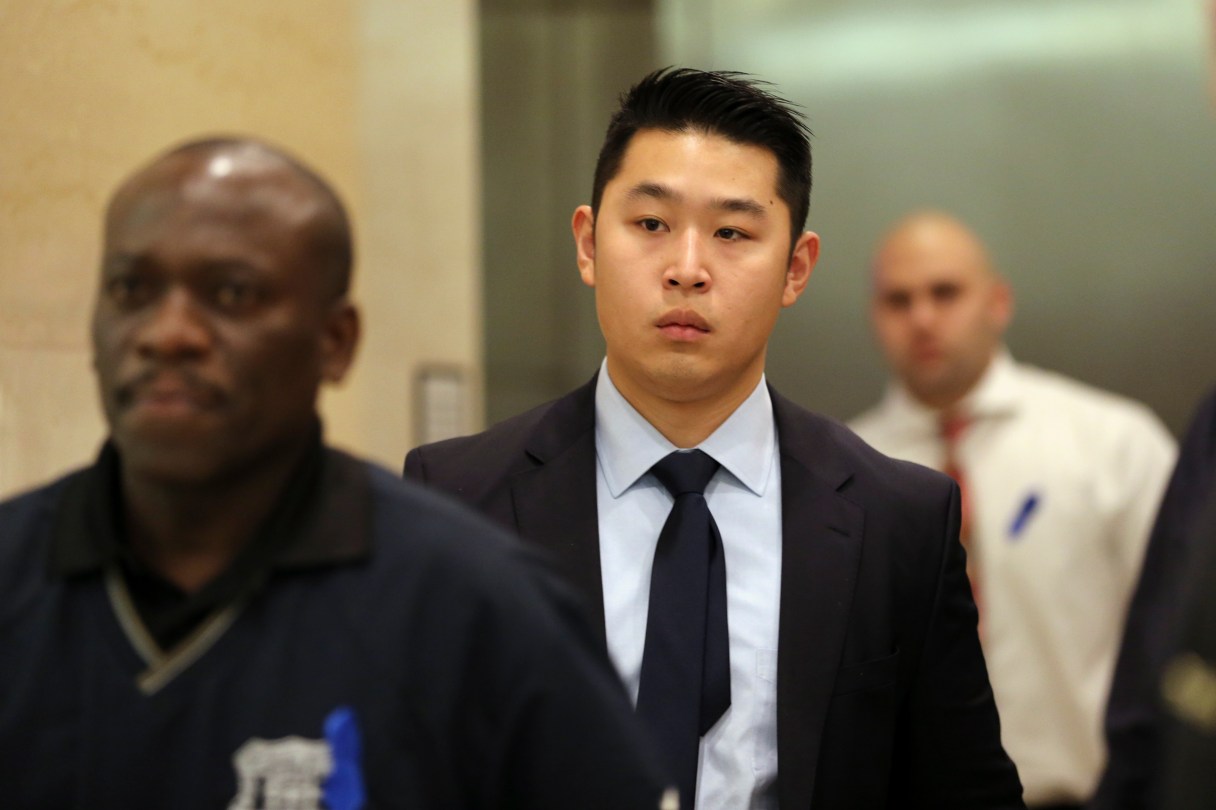
NEW YORK (AP) – Jurors will return to court as they consider whether a rookie police officer who shot an innocent man in a dark public housing stairwell accidentally discharged his weapon, as he says, or whether he acted out of recklessness and did little to help the dying victim, as the prosecution contends.
New York Police Department Officer Peter Liang faces up to 15 years in prison if he’s convicted on manslaughter and other charges in the death of 28-year-old Akai Gurley, who was taking the stairs down with his girlfriend rather than wait for an elevator at the Brooklyn complex.
Liang, 28, testified this week that he didn’t know anyone was in the pitch-black stairway on Nov. 20, 2014, when he unintentionally fired his drawn gun while on patrol after being startled by a noise. The shot ricocheted off a wall and hit Gurley, who was unarmed.
The 12-member panel deliberated for about an hour Tuesday before being sent home for the day. District Attorney Kenneth Thompson sat beside Gurley’s domestic partner, Kimberly Ballenger, as the jury heard closing arguments Tuesday afternoon.
Prosecutors presented a very different version of Liang’s state of mind after the shooting than Liang’s lawyer.