
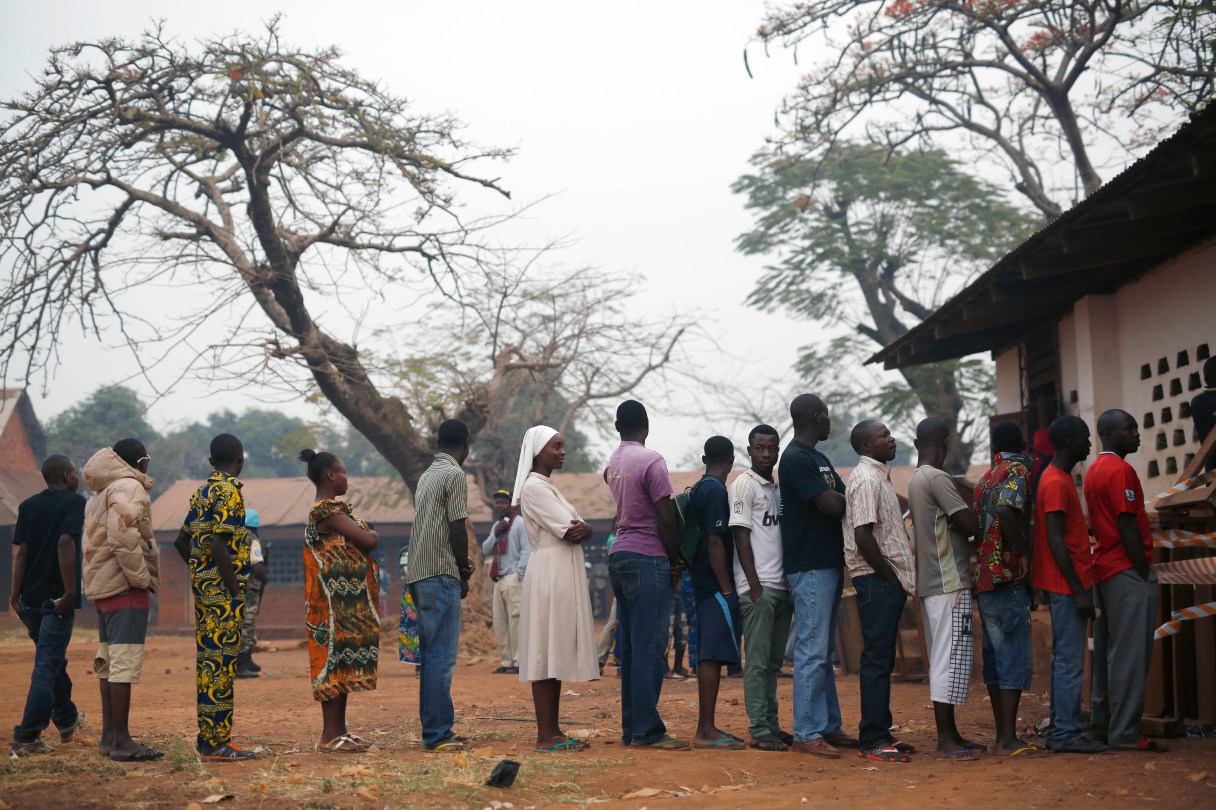
BANGUI, Central African Republic (AP) – Central African Republic went ahead with a presidential runoff vote Sunday that many hope will solidify the country’s tentative peace after more than two years of sectarian fighting left thousands dead and nearly 1 million people displaced including most of the capital’s Muslim population.
Armored U.N. personnel carriers roamed the streets of Bangui as residents headed to the polls not long after sunrise. Some 2,000 U.N. peacekeepers are deployed in the capital while 8,000 others were working to secure the vote in the largely anarchic provinces.
Residents said they planned to set aside painful memories of the chaos that intensified in late 2013 when Christian militia fighters known as the anti-Balaka attacked Bangui, unleashing cycles of retaliatory violence with mostly Muslim Seleka fighters. At the height of the violence people were killed and dismembered by mobs in the capital’s streets. More than 460,000 people fled for their lives to neighboring countries, many aboard trucks that came under attack even as refugees tried to leave.
The conflict at the time was a political dispute over who would lead Central African Republic, but it divided communities among religious fault lines: Hundreds of mosques and churches were destroyed, interreligious marriages unraveled. A new spasm of violence late last year effectively barricaded most of Bangui’s remaining Muslims inside the PK5 neighborhood for several months.
Now voters are being given a choice of two former prime ministers – both promising to unite the country and bring the peace people here desperately want. Front-runner Anicet Georges Dologuele received about 24 percent in the first round and also was endorsed by the third-place finisher. However, Faustin Archange Touadera has strong grassroots support after placing second in the December ballot.