
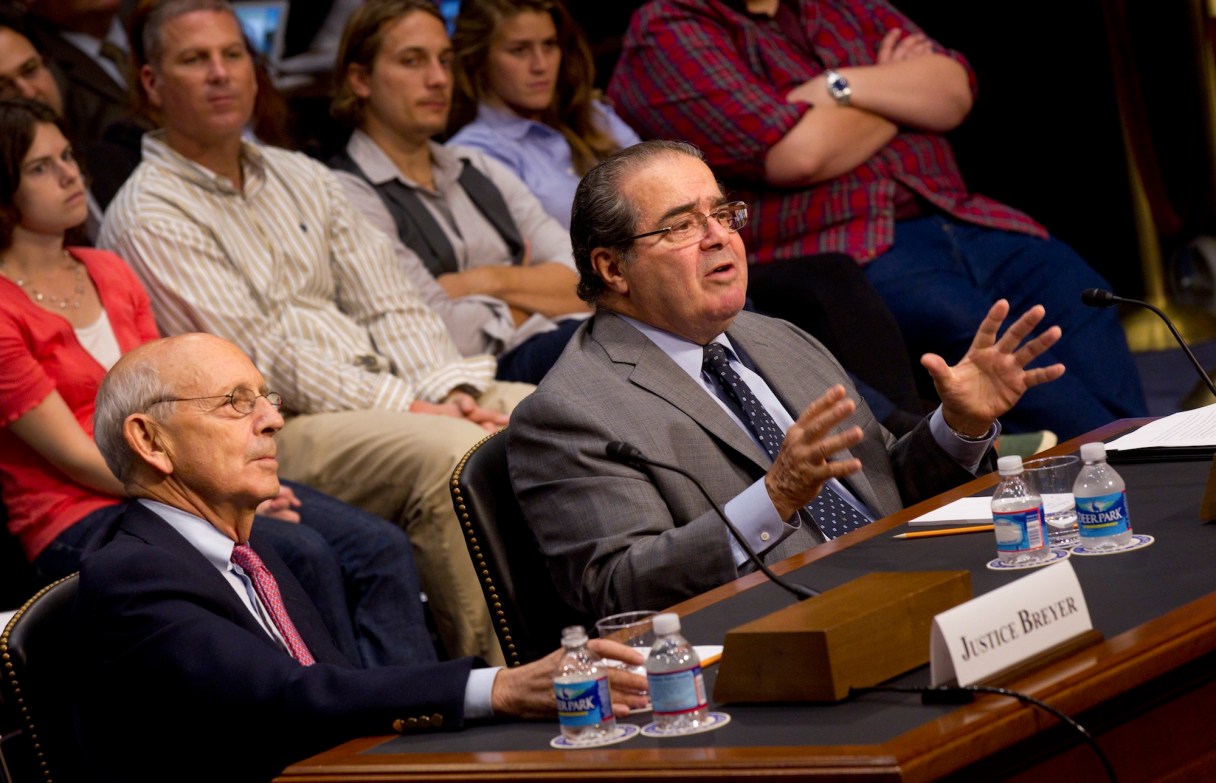
WASHINGTON – In most presidential elections, Supreme Court nominations are a major issue for elites and a substantial concern for significant parts of the conservative movement. Other voters usually see the future makeup of the court as a side matter.
Justice Antonin Scalia’s death on Saturday will change this.
The issue of conservative judicial activism had already begun to take hold among liberals because of a series of fiercely ideological and precedent-shattering 5-to-4 decisions.
You read that right: After decades during which conservatives complained about “liberal judicial activism,” it is now conservatives who are unabashed in undermining progressive legislation enacted by the nation’s elected branches.
In 2010, Citizens United rewrote decades of precedent on Congress’ power to regulate how campaigns are financed, facilitating a flood of money into elections from a small number of very wealthy Americans. Three years later, Shelby County v. Holder ripped the heart out of the federal government’s enforcement power in the Voting Rights Act. Last week, conservatives on the court halted the implementation of President Obama’s Clean Power Plan, his central initiative on climate change.
This is merely a partial list. The court’s conservatives have also regularly undercut the power of unions and the ability of citizens to wage legal battles against corporations.
Such decisions already had the potential of broadening the range of progressive constituencies invested in making the court a major election issue, including political reformers, African-Americans, environmentalists and organized labor.
But Scalia’s death means that Obama or his successor – if that successor is a Democrat – could overturn the current conservative majority on the court, which could lead it to revisit many of the most troubling decisions of recent years.
And Republicans did themselves no favors in the coming argument by moving in a hard political direction even before most of the tributes to Scalia had been published – and even before the president had actually picked someone: Senate Majority Leader Mitch McConnell proclaimed that no Obama nominee would be considered, period.
Republicans claimed precedent for ignoring court appointees from presidents on their way out the door.
Well. A Senate controlled by Democrats confirmed President Reagan’s nomination of Anthony Kennedy on a 97-0 vote in February 1988, which happened to be an election year. By what definition was Reagan not a lame duck when he put Kennedy forward on Nov. 11, 1987?
Obama rejected the rejectionists.
My hunch is that Obama will try to put the Republicans’ obstructionism in sharp relief by offering a nominee who has won support and praise from GOP senators in the past. Three potential candidates who fit these criteria and won immediate and widespread mention were Merrick Garland and Sri Srinivasan, both judges on the U.S. Court of Appeals for the District of Columbia, and Jane Kelly, a judge on the Eighth Circuit.
Whatever choice Obama makes, he will try to make it as hard as possible for Republican senators – especially those struggling for re-election this year in blue or purple states – to claim that he had picked an ideologue.
An extended court fight would allow progressives, once and for all, to make clear it is their conservative foes now using judicial power most aggressively. The partisan outcome of this year’s election just became far more important. This fall, Americans will not just be picking a new chief executive. They will be setting the course of the court of last resort for a generation.
Washington Post Writers Group