
Monday, November 16, 2026Nov 16

New research finds noise harder on children than adults

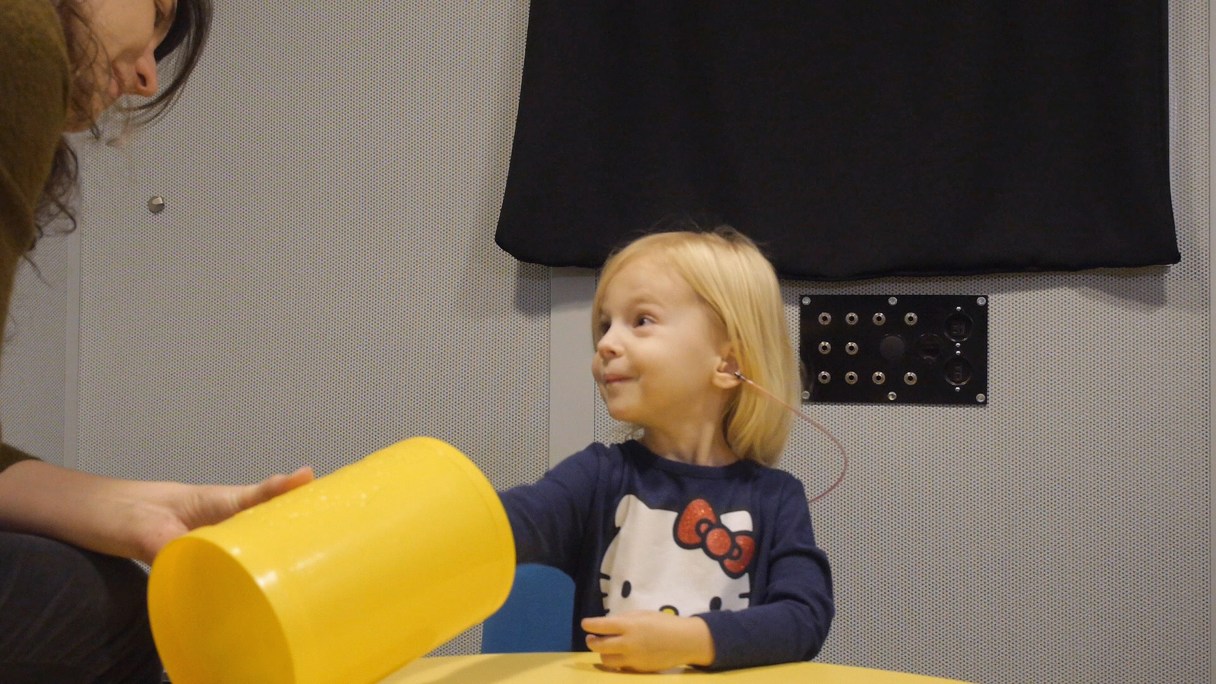
In this images from video provided by University of North Carolina at Chapel Hill, a toddler participates in a speech perception experiment in a laboratory at the University of North Carolina in Chapel Hill, N.C.. The toddler was conditioned to put a block in the bucket whenever she heard the “target” word. From the cacophony of day care to the buzz of TV and electronic toys, noise is more distracting to a child's brain than an adult's, and new research shows it can hinder how youngsters learn. In fact, one of the worst offenders when a tot's trying to listen is other voices babbling in the background, researchers said Saturday at a meeting of the American Association for the Advancement of Science. (Emily Buss/University of North Carolina at Chapel Hill via AP)

WASHINGTON (AP) – From the cacophony of day care to the buzz of TV and electronic toys, noise is more distracting to a child’s brain than an adult’s, and new research shows it can hinder how youngsters learn.

In fact, one of the worst offenders when a tot’s trying to listen is other voices babbling in the background, researchers said Saturday at a meeting of the American Association for the Advancement of Science.

“What a child hears in a noisy environment is not what an adult hears,” said Dr. Lori Leibold of Boys Town National Research Hospital in Omaha, Nebraska.

That’s a Catch-22 in our increasingly noisy lives because “young children learn language from hearing it,” said Dr. Rochelle Newman of the University of Maryland. “They have a greater need for understanding speech around them but at the same time they’re less equipped to deal with it.”

It’s not their ability to hear. For healthy children, the auditory system is pretty well developed by a few months of age.