
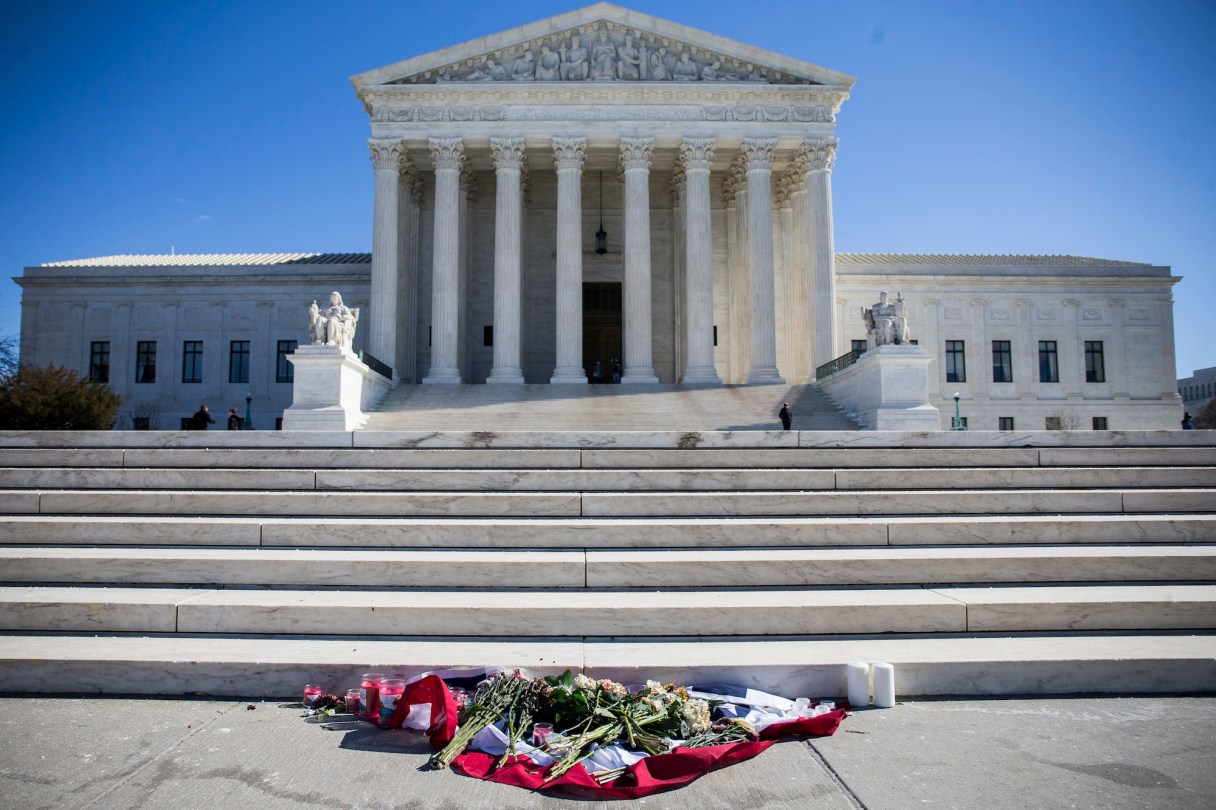
Antonin Scalia, dead unexpectedly this weekend at 79, was not the most politically powerful justice during his three decades on the Supreme Court. That distinction belonged to the court’s two swing votes, Sandra Day O’Connor and then Anthony M. Kennedy, respectively the philosopher queen and king of our fraying republican order.
Unlike them, Scalia did not have the opportunity to write all his preferences into the law of the land. For every victory he won, there was a sharp defeat; for every important majority opinion a stinging, quotable dissent. And on the issues he cared the most about – abortion, above all – his defeats were famous and his dissents often not just eloquent but anguished.
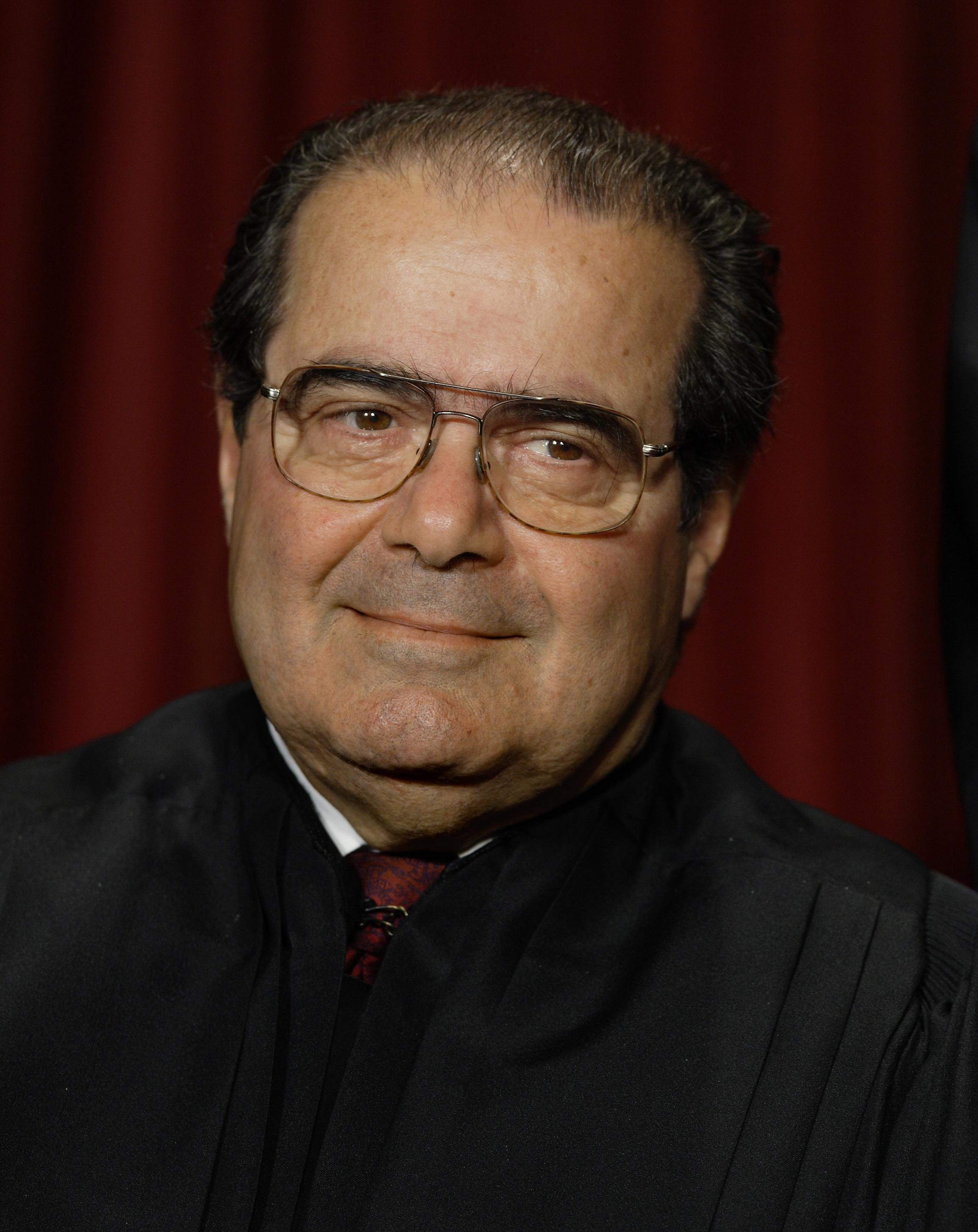 FILE – In this Monday, Oct. 31, 2005 file photo, Associate Justice Antonin Scalia joins the members of the Supreme Court for photos during a group portrait session, at the Supreme Court Building in Washington. On Saturday, Feb. 13, 2016, the U.S. Marshals Service confirmed that Scalia has died at the age of 79. (AP Photo/J. Scott Applewhite)
But in every other respect, he was the most important Supreme Court justice of his era.
He was important because of his intellectual influence. There were and are many legal theories and schools of constitutional interpretation within the world of American conservatism. But Scalia’s combination of brilliance, eloquence and good timing – he was appointed to the court in 1986, a handful of years after the Federalist Society was founded, and with it the conservative legal movement as we know it – ensured that his ideas, originalism in constitutional law and textualism in statutory interpretation, would set the agenda for a serious judicial conservatism and define the worldview that any “living Constitution” liberal needed to wrestle with in order to justify his own position.
This intellectual importance was compounded by the way he strained to be consistent, to rule based on principle rather than on his partisan biases – which made him stand out in an age when justices often seem as purely partisan as any other office holder. Of course there were plenty of cases (“Bush v. Gore!” a liberal might interject here) in which those biases probably did shape the way he ruled. But from flag burning to the rights of the accused to wartime detention, Scalia had a long record of putting originalist principle above a partisan conservatism. And this, too, set an example for his fellow conservatives: The fact that today the court’s right-leaning bloc has far more interesting internal disagreements than the often lock-step-voting liberal wing is itself a testament to the premium its leading intellectual light placed on philosophical rigor and integrity.