

Thursday evening at the Tivoli Theater, the Chattanooga Symphony & Opera performed a charming and entertaining concert of music inspired by, and associated with, animals. Entitled “Carnival of the Animals,” the program included “The Story of Babar” by Francis Poulenc, “Catcerto,” by Mindaugus Piecaitis, and “Thurber’s Dogs,” by Peter Schickele. The evening concluded with a lively and beautiful performance of Camille Saint-Saens’ ever-popular composition, “Carnival of the Animals.”David Schildkret was the engaging and humorous narrator for the works by Saint-Saens and Poulenc.
As much as this was a program of music about animals, it was, in a more general sense, an evening of musical storytelling.It was wonderful to hear how four composers chose to musically represent the words, drawings and videos that were paired with each composition, in their own distinct style.From the bittersweet and elegant nostalgia of the Poulenc, to the wit and humor of the Saint-Saens; from the clever and often dreamy quality of “Catcerto” to the eclectic, emotional and sometimes eccentric “Thurber’s Dogs,” this was an example of innovative programming that clearly resonated with the enthusiastic audience.
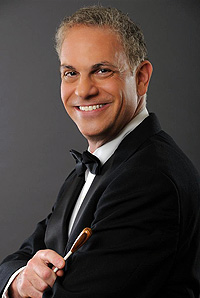 Arizona State University choral professor David Schildkret will be guest narrator for the CSO performance of Camille Saint-Saëns’ “The Carnival of the Animals.” He has written a narration for the work.
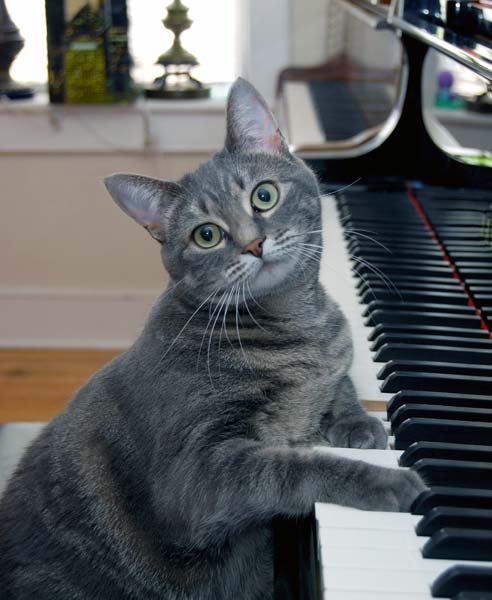 A video projection during the CSO’s “Carnival of the Animals” Masterworks concert tonight, Feb. 18, will feature Nora, the gray tabby whose piano-playing inspired Mindaugas Piečaitis to compose “Catcerto,” one of the animal-themed works on the program.
The program
› Francis Poulenc’s “The Story of Babar”› Mindaugus Piecaitis’ “Catcerto”› Peter Schickele’s “Thurber’s Dogs”› Camille Saint-Saëns’ “Carnival of the Animals”
In 1931, French author, Jean de Brunhoff published the first in his series of now timeless, illustrated children’s books, “The Story of Babar, the Little Elephant.”Originally composed for piano and narrator in 1940, and later creatively orchestrated by Jean Françaix, Poulenc captured the unique blend of innocence and subtle sophistication of de Brunhoff’s book.
The orchestra was, as always, a joy to listen to, with excellent dynamic range and nicely contrasted articulations.There may have been some slight intonation and balance issues in the harmonically dense and challenging opening episode, but by the time similar musical material reemerged later in the work, all was very well, indeed.It is very rare that bass-register instruments are featured with solo passages in the orchestral literature, so special praise to tuba player Neil Konouchi and contrabassoon player Eddie McCrary for their exceptional performance.
Later in the program, narrator David Schildkret’s comic and entertaining approach worked perfectly for the Saint-Saens work, especially when paired with his own, often hilariously funny newly written text.
However, this approach proved less successful for some parts of “Babar.”He was playing it for laughs, so to speak – including a couple of ad-libbed references to a certain train in Chattanooga – and the audience clearly enjoyed it.But one might have wished for a delivery that acknowledged the pathos and innocence that are inherent in much of Brunhoff’s magical story, and Poulenc’s often-elegant musical setting.
After intermission, the orchestra gave a lovely and spirited performance of Lithuanian composer, Mindaugas Piecaitis’s inventive and playful composition entitled, “Catcerto.”This brief, four minute work, set to an online video about a certain “piano-playing” cat named Nora, has proved to be an internet phenomenon, having received over 5 million views on YouTube.
Composer Peter Schickele has been described as playing “a leading role in the ever-more-prominent school of American composers who unselfconsciously blend all levels of American music” (John Rockwell, The New York Times), and this proved to be true for the next work on the evening’s program.Based on the drawings of dogs by James Thurber, originally published in The New Yorker in 1927, Schickele effectively brings out the character of each drawing within each of the six movements of his composition, “Thurber’s Dogs.”As each movement was performed, videos based on Thurber’s drawings – each, between two and five minutes in length – were projected onto a screen above and behind the orchestra on stage.Principal oboe Robert Burks’ lyrical playing was a pleasure to hear.
“Carnival of the Animals” by Camille Saint-Saens concluded the concert.Always an audience favorite, the orchestra shined, playing with full-throated confidence and vigor. David Schildkret’s text and narration were delightfully witty; the wonderful piano soloists, Alan Nichols and Jason Duroy, were confident and well-coordinated; and the double-bass section performed superbly in the “Elephant” movement. Particularly outstanding was the glorious performance of the “Swan” movement by principal cellist Eric Reed.
Douglas Hedwig was a trumpeter with the Metropolitan Opera Orchestra in New York City for 27 years and also was on the faculty of The Juilliard School.He is Professor Emeritus of Music at The City University of New York and his compositions are published by Carl Fischer Music and TNR Music Publishers. He and his wife moved to Chattanooga in 2013.