
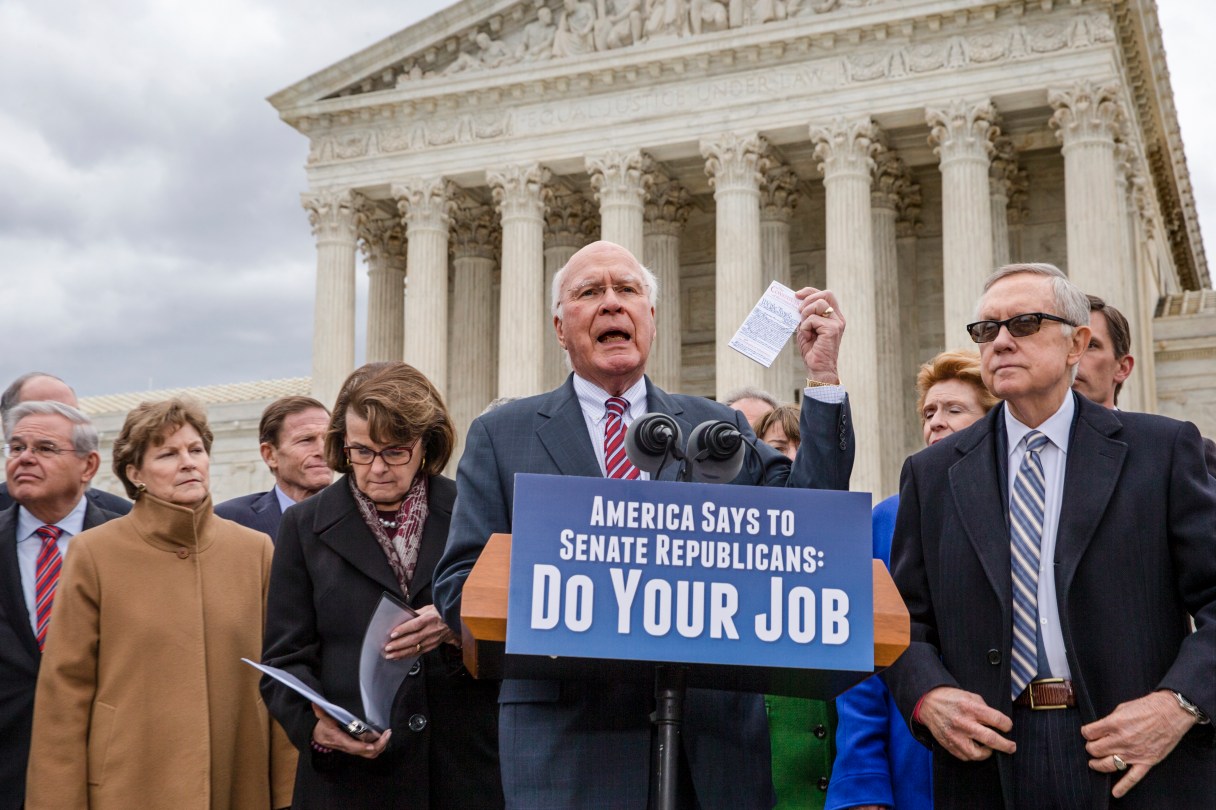
WASHINGTON (AP) – Searching for a way to put a new justice on the nation’s highest court, President Barack Obama is hoping that all politics really is local – even Supreme Court politics.
The president and his allies are pressuring Republican senators back home, aiming to make life politically uncomfortable for the lawmakers who’ve vowed that only Obama’s successor will fill the seat of the late Antonin Scalia.
It’s a long shot. Only a few Republicans have expressed openness to even hold hearings on a nominee. Obama must first get Republicans to break from leadership on that and then win confirmation support from 14 GOP senators.
The president is still trying to make his case. The White House said Thursday Obama will meet next week with Senate Republican leader Mitch McConnell, Democratic leader Harry Reid, Judiciary Committee Chairman Chuck Grassley and Patrick Leahy, the top Democrat on the committee. Meanwhile, Obama has lobbied at least one senator directly at the White House.
The president spoke briefly Wednesday with Orrin Hatch of Utah, a former Judiciary Committee chairman viewed as potentially sympathetic to concerns about the precedent set by the Republican opposition.