
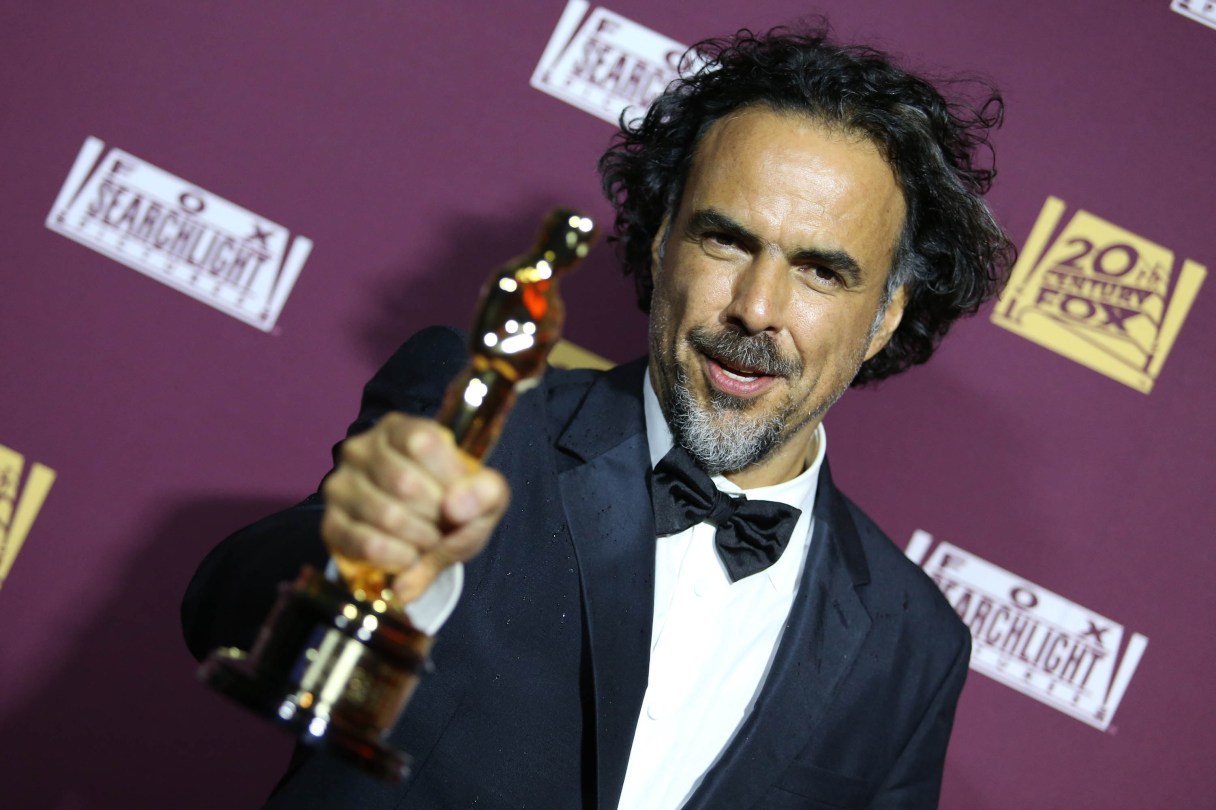
MEXICO CITY (AP) – Movie buffs in Mexico are abuzz with the possibility native son Alejandro Gonzalez Inarritu could snag this year’s directing Oscar for “The Revenant,” which would be an unprecedented third in a row by Mexicans.
If that’s not enough for Mexicans to cheer about during Sunday’s Academy Awards show, Emmanuel “Chivo” Lubezki is a good bet to win his third cinematography Oscar in a row. That would be a first for an individual of any nationality.
Together with directors Guillermo del Toro and Alfonso Cuaron, they’re part of a new Mexican generation that is responsible for many of Hollywood’s most critically acclaimed and commercially successful films these days.
“They are at the head of a generation that demarcated a before and an after in Mexican cinema,” said Jose Antonio Valdes, deputy director for information and special projects at Mexico’s governmental film institute, the Cineteca Nacional.
“They come from a generation that has a different mentality, where the idea of the global filmmaker was already a reality, and I think we are seeing that now,” Valdes said. “Mexican filmmakers no longer think in terms of Mexico; they think globally.”