
Countless news stories speak of “evangelical voters” in this election cycle. Who are these members of society and what informs their decisions?
Sometimes it’s easier to understand something when you embrace what it’s not. For instance, evangelical voters are not a monolithic group that vote in uniformity. Acknowledging that faith serves as the priority of evangelicals does not translate into a group of individuals who isolate themselves in a world of institutional religion in a cult-like fashion.
Granted, there may be some who take the approach to separate themselves from the “world,” but evangelicals, in contrast, stand faithful to be the salt and light as noted in Matthew.
“Evangelical” originates from the Greek term “euangelion,” which means the good news or the gospel. Evangelicals’ faith stands on the foundations of the belief in the full text of the Judeo-Christian Bible and the redemption provided by the sacrificial love, death and resurrection of Jesus Christ. So, “evangelicals” comprise a very diverse group defined by their theological beliefs and convictions, not their denominational, political, societal or economic distinctions.
Are you an evangelical Christian? If you are a Christ follower who believes that sharing the gospel, or the good news, is central to your faith, you, too, are an evangelical.
Evangelicals value the church as the institution of faith, charity and community that is most often in conflict with an overreaching government that competes for and even attempts to replace a believer’s set of values through mandates about marriage, abortion as contraception and the demand of more of one’s earned wealth in taxes than is noted to be obedient in the act of tithing, just as a few examples.
The evangelical voter gains value during election cycles because there seems to be a bit more predictability about their approach to candidates. Yet in 2016, those conventions have been pointless because of assumptions, not reality.
The assumption is that if a political candidate is personally pious, quotes enough Bible verses and has the right, and I do mean “right,” talking points, the gravitational pull toward that man or woman is just as sure as a law of nature.
Let’s replace politician with physician in that thought process.
If an evangelical man or woman is told that surgery is required, that Bible-believing patient will approach the choice based on the referral of an existing trusted physician, information available about the doctor’s competence, skill and outcomes, and other factors.
If all possible physicians presented to that patient as options are identical and one happens to be an evangelical Christian, that will likely be a deciding factor.
But the reality is quite simple: Evangelical Christians don’t want to live in a theocracy and approach daily decisions using their faith to inform those choices. Evangelical Christians seek excellence in their lives through proficiency at work, study, community service and, yes, politics.
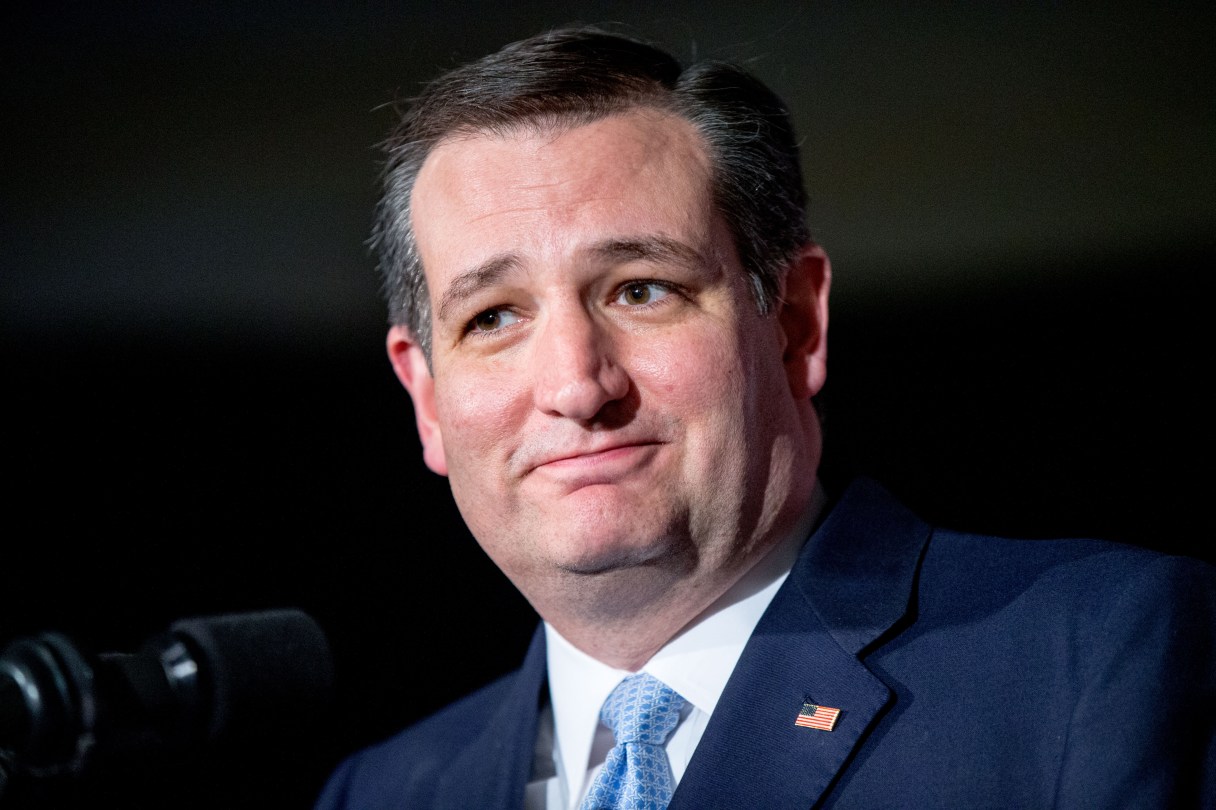
The campaign of Ted Cruz has been labeled repeatedly as the one most predictably “evangelical.” He is, unquestionably, a brilliant man, as is Dr. Ben Carson, who’s been supported by many of the “faith community.” Yet, such surprise seems misplaced that voters of the Christian faith don’t robotically support certain stereotyped candidates.
Speaking personally, the daily availability of Scripture and spiritual growth is my own duty and entrusted to my pastor. The role of government in my life is that of Romans 13 – an institution honored but one that is expected to be “not a terror to good works, but to evil.”
Robin Smith, former chairwoman of the Tennessee Republican Party, is owner of Rivers Edge Alliance. She works with political candidates, including Hamilton County Commissioner Marty Hayes and Criminal Court Judge Tom Greenholtz.