
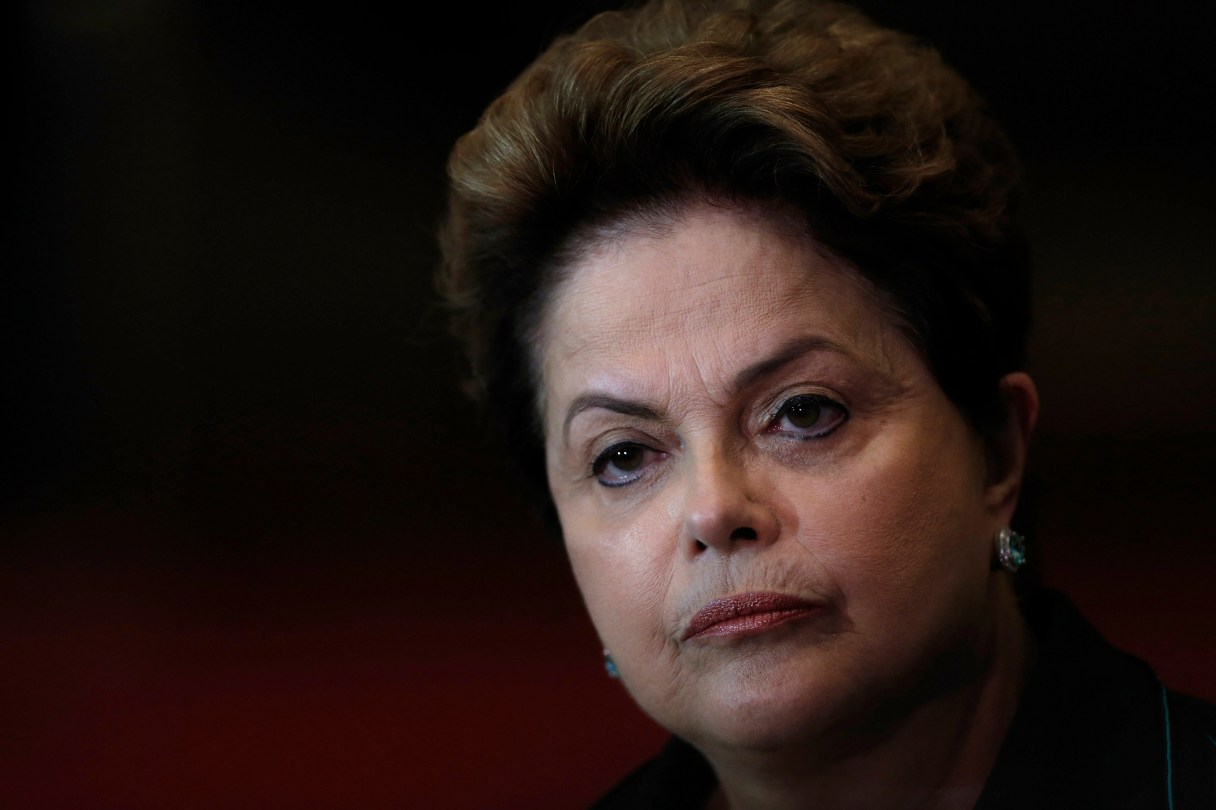
RIO DE JANEIRO (AP) – With her job on the line, Brazilian President Dilma Rousseff is spending January developing an economic plan she hopes will restore faith in her leadership and weaken looming impeachment proceedings against her.
The once-popular successor of former President Luiz Inacio “Lula” da Silva has fallen so far that it’s unclear whether she can recover. And she’ll have little room to maneuver once Congress reconvenes in Brasilia in February: Her approval ratings hover in the single digits, both friendly and hostile lawmakers are restive and Latin America’s largest economy is expected to continue contracting in 2016.
“Dilma will have one month with no major problems blowing up in Brasilia to come up with a plan to revive a faltering economy,” said Claudio Couto from Brazilian think tank Fundacao Getulio Vargas. “The key is to bring some confidence back.”
That confidence has been shaken by a series of ballooning crises over the past year. Major scandals, some of which touch Rousseff, have combined with tanking commodity prices to slam the economy, which has suffered credit-rating downgrades, a sharp currency devaluation and 10-percent annual inflation.
“I can’t wait to stop hearing bad news from Brasilia,” said Gabriela Malvezzi, a 28-year-old psychologist in Rio. “I don’t even turn on the TV anymore. All that I wanted was for 2015 to end.”