
Monday, November 16, 2026Nov 16

Grisly fossils from Kenya reveal a 10,000-year-old massacre

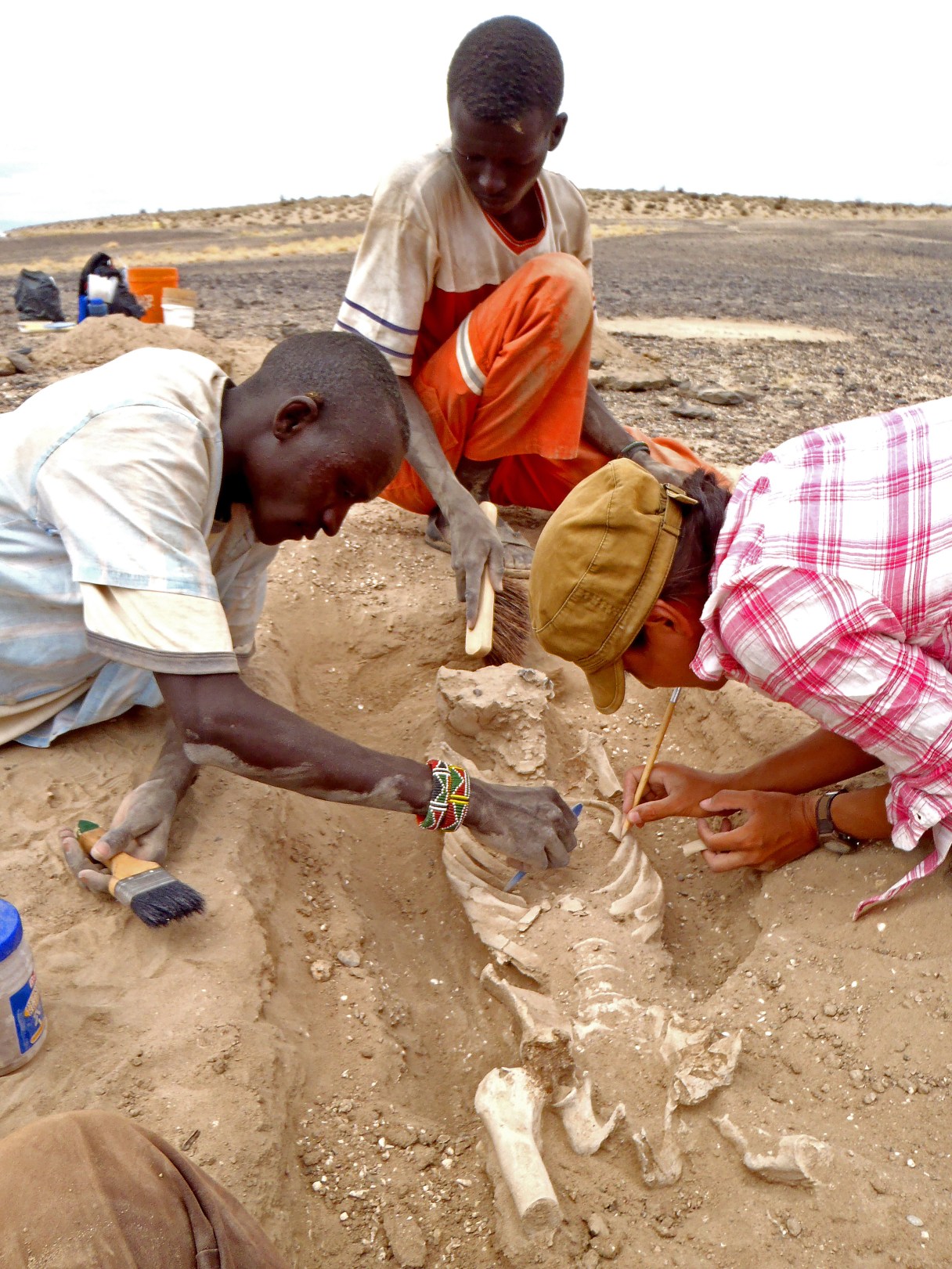
In this August 2012 photo provided by Marta Mirazon Lahr, researcher Frances Rivera, right, Michael Emsugut, left, and Tot Ekulukum excavate a human skeleton at the site of Nataruk, West Turkana, Kenya. This skeleton was that of a woman, found lying on her back, with lesions on her neck vertebrae consistent with a projectile wound. She also had multiple fractures on one of her hands. Writing in a paper released Wednesday, Jan. 20, 2016, by the journal Nature, scientists said it’s one of the clearest cases of violence between groups among prehistoric hunter-gatherers. (Marta Mirazon Lahr via AP)

NEW YORK (AP) – Scientists have found grisly evidence of a massacre in Kenya about 10,000 years ago, providing rare evidence of violence between groups in ancient hunter-gatherer societies.

Researchers said the discovery casts light on the poorly understood roots of warfare.

Evidence of violence appeared in 10 of 12 relatively complete fossil skeletons the scientists found by what used to be the edge of a lagoon. That included five or six cases of apparent arrow wounds to the head or neck, and five cases where the head was smashed with something like a club. One skull had a sharpened stone still embedded.

The researchers said the wounds would have been fatal immediately or soon thereafter.

Two skeletons didn’t show evidence of violence but the position of the hands suggested they might have been tied up at the time of death. One was a woman who was pregnant or had recently given birth.