

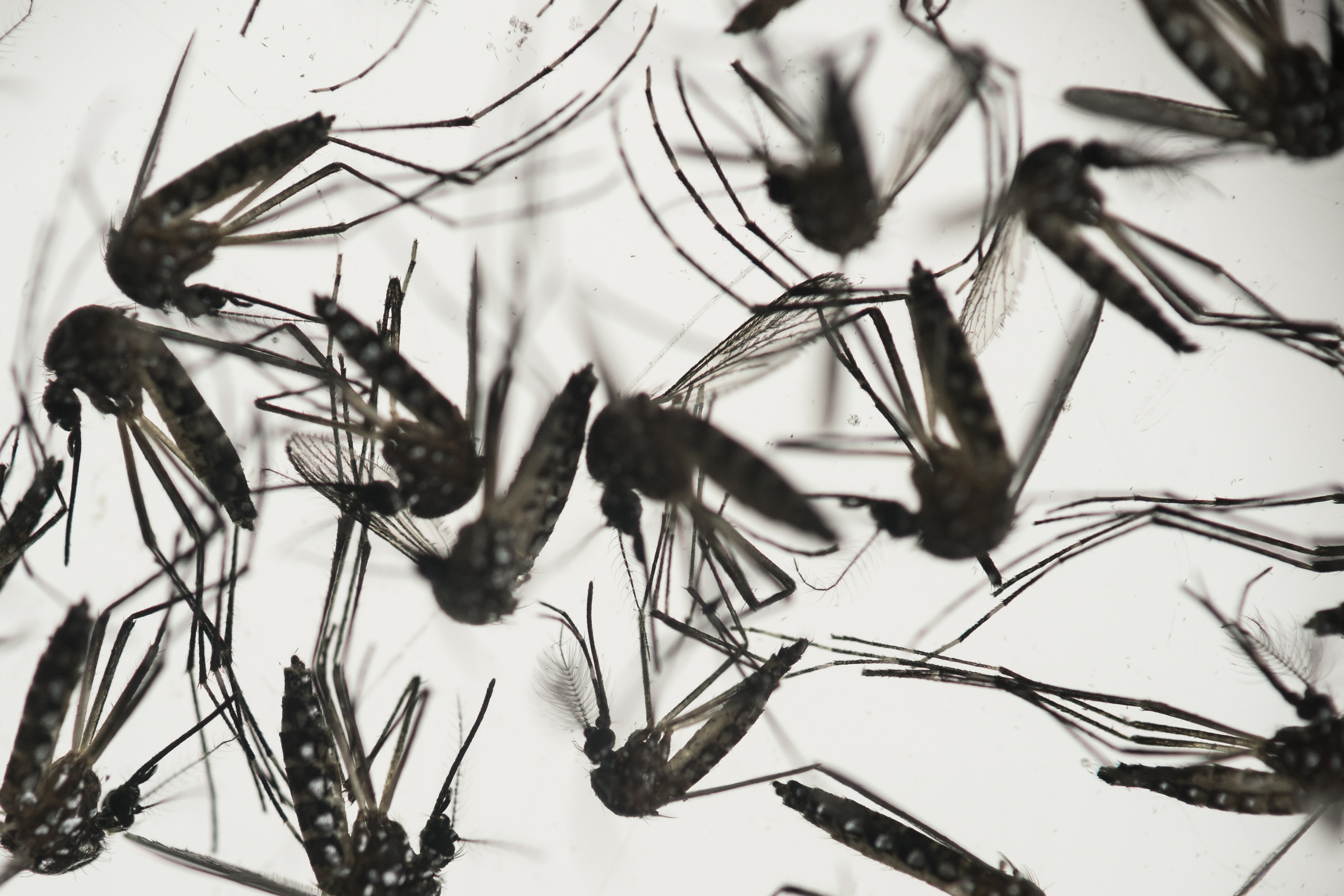
 Aedes aegypti mosquitoes sit in a petri dish at the Fiocruz institute in Recife, Pernambuco state, Brazil, Wednesday, Jan. 27, 2016.
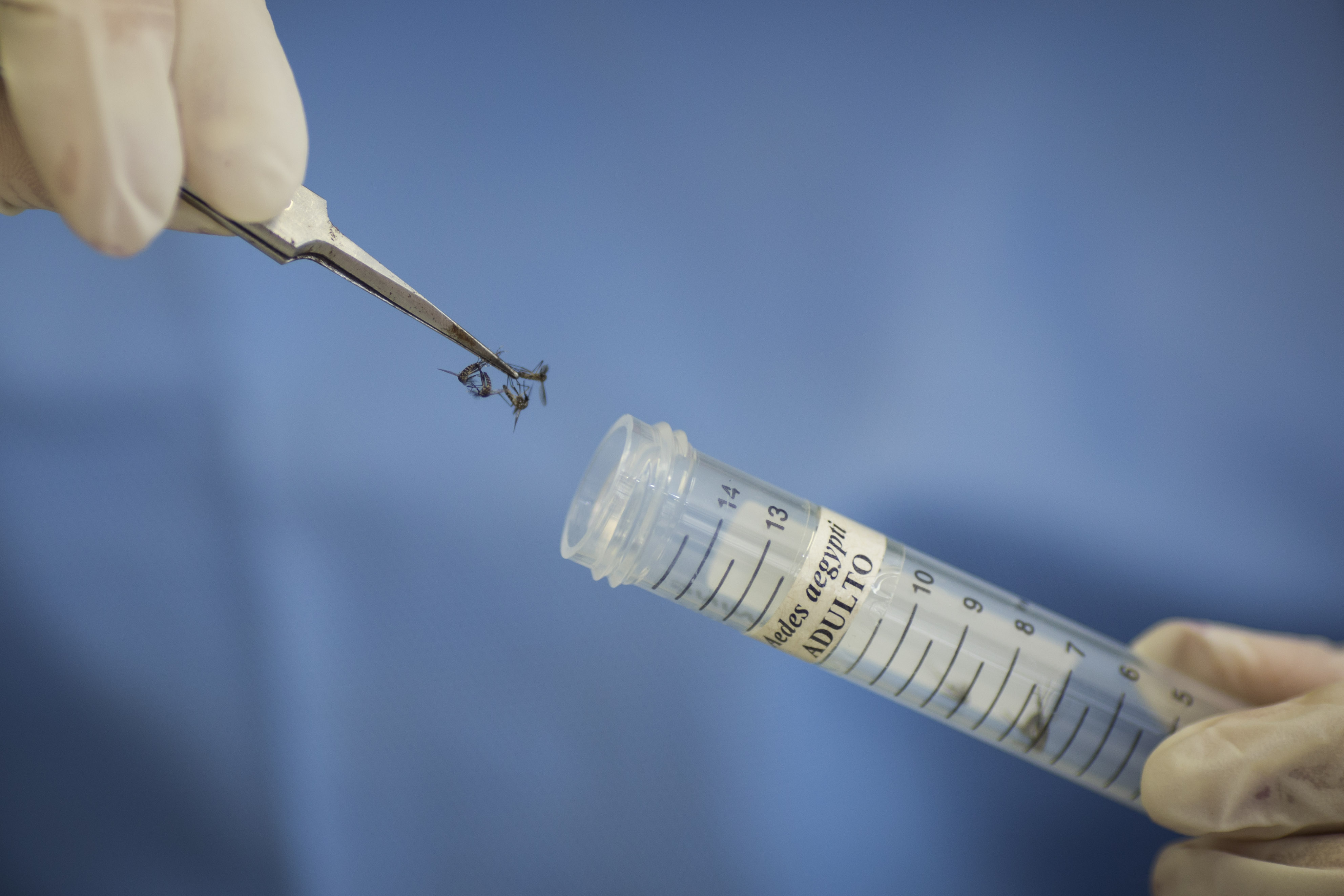 A technician of the Fiocruz institue stores Aedes aegypti mosquitoes to be used in research, in Recife, Pernambuco state, Brazil, Wednesday, Jan. 27, 2016.
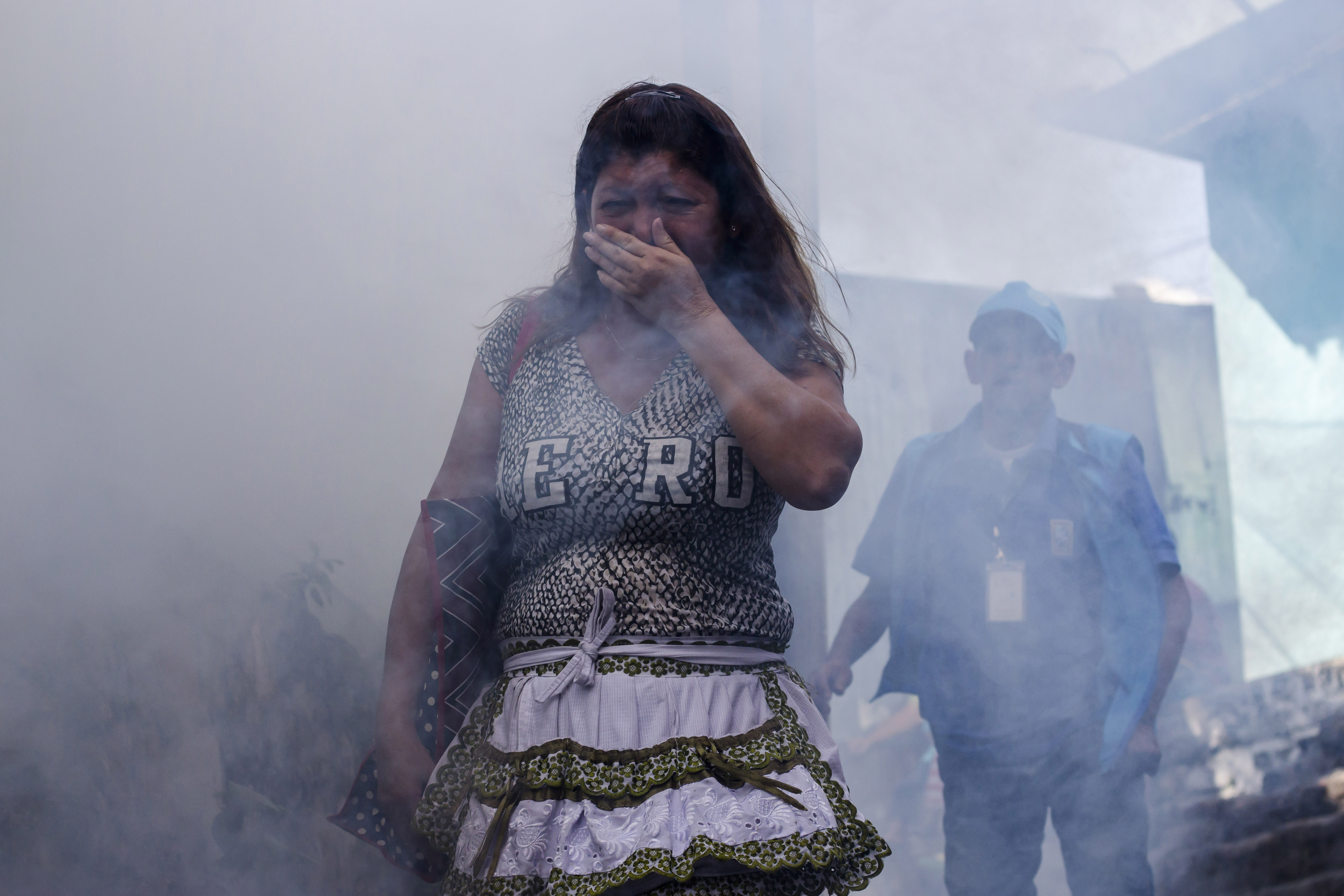 A woman covers her mouth while city workers fumigate insecticide to help combat the Aedes Aegypti mosquitoes that transmit the Zika virus, at the San Judas Community in San Salvador, El Salvador, Tuesday, Jan. 26, 2016.
SAN SALVADOR, El Salvador – Maria Erlinda Guzman desperately wants a baby, and has been undergoing fertility treatments at El Salvador’s largest women’s hospital. But now, she fears her dream of motherhood may be dashed by Zika.
After her country took the extraordinary step of advising women to avoid pregnancies for two years due to concerns about the rapidly spreading virus, the 34-year-old now plans to start using contraception. She worries that she may be too old to conceive by the time it is considered safe to do so.
“I’m going to be left childless,” Guzman said.
While Zika’s exact link to the rare birth defect known as microcephaly is still unclear, warnings from El Salvador, at least six other countries and health officials across the Americas are raising anxiety for millions of would-be and could-be mothers in affected areas.
For some it’s a dilemma pitting religious beliefs about abortion against the risk that their babies could be born with abnormally small heads and a short life expectancy.