
Monday, November 16, 2026Nov 16

South Sudan: Peace accord falters, refugees remain in camps

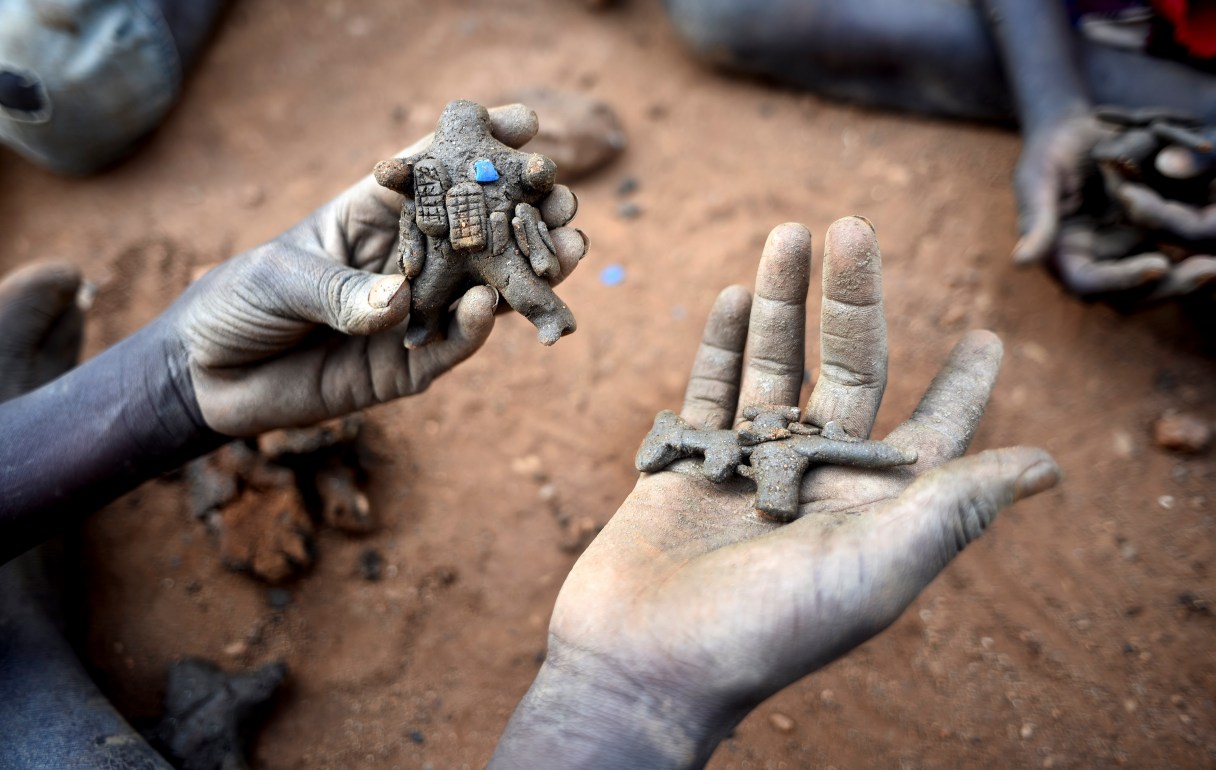
In this photo taken Tuesday, Jan. 19, 2016, a displaced child holds clay model toys of a peacekeeper and a rifle, in the United Nations camp for displaced people in the capital Juba, South Sudan. When a delegation of South Sudanese rebels returned to the government-controlled capital Juba last month after two years of war, many refugees thought they would finally return to the homes they fled. But prospects for peace seem dim after the government and rebels missed a deadline last week to form a power-sharing government and end the war.  President Salva Kiir, an ethnic Dinka, and rebel leader Riek Machar, a Nuer, signed a peace deal in August, but fighting continues. Machar said Tuesday, Jan. 26 in Kampala, Uganda that he won’t return to Juba, South Sudan’s capital, because the decree violated the peace accord. (AP Photo/Jason Patinkin)
In this photo taken Tuesday, Jan. 19, 2016, a displaced child holds clay model toys of a peacekeeper and a rifle, in the United Nations camp for displaced people in the capital Juba, South Sudan. When a delegation of South Sudanese rebels returned to the government-controlled capital Juba last month after two years of war, many refugees thought they would finally return to the homes they fled. But prospects for peace seem dim after the government and rebels missed a deadline last week to form a power-sharing government and end the war. President Salva Kiir, an ethnic Dinka, and rebel leader Riek Machar, a Nuer, signed a peace deal in August, but fighting continues. Machar said Tuesday, Jan. 26 in Kampala, Uganda that he won’t return to Juba, South Sudan’s capital, because the decree violated the peace accord. (AP Photo/Jason Patinkin)

JUBA, South Sudan (AP) – When a delegation of South Sudanese rebels returned to the government-controlled capital Juba last month after two years of war, Nyajok Koat thought she would finally return to the home she fled when the fighting began.

But more than a month later, prospects of her leaving the U.N. base where she has taken shelter seem dim after the government and rebels missed a deadline last week to form a power-sharing government and end the war.

“It’s only for God to know how long I’ll be here,” an exasperated Koat told a reporter who visited a U.N. camp in the capital that she shares with more than 27,000 other people.

Although President Salva Kiir, an ethnic Dinka, and rebel leader Riek Machar, a Nuer, signed a peace deal in August, the fighting continues sporadically. Machar has not come to the capital to be Kiir’s vice president, as agreed.

The peace deal said Machar’s side would get control of South Sudan’s two oil-producing states, but Kiir created 28 new states by decree, jeopardizing that provision of the agreement. Machar said Tuesday in Kampala, Uganda that he won’t return to Juba because the decree violated the peace accord.