
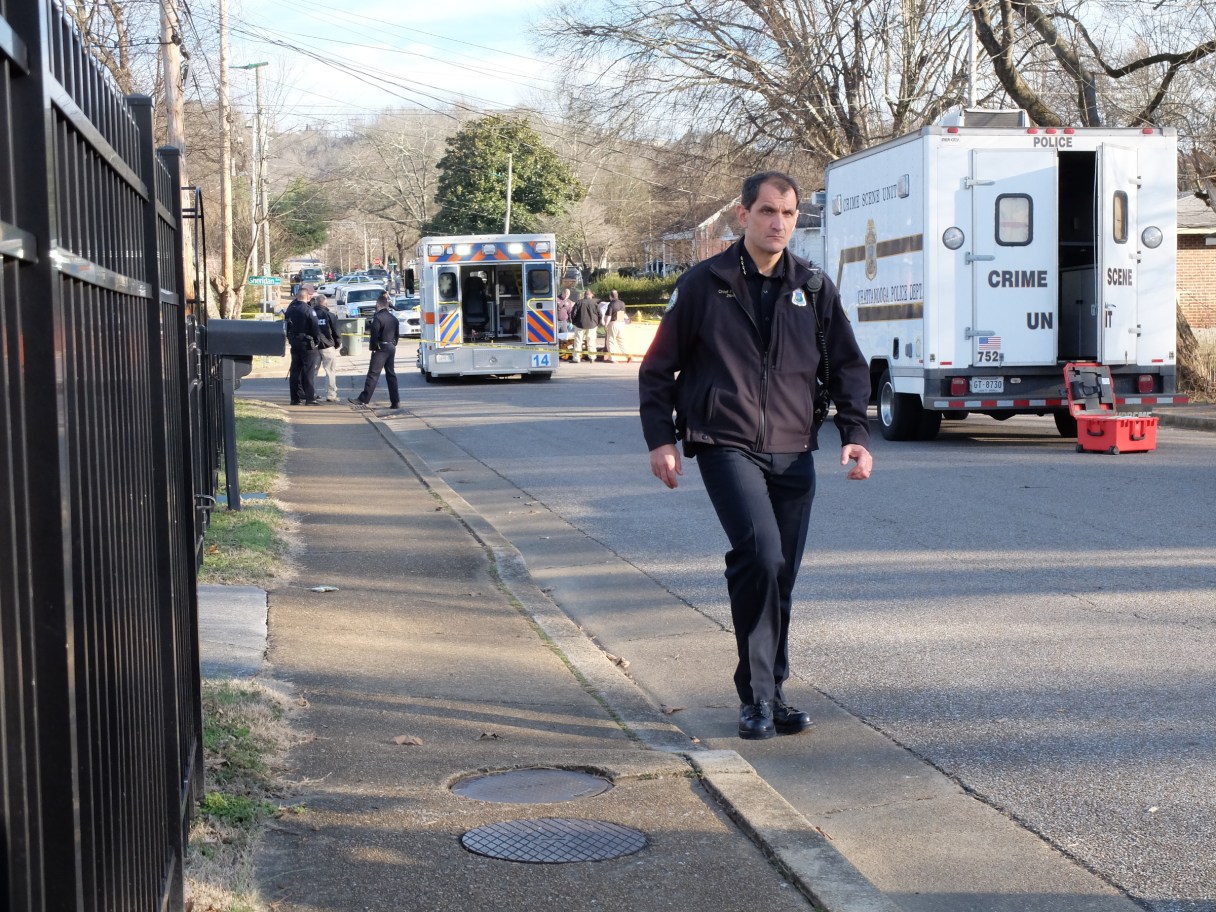

The Chattanooga Police Department has tried practically everything to recruit minority – and especially black – job candidates. Everything, that is, except paying people to recommend such candidates. Now, the department’s going to do that, too.
“People are motivated by financial incentive,” Police Chief Fred Fletcher said. “Let’s just pay people who can help us meet our goal, which is to increase diversity.”
People are paid rewards to turn in criminals. Teachers have been given financial incentives for teaching certain subjects and living in poor neighborhoods. Businesses pay headhunter agencies to help them find the best employees.
Complete details of the police department program aren’t available, but the department is expected to pay tipsters $500 if the potential candidate joins an academy.
“We’re trying everything,” City Councilman Moses Freeman said. “We’ve got to get the number of African-American police up significantly, and I think this is a great way to do it.”
A diverse police force, one that more closely resembles the population of the city, is ideal. It helps those who come in contact with the police feel more comfortable when the officers look more like them.
However, achieving such a goal, no matter how much it’s been desired – and it’s been desired for decades – has been elusive.
According to Times Free Press archives:
‘ August 1998: Blacks make up 33.40 percent of Chattanooga’s population but only 22.1 percent of the police force. Police Chief Jimmie Dotson wants more minorities on the force. “The chief said he wants quality first and diversity to follow that,” says department spokesman Ed Buice.
‘ June 2003: Blacks comprise about 27 percent of the department’s sworn officers. Dotson says he hopes a law enforcement program with the Hamilton County Department of Education and less restrictive age requirements can help recruit more black officers. “We just can’t seem to attract black applicants,” he says.
‘ March 2004: Blacks make up about 36 percent of the city’s population, but, according to a 2003 diversity report, only 20 percent of the police force. New Police Chief Steve Parks says there are no short-term fixes to the problem and the department must put more focus on recruiting more black officers.
‘ November 2004: Police Executive Chief Freeman Cooper says the department is reaching out to area colleges and community centers, and with a $30,000 radio advertising campaign to minorities who might be interested in police jobs.
‘ January 2005: Only 90 of the police department’s 447 officers (20.1 percent) are black, an increase of only 12 officers from 1978, according to Black Police Officers Association chapter spokesman Sgt. John Carter. However, the percentage is the second highest among the state’s largest cities.
‘ June 2007: Records show 20 percent of the department’s members are black, but the department has 60 vacant positions. Police Chief Freeman Cooper says “diversity is always an issue with recruitment” but adds the department must compete with public and private agencies for applicants so it is “not always successful simply because of that competition.”
‘ January 2008: Cooper says the department has “never been able to recruit to the degree we would hope, as far as minorities.”
‘ July 2010: Chattanooga is 35 percent black, according to the U.S. Census Bureau, but the police department is 15 percent black. Sgt. Derrick Stewart, president of the local chapter of the Black Police Officers Association, says a combination of retirements, resignations and fewer minorities graduating from the academies has depleted the ranks but that most of the department’s recruiting efforts have been unproductive. New Police Chief Bobby Dodd says one of his goals is to increase the number of black officers and other minorities on the force.
‘ February 2012: Records show the number of minority officers in the police department is the highest – including 81 black officers, or 18.8 percent of the total – it has been in at least five years, though the city population is 34.9 percent black. Dodd says he has recruited minorities across the country, members go to colleges to look for recruits and he has invited local pastors to send him promising candidates (though none have been submitted).
‘ June 2015: Blacks make up 23.3 percent of the 592-person department’s sworn and civilian employees, according to records.
‘ January 2016: While Chattanooga is 35 percent black, blacks represent 17.3 percent of sworn officers on the police force.
Discounting the possibility that reports over the years used different sets of numbers, it’s nevertheless evident a generation of focused minority recruitment by the Chattanooga Police Department has failed to move the needle very much. It’s also clear that police chiefs both white and black have desperately sought minority candidates and attempted to use a variety of efforts to recruit them.
Policing is dangerous, does not pay as well as many private-sector jobs, and is a job that involves a great deal of hassle. But it’s respectable work, vital for the community and can give one a sense of self-worth.
We should hope Fletcher’s idea is so successful – and creates actual applicants – that he has to ask for more money.