
Monday, November 16, 2026Nov 16

Court OKs trial for girl who texted boyfriend urging suicide

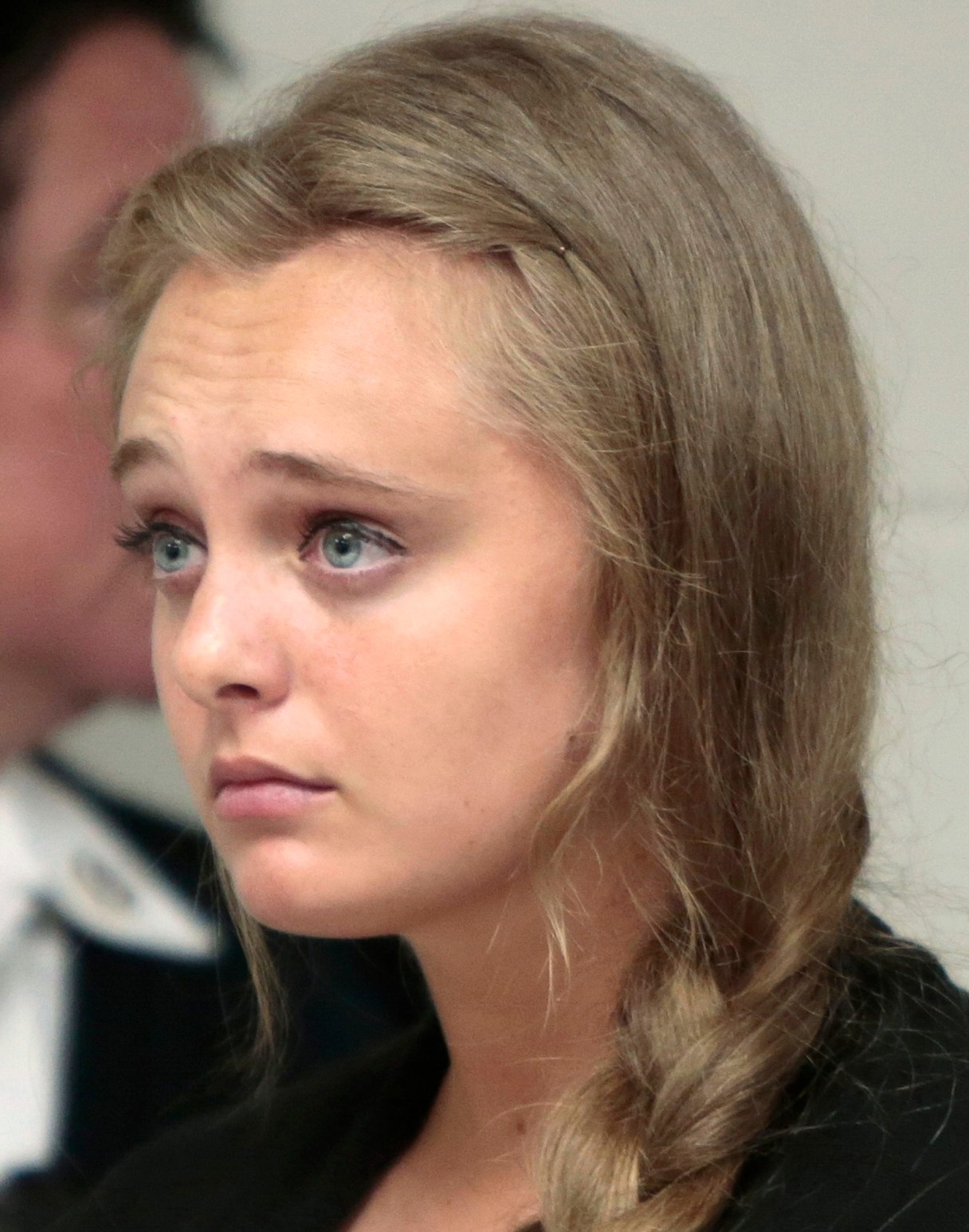
FILE - In this Aug. 24, 2015, file photo, Michelle Carter listens to defense attorney Joseph P. Cataldo argue for an involuntary manslaughter charge against her to be dismissed at Juvenile Court in New Bedford, Mass. Carter, a teenager from Plainville, Mass., is charged with involuntary manslaughter in the 2014 death of Conrad Roy III. The Massachusetts Supreme Judicial Court ruled Friday, July 1, 2016, Carter must stand trial on a manslaughter charge for encouraging Roy to kill himself by sending him dozens of text messages and telling him to "get back in" a truck filled with carbon monoxide fumes. (Peter Pereira/Standard Times via AP, Pool, File) MANDATORY CREDIT

BOSTON (AP) – A teenage Massachusetts girl who sent her boyfriend dozens of text messages encouraging him to take his own life and who allegedly told him to “get back in” a truck filled with carbon monoxide fumes must stand trial for involuntary manslaughter, the state’s highest court ruled Friday.

The Supreme Judicial Court ruled Friday that a grand jury had probable cause to indict Michelle Carter, then 17, in the 2014 death of Carter Roy III, 18.

Carter’s lawyer had argued that her texts were free speech protected by the First Amendment and did not cause Roy to kill himself.

But the court, in a strongly worded decision, said the grand jury heard evidence suggesting that Carter engaged in a “systematic campaign of coercion” that targeted Roy’s insecurities and that her instruction to “get back in” his truck in the final moments of his life was a “direct, causal link” to his death.

“In sum, we conclude that there was probable cause to show that the coercive quality of the defendant’s verbal conduct overwhelmed whatever willpower the eighteen year old victim had to cope with his depression, and that but for the defendant’s admonishments, pressure, and instructions, the victim would not have gotten back into the truck and poisoned himself to death,” Justice Robert Cordy wrote for the court in the unanimous, 7-0 ruling.