
Saturday, November 14, 2026Nov 14

Toxic algae bloom swarms Utah Lake, seeps into farm supply

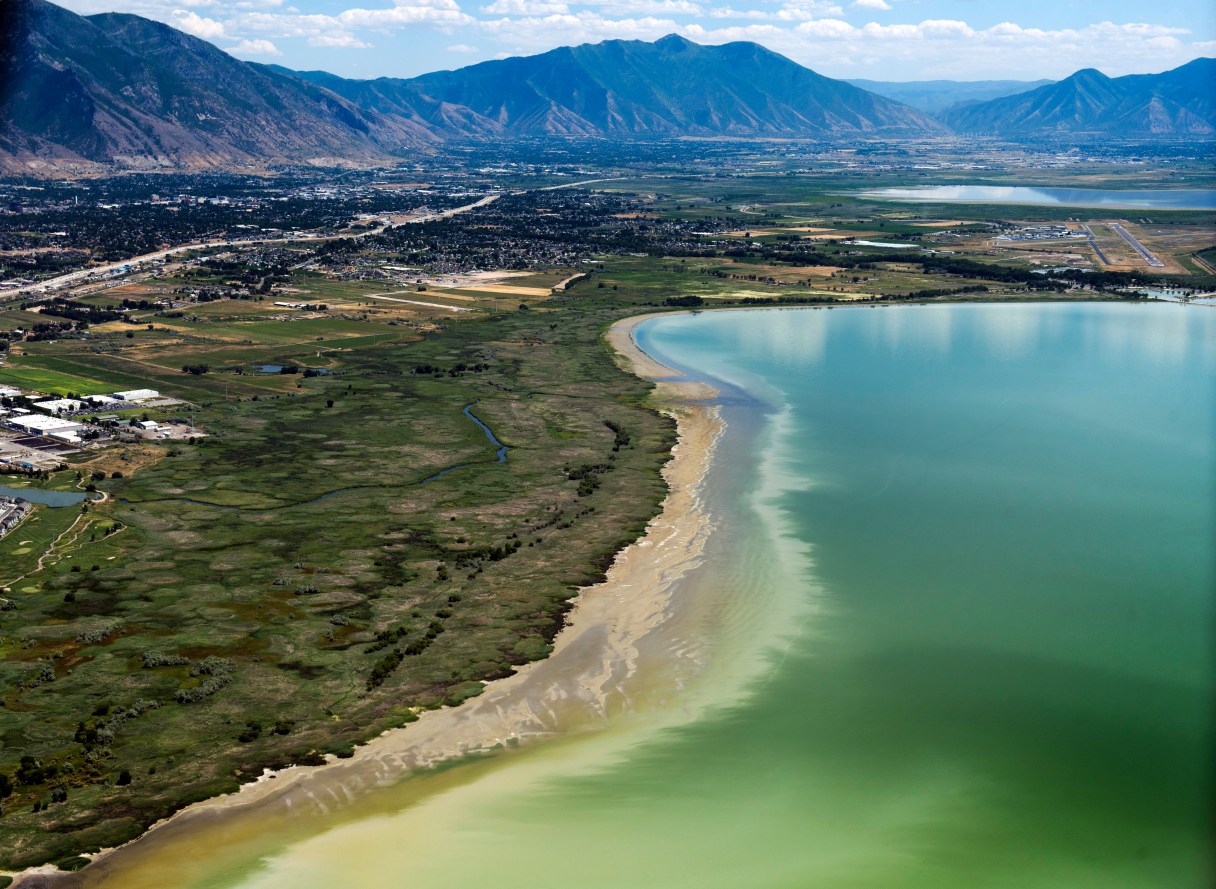
FILE - This July 14, 2016, file photo, shows discolored water caused by an algae bloom near the Lindon Marina in Utah Lake in Lindon, Utah. A huge toxic algal bloom in Utah has closed one of the largest freshwater lakes west of the Mississippi River, sickening more than 100 people and leaving farmers scrambling for clean water. The bacteria commonly known as blue-green algae has spread rapidly to cover almost all of 150-square-mile Utah Lake, turning the water a bright, anti-freeze green and leaving scummy foam along the shore. (Rick Egan/The Salt Lake Tribune via AP, File)

SPANISH FORK, Utah (AP) – A huge toxic algae bloom in Utah has closed one of the largest freshwater lakes west of the Mississippi River, sickening more than 100 people and leaving farmers scrambling for clean water for days during the hottest part of the year.

The bacteria commonly known as blue-green algae has spread rapidly to cover almost all of 150-square-mile Utah Lake, turning the water bright, anti-freeze green with a pea soup texture and leaving scummy foam along the shore.

“It smells like something is rotting,” said Jason Garrett, water quality director for the Utah County Health Department. “We don’t have an idea of how long this event will last.”

Toxic algae is a problem around the country. An enormous outbreak in Florida is now fouling beaches on the Atlantic coast, and a 2014 outbreak at Lake Erie left more than 400,000 people in the Toledo area without tap water for two days.

Utah Lake doesn’t provide drinking water, but its closure has caused big problems for people who use the lake for swimming, fishing and other activities and for farmers with thirsty crops.