
Monday, November 16, 2026Nov 16

ASEAN split on how to deal with China in South China Sea row

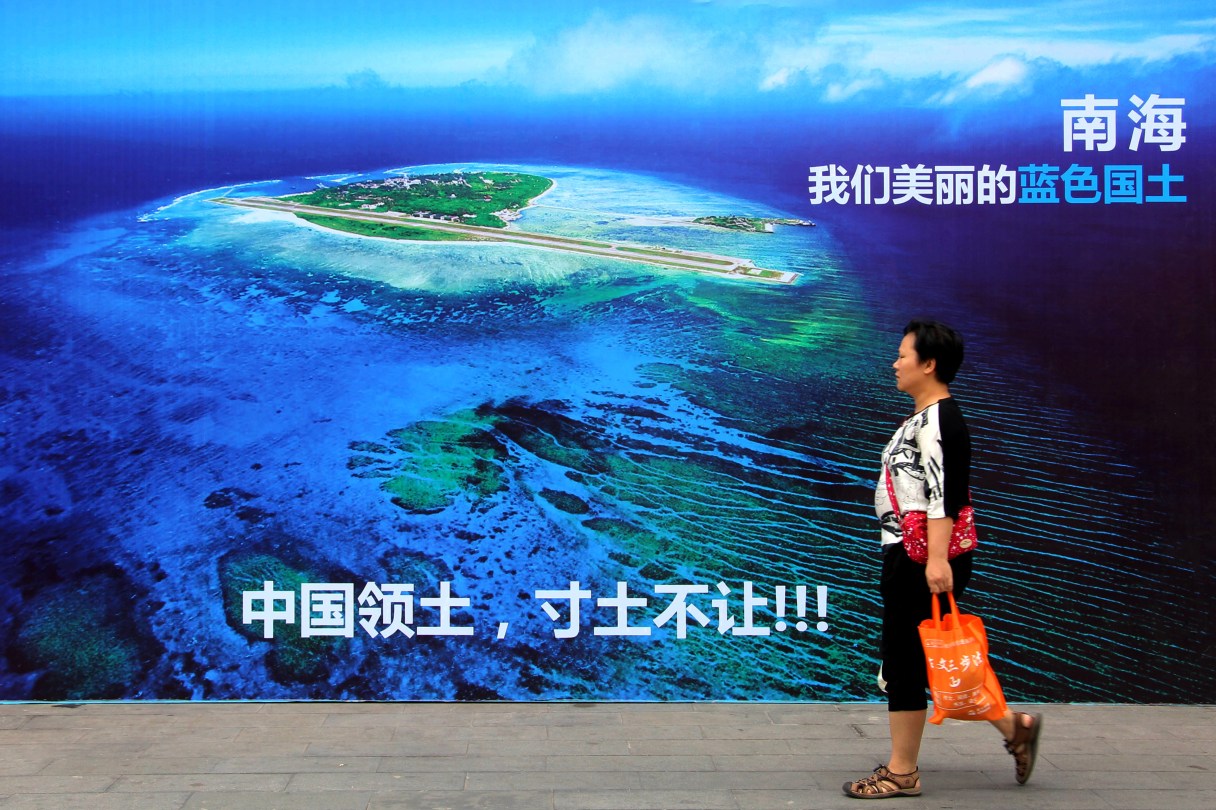
FILE - In this July 14, 2016 file photo, a woman walks past a billboard featuring an image of an island in South China Sea on display with Chinese words that read: "South China Sea, our beautiful motherland, we won't let go an inch" in Weifang in east China's Shandong province. An international arbitration panel’s decision on the contested waters of the South China Sea so far is fueling regional tensions rather than tamping them down. In the ensuing 11 days, China has responded to the sweeping victory for the Philippines by flexing its military might. The Philippines faces pressure both at home and abroad not to cede an inch to China after the July 12 decision by a tribunal at The Hague-based Permanent Court of Arbitration. (Chinatopix via AP, File)

VIENTIANE, Laos (AP) – For 49 years, the unity of Southeast Asia’s main grouping has hinged on its founding principle: decisions by consensus. But that cardinal rule is now proving to be the biggest headache for its members, who began important meetings this weekend deeply divided on how to deal with China’s territorial expansion in the South China Sea.

The foreign ministers of the 10 members of the Association of Southeast Asian Nations gather Sunday for talks that are expected to focus on the July 12 decision by The Hague-based tribunal in a dispute between China and the Philippines. The Permanent Court of Arbitration found that China had no basis for its expansive claims to territorial waters around the Philippines. China has similar claims against other ASEAN nations, including Vietnam and Malaysia, and the ruling should have emboldened the grouping to challenge Beijing more forcibly.

One avenue for ASEAN to show its teeth is through a joint statement.

Easier said than done, however, with the nagging consensus principle getting in the way. Laos, which has assumed the rotating chairmanship of ASEAN this year, is a staunch China ally and is unlikely to allow an open slap by other regional colleagues on a trusted friend. By its side is Cambodia, another China ally.

Including a reference to the tribunal’s ruling in the final communique “is a difficult issue that requires efforts of all parties,” said Tran Viet Thai, deputy director of the Institute of Strategic Studies, a Vietnamese government think-tank.