
Monday, November 9, 2026Nov 9

Rare mass killing raises questions about security in Japan

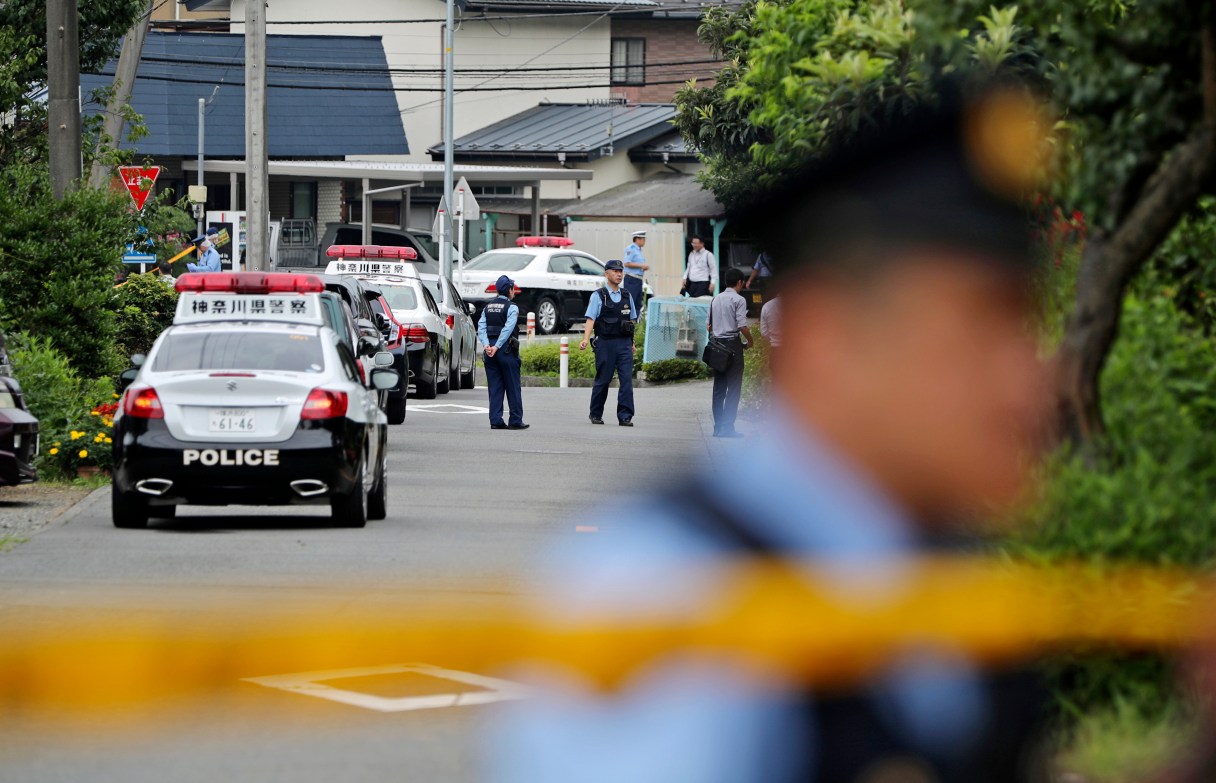
Police officers stand guard at a crossroad near the Tsukui Yamayuri-en, a facility for the mentally disabled where a number of people were killed and dozens injured in a knife attack in Sagamihara, outside of Tokyo, Japan, Tuesday, July 26, 2016. A young Japanese man went on a stabbing rampage Tuesday at the facility where he had been fired, officials said, killing many people months after he gave a letter to Parliament outlining the bloody plan and saying all disabled people should be put to death. (AP Photo/Eugene Hoshiko)
Police officers stand guard at a crossroad near the Tsukui Yamayuri-en, a facility for the mentally disabled where a number of people were killed and dozens injured in a knife attack in Sagamihara, outside of Tokyo, Japan, Tuesday, July 26, 2016. A young Japanese man went on a stabbing rampage Tuesday at the facility where he had been fired, officials said, killing many people months after he gave a letter to Parliament outlining the bloody plan and saying all disabled people should be put to death. (AP Photo/Eugene Hoshiko) Police officers stand guard at a crossroad near the Tsukui Yamayuri-en, a facility for the mentally disabled where a number of people were killed and dozens injured in a knife attack in Sagamihara, outside of Tokyo, Japan, Tuesday, July 26, 2016. A young Japanese man went on a stabbing rampage Tuesday at the facility where he had been fired, officials said, killing many people months after he gave a letter to Parliament outlining the bloody plan and saying all disabled people should be put to death. (AP Photo/Eugene Hoshiko)

TOKYO (AP) – The killing of 19 people at a home for the mentally disabled raised questions about whether Japan’s reputation as one of the safest countries in the world is creating a false sense of security.

The deadliest mass killing in Japan in the post-World War II era unfolded early Tuesday in Sagamihara, a city about 50 kilometers (30 miles) west of central Tokyo, when authorities say a former employee broke into the facility and stabbed more than 40 people before calmly turning himself in to police.

The suspect, identified as 26-year-old Satoshi Uematsu, had worked at the facility from 2014 until February, when he was let go. He wrote to Parliament outlining the bloody plan and saying all disabled should be put to death.

While not immune to violent crime, Japan has a relatively low homicide rate of well under one per 100,000 people. Mass killings usually are seen half a world away on the nightly news, although seven Japanese were among the dead in a recent hostage-taking in Bangladesh that targeted non-Muslims.

Because such massacres are rare, Japan has become overconfident about its safety, a Japanese criminologist said.