
Saturday, November 14, 2026Nov 14

Turks deepen purge, warn allies to extradite coup suspects

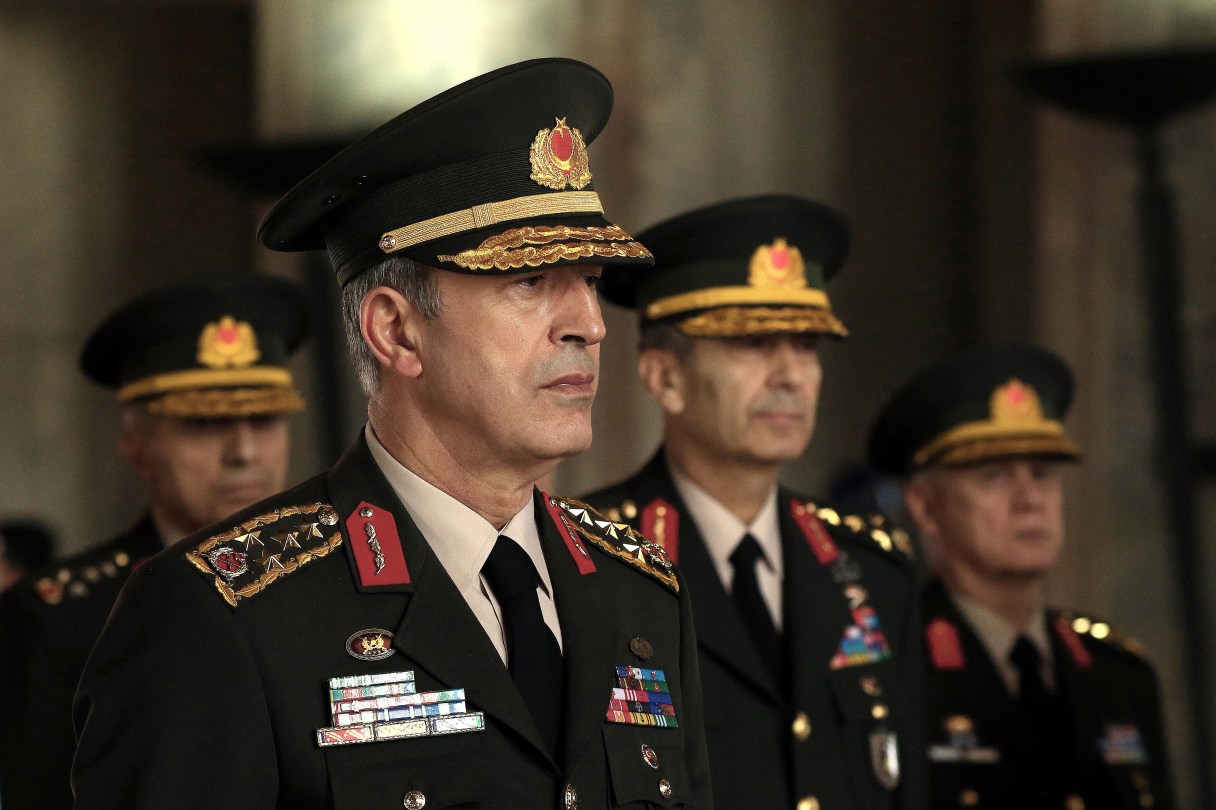
Chief of general staff General Hulusi Akar stands with other Military chiefs during a Supreme Military Council meeting with the Prime Minister Binali Yildirim at Ataturk's mausoleum in Ankara on July 28, 2016. The Supreme Military Council, gathering top commanders of NATO's second-largest army, met a day after Turkey discharged close to 1,700 officers — including 149 generals and admirals — suspected of involvement in the failed July 15 coup attempt. A senior Turkish official described the purges as "dishonorable discharge." (AP Photo/Ali Unal)

ANKARA, Turkey (AP) – Turkey was shaking up its armed forces Thursday with another anticipated wave of officer dismissals, while the government warned allies that diplomatic relations would suffer if they did not extradite suspects in the July 15 putsch.

The Supreme Military Council, representing the commanders of NATO’s second-largest army, met a day after Turkey discharged nearly 1,700 officers – including 149 generals and admirals – suspected of involvement. A senior Turkish official described the actions as “dishonorable discharges.”

The council, which determines promotions and retirements, met for five hours Thursday under the chairmanship of Prime Minister Binali Yildirim. Two generals resigned as the meeting debated what were expected to be another round of dismissals.

Turkey has declared a state of emergency following the failed coup that caused 290 deaths. Its clampdown seeks to target anyone suspected of ties to U.S.-based Muslim cleric Fethullah Gulen, whom the government accuses of masterminding the plot.

Nearly 16,000 people were detained over alleged links to the uprising, about half of whom were formally arrested to face trial.