
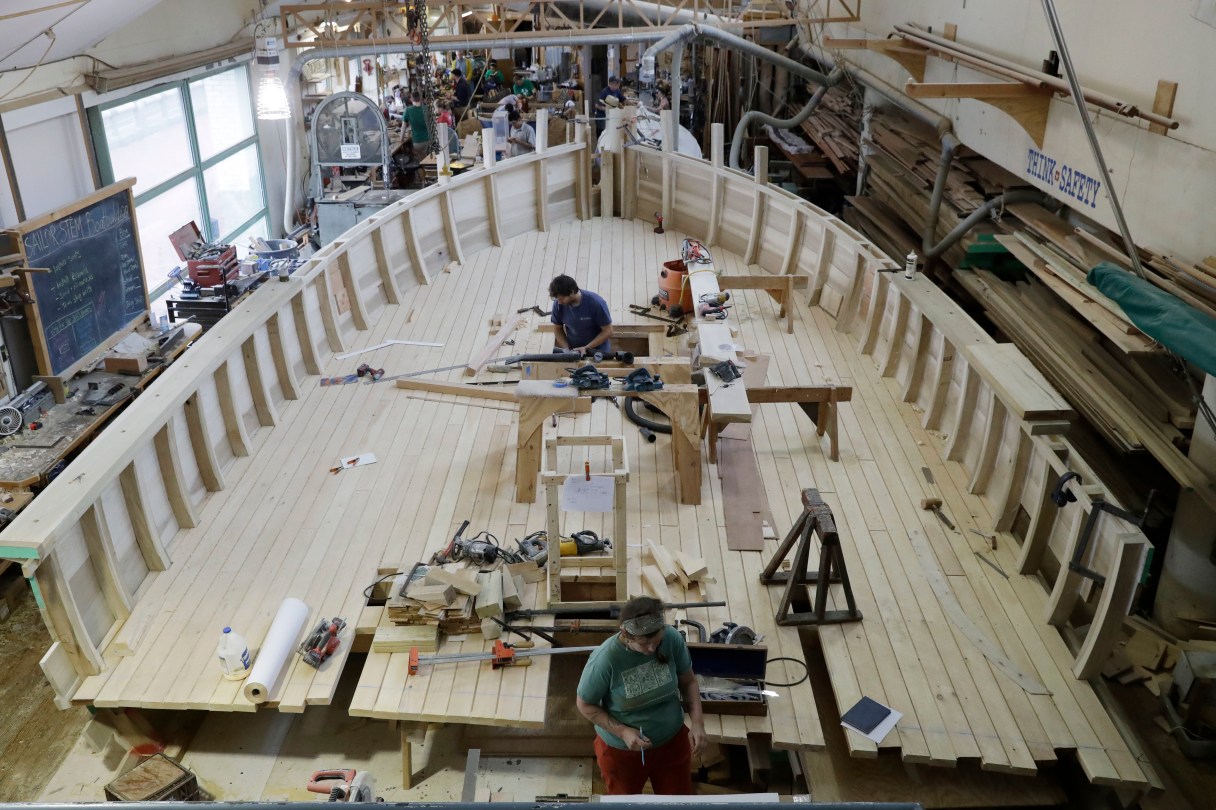
PHILADELPHIA (AP) – Visitors to the birthplace of America can soon climb aboard a life-size Revolutionary era privateer ship in the heart of the city’s historic district, while staying firmly planted on land.
Builders working with the Museum of the American Revolution in Philadelphia are crafting half of a ship – which at 45 feet can still impress in scope and scale – to invite visitors to learn a lesser known story of the Revolution through the lesser known 14-year-old James Forten.
The ship will act as one of the museum’s primary immersive exhibits, explore maritime involvement in the Revolution and highlight Forten, a free African-American boy who served on a privateer ship and later became a prominent abolitionist and wealthy Philadelphia businessman. The museum is set to open in April just two blocks from Independence Hall.
R. Scott Stephenson, museum vice president of collections, exhibitions and programming, said Forten “represents a founding generation” that spans ethnicities, backgrounds and ages.
Philadelphia’s Penn’s Landing was one of the major maritime ports during the Revolution, but Stephenson said “many don’t know African-American men and white men fought side by side on ships, and that they were probably the most integrated places in the (war) effort.”