
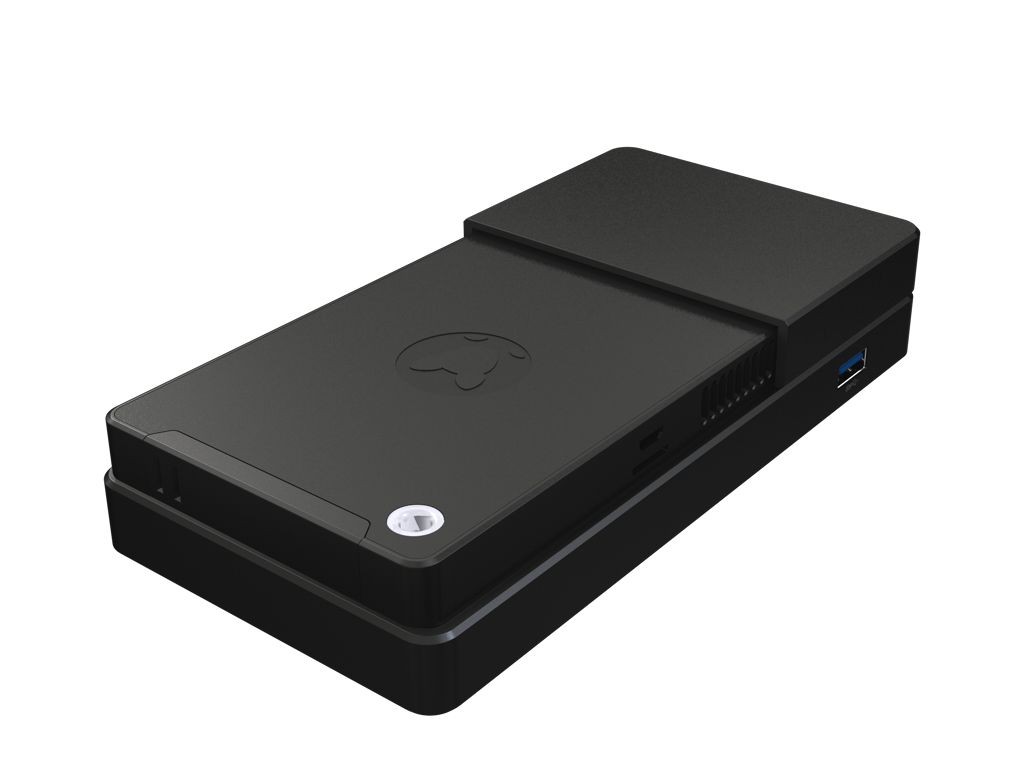
 The InFocus Kangaroo is workstation PC that fits in your pocket.
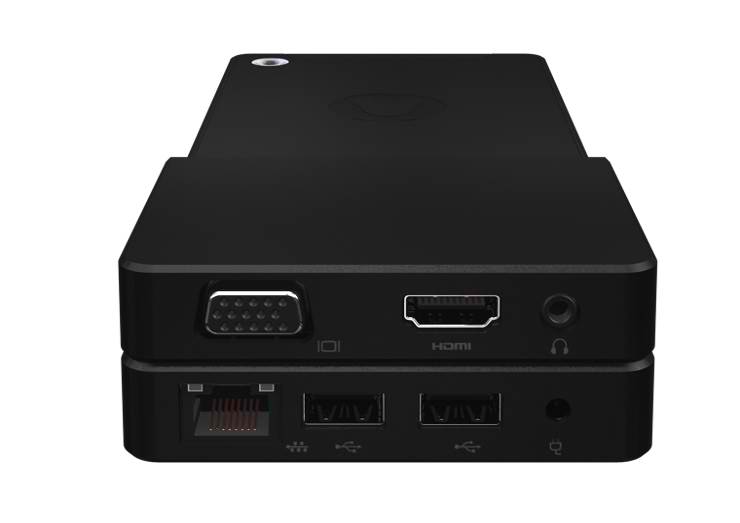 The InFocus Kangaroo is workstation PC that fits in your pocket.
For decades, the resounding war cry of the computing industry has been “faster and more compact,” but with recent forays into micro-computing, some companies are taking small to a whole new level.
In the 1950s, early computer workstations such as the Univac 1 comprised thousands of vacuum tubes, weighed more than a dozen metric tons and consumed more than 100 kilowatts of power. These days, most desktop PCs are exponentially faster, weigh about as much as a welterweight bowling ball and sip electricity instead of guzzling it.
Recently, manufacturers have begun experimenting with even smaller devices – dubbed mini- or micro-PCs – that offer a pared-down computing experience in a svelte form factor no larger than a pack of cards.
InFocus, a Portland, Ore.-based company best known for its projectors and touch screens, recently released the Kangaroo Mobile Desktop, a $200 device billing itself as “the most versatile mini-PC you can imagine.” The Kangaroo runs the full 64-bit Windows 10 operating system but weights less 14 ounces.
Like all micro-PCs, the Kangaroo must be connected to an external display to function, but unlike its minuscule competitors, it is self-powered via a built-in, rechargeable battery good for up to four hours of “casual use.” For a truly mobile experience, users can even deploy an iPad as their display by connecting it via a Lightning cable and running the free OSLinx virtualization app.