
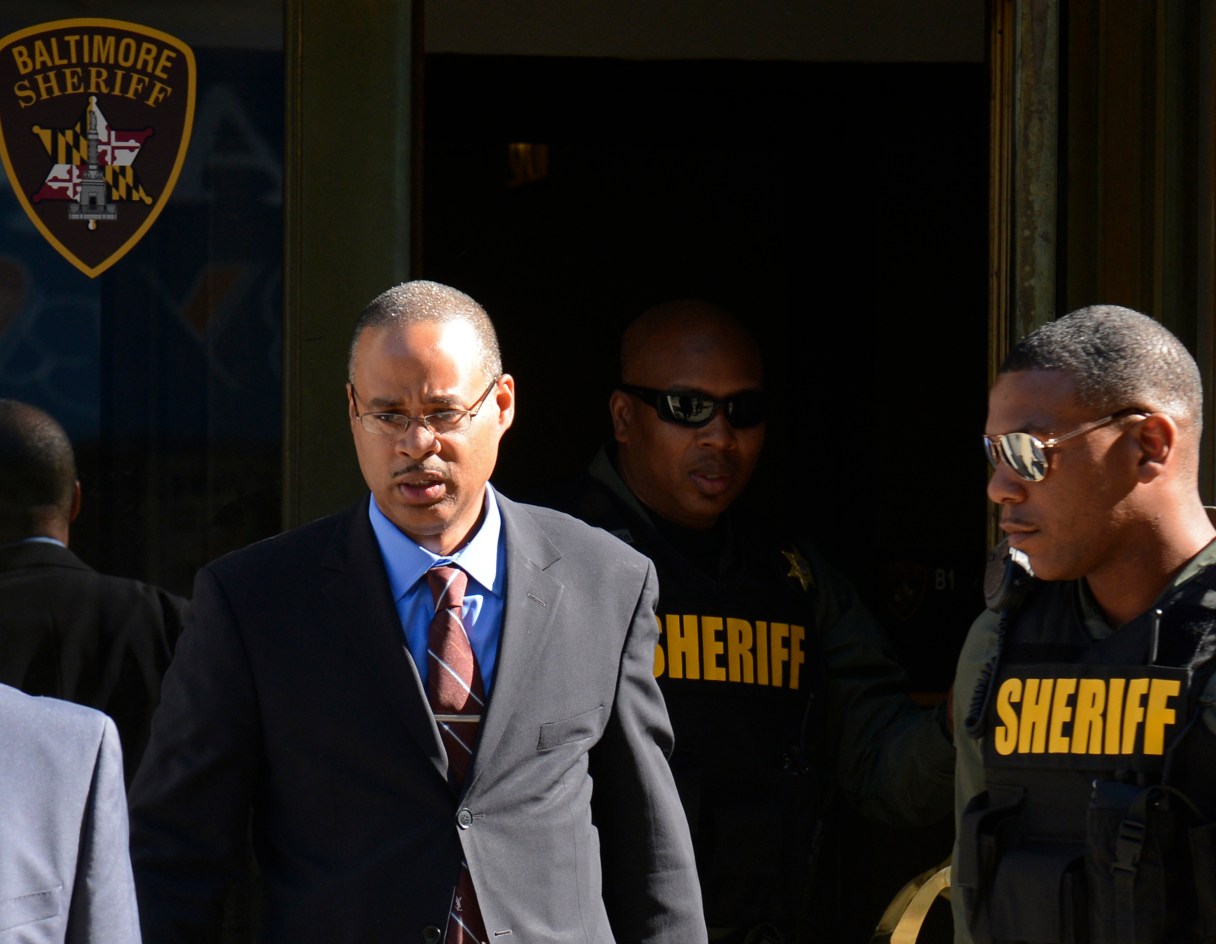
BALTIMORE (AP) – Prosecutors introduced a new theory as a murder trial started for a police van driver charged in the death of Freddie Gray, a black man whose neck was broken in the back of the wagon.
Not only was Officer Caesar Goodson negligent when he didn’t buckle Gray into a seat belt, prosecutors said, he intentionally wanted to injure Gray by giving him a “rough ride” – blowing through a stop sign and making a sharp turn at such a high speed that he crossed a double yellow line. Gray – his hands cuffed and his legs shackled – was thrown helplessly against the rear compartment, the prosecutor said.
Goodson, 46, is facing second-degree murder, manslaughter, assault and other charges. Over the past year, prosecutors had hinted that Gray was subjected to such treatment. But the accusation during opening statements Thursday was the first time they said the driver meant to hurt Gray, whose death in April 2015 touched off the worst riots in Baltimore in decades.
A “rough ride” is police lingo for teaching someone a lesson by putting him in a police wagon without a seat belt and driving so erratically that he is thrown around.
Chief Deputy State’s Attorney Michael Schatzow said the state will produce a video to help prove their case, but introducing the new theory was surprising, experts said.