
Tell them what you think
Hey, citizens: You can email commissioners here: http://www.hamiltontn.gov/commission/EmailForm.aspx
When did talking become so difficult?
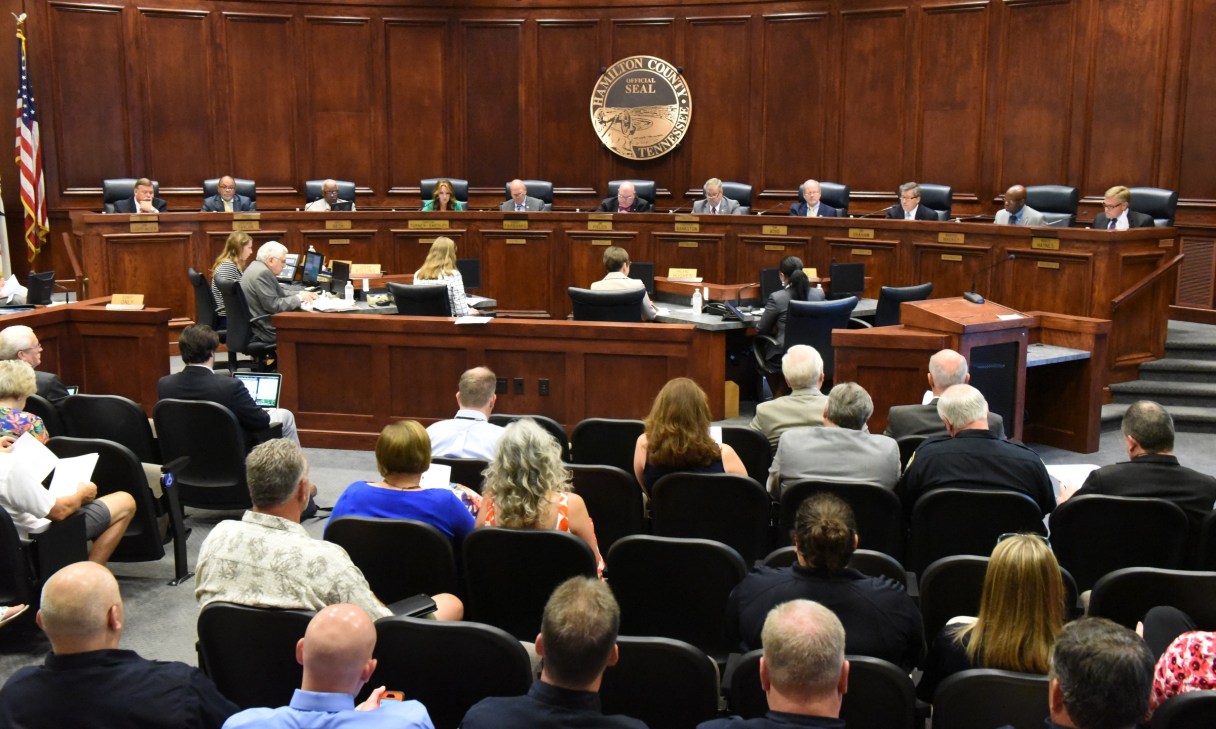
That’s the chief question Hamilton County taxpayers need to be asking our county commissioners, who apparently have forgotten how to have an open discussion in front of us about how to spend our money.
Especially when the spending of our money concerns the commissioners’ slush funds – otherwise known as their discretionary funds for “special projects.”
Traditionally, the county has budgeted $100,000 a year for each of the nine commissioners – almost $1 million when you add it all up. Commissioners, with these “project” funds, can choose to finance something for a local group or PTA or neighborhood and thus curry favor or gain name recognition to store away for the next election.
But Mayor Jim Coppinger left the commissioners’ special project money out of last year’s budget proposal and did so again for 2017.
Last year, six of the nine commissioners voted slickly to take the money for discretionary funds out of county savings and add the discretionary funds back into the budget. Mayor Coppinger then vetoed the amended budget. The same six commissioners overruled his veto. The six were Chester Bankston, Tim Boyd, Warren Mackey, Sabrena Smedley and Jim Fields. All but Mackey are Republicans who claim to be fiscal conservatives.
This year, rather than discuss the controversial discretionary funds and the expenditure of our money in an open debate during a regular, open meeting, Commissioner Boyd in a finance committee meeting in early May said he would ask the commissioners’ legislative assistant to send emails to the other commissioners so he could gather their opinions about the budgeting of discretionary funds.
Boyd said the proposed emails did not amount to a violation of the Tennessee Open Meetings Act because no deliberation would take place electronically. He said the public could review the emails upon request.
Now, in response to a Times Free Press request for those emails, Commission Chairman Bankston said the emails never happened because of concerns that they would violate the state’s Open Meetings Act, also known as the Sunshine Law.
This is the commission that regularly communicates in private via cellphone and texts even while on the dais during so-called public meetings.
Really, folks. Why is it so hard for our commissioners to just open their mouths and talk in front of us about what they want to do with our money – our property tax, sales tax, business license tax money? Our car tag fees, our court fines, our permit fees?
Our money.
Tell us, commissioners: If you had already written a $100,000 check to a home builder or a landscaper or an investment manager, would you not expect that employee to talk with you about how you want the money spent?
Would you be comfortable with your builder just sending emails about it to other subcontractors and telling you to file a freedom of information request if you want to know more?
When did becoming county commissioners give you the right to become so arrogant that you need not use the county commission room dais and microphones for your discussions? Instead, you’d rather pass notes and emails or texts or even carry on in blatant hushed cellphone conversations.
And when the Times Free Press requests your emails about the discretionary funds or other county business pertaining to the public’s money, commissioners pretend to be victims. Victims of the press and the law, claiming that they think the Sunshine law “prohibits frank discussion” among elected officials.
Nothing in the law prohibits any elected body from having a discussion. Its sole purpose is to ensure that the discussion is public – not secret – so citizens can know what their elected officials are contemplating and planning and doing with public money – our money.
Clearly, many of our Hamilton County commissioners are not comfortable talking where citizens can hear them, or where reporters will write what they say so the public unable to attend their week-day, work-hours meetings can read what they say.
“The Sunshine Law stinks. We ought to be able to talk. I’ve suggested time and time again that we talk, and that we don’t get to the point where we look like we’re so divided up here,” Commissioner Greg Beck said last year in another show of disdain for public openness.
The Sunshine Law doesn’t prohibit elected officials from talking – whether they agree or disagree or talk through an issue to a compromise. It just requires that our leaders make their discussions in public, in front of the people who pay them and who fund their budgets.
That’s really not too much to ask.
And, commissioners: You should know that when you seek some secret way to pass notes, texts, emails, phone calls and the like, it just makes you look like you have something to hide. Do you?
Why don’t you ask the public to send you some emails on that question?