
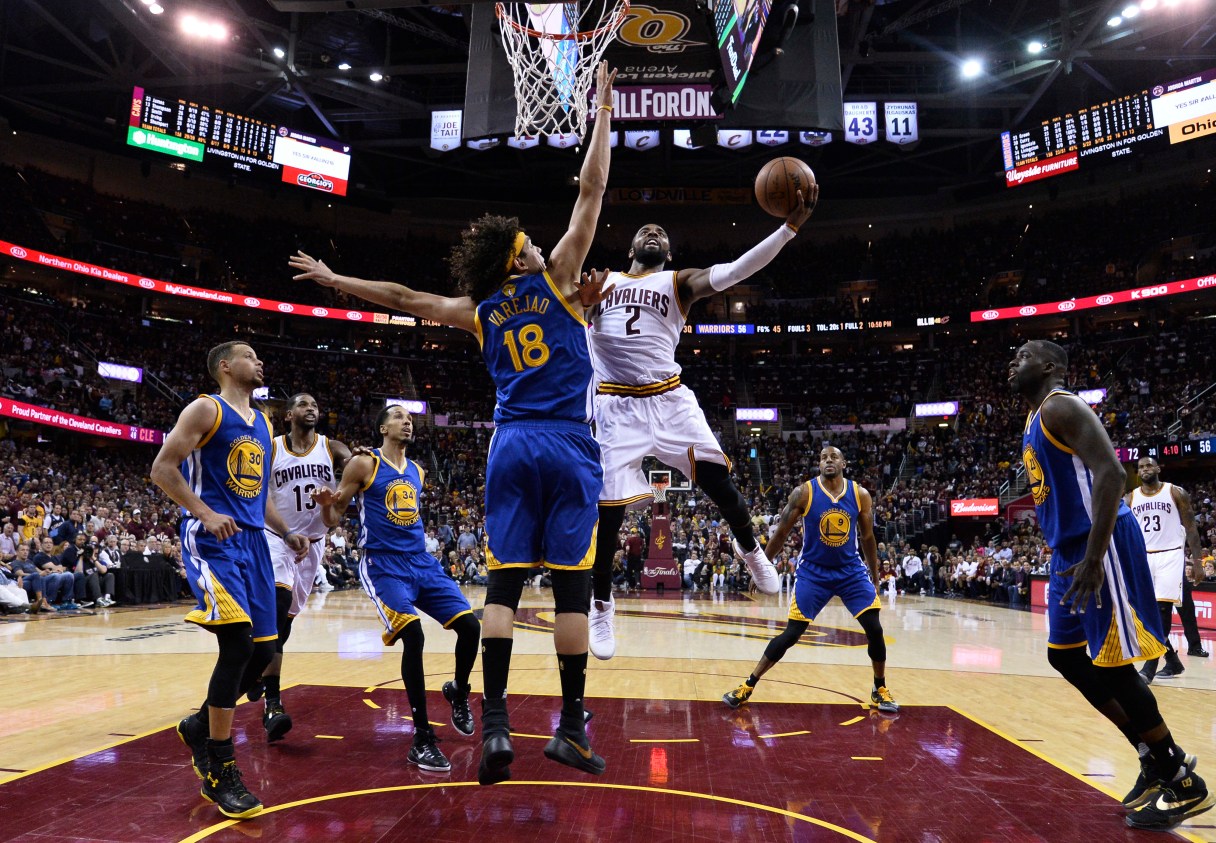
NEW YORK (AP) – A line snaked out the door Wednesday night at Finnerty’s, a Manhattan bar that bills itself as the “Home for Bay Area Sports.” A man in an Andre Iguodala jersey waited to get in to watch Game 3 of the NBA Finals and join the fellow Golden State Warriors fans packed shoulder to shoulder, who gazed up at TVs and groaned in unison at an unfavorable call.
Nearly 16.5 million Americans watched the Cleveland Cavaliers win that night, according to the official number released by Nielsen. Or more precisely, almost 16.5 million watched from a home. For now, those bar patrons aren’t counted in the total for the NBA Finals or any of this month’s other major events that draw a lot of out-of-home viewing, from hockey’s Stanley Cup Final to soccer’s European Championship and Copa America.
Also not counted is the fitness buff who follows the action on the TV attached to a treadmill at the gym, headphones plugged in. Or those diehards at the outdoor viewing parties the networks love to cut to after a big play.
That could change soon – a step that can’t come quickly enough for sports broadcasters. Last month, ESPN used the spotlight of its annual presentation to advertisers to announce it would utilize Nielsen’s service to measure out-of-home viewers. The message was clear: The company wanted marketers to know it believes Nielsen’s current numbers vastly underestimate much of its viewership. And more viewers, of course, would mean higher rates.
For ESPN in particular, the possibility of greater ad revenue can help offset the loss of subscribers. But for every network invested heavily in live sports rights – not to mention other programs that attract a lot of out-of-home viewers – this additional measurement is greatly anticipated.