
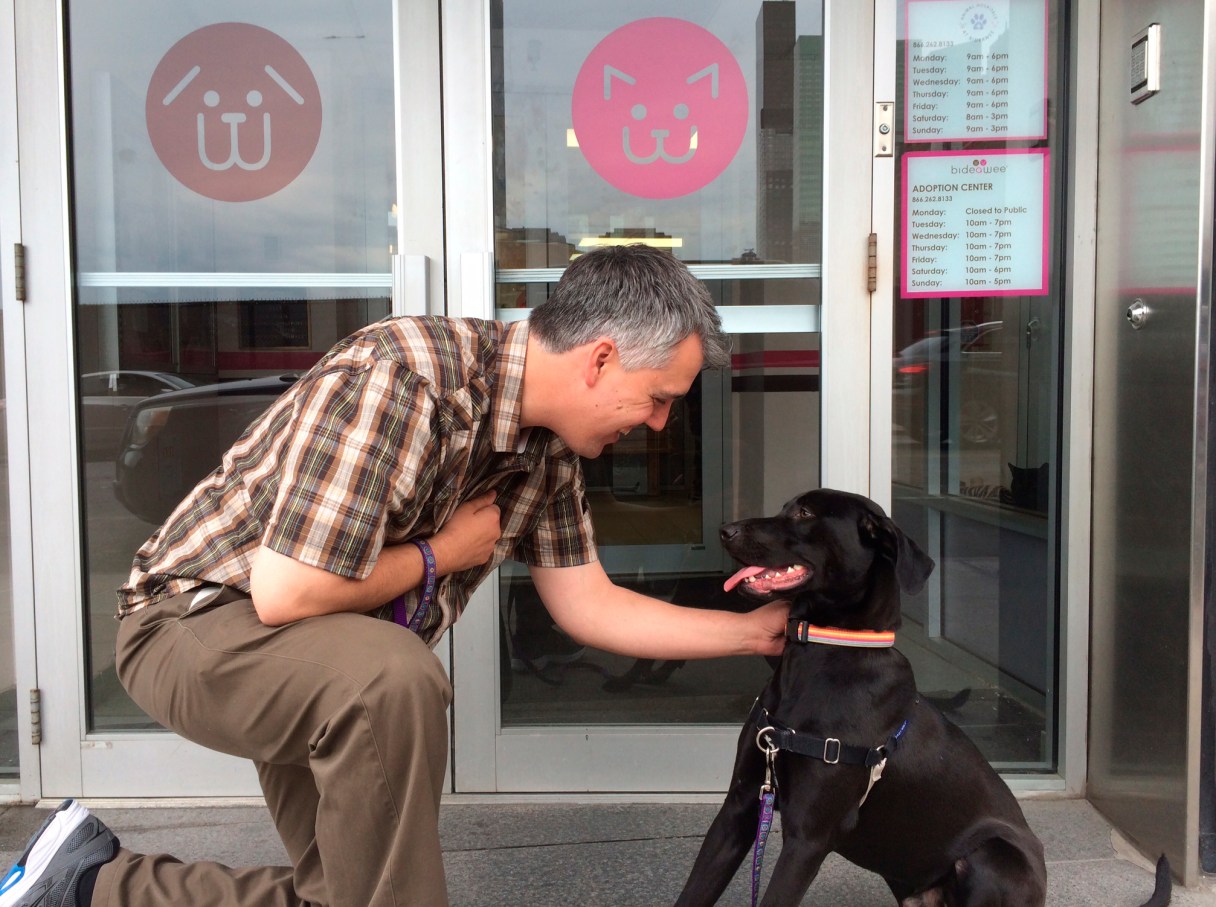
 Clay, a 9-month-old black lab mix, plays with a ball at Robert Moses playground in New York. Clay has been at Bideawee no-kill shelter in Manhattan since October. Staff work with him every day, socializing him with other animals and keeping him active and engaged. (Mark McQueen via AP)
The middle-aged woman had brought a friend with her to the animal shelter for moral support. They sat together on a bench, soft-spoken and red-eyed.
Clay, a strapping 9-month-old black lab mix, lay panting at their feet, lunging to his tiptoes with high-pitched barks when another dog walked into the lobby.
“I just don’t know what to do with him,” his owner told Mike Rueb, the longtime trainer and associate director of adoptions and resident care at Bideawee, a 112-year-old no-kill shelter in Manhattan. “He’s just too much for me to handle.”
Each year, approximately 7.6 million animals end up in a shelter, according to the American Society for the Prevention of Cruelty to Animals (ASPCA). Nearly 3 million of them are euthanized.
Most municipal shelters are so-called “kill” shelters, meaning that when they need to make room for new arrivals, they put down otherwise healthy animals. No-kill shelters like Bideawee offer an alternative for animals whose owners cannot care for them. They typically treat sick, injured or older animals to ready them for a new home. They also offer training.