
Saturday, October 31, 2026Oct 31

This story is free to read.

The Latest: Coral bleaching likely to last through 2016

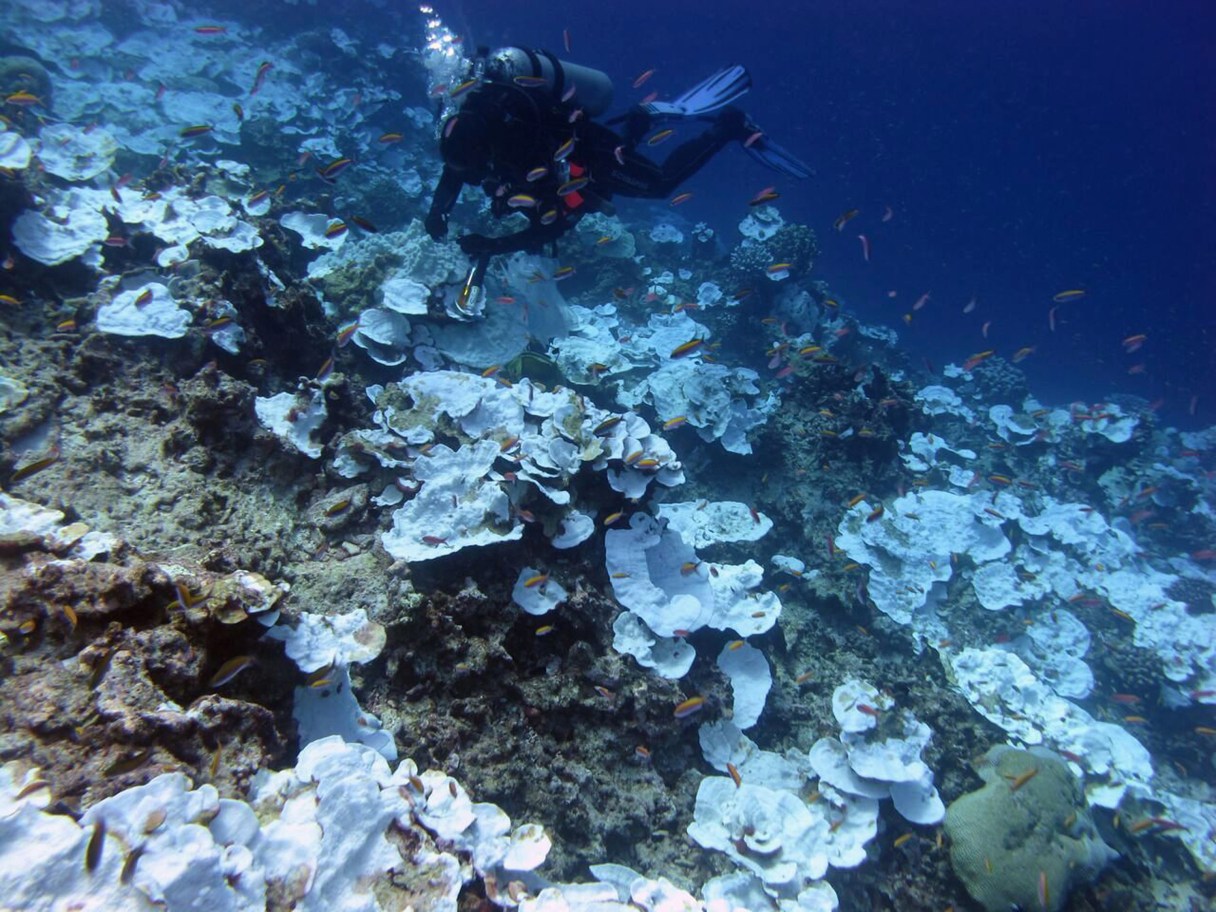
This May 2016 photo provided by NOAA shows bleaching and some dead coral around Jarvis Island, which is part of the U.S. Pacific Remote Marine National Monument. Scientists found 95 percent of the coral is dead in what had been one of the world’s most lush and isolated tropical marine reserve. More than 2,000 international reef scientists, policymakers and stakeholders are gathering in Hawaii starting Monday, June 20, 2016, to discuss the latest coral science and what can be done to stop widespread death of the world's reefs.  (Bernardo Vargas-Angel/NOAA via AP)
This May 2016 photo provided by NOAA shows bleaching and some dead coral around Jarvis Island, which is part of the U.S. Pacific Remote Marine National Monument. Scientists found 95 percent of the coral is dead in what had been one of the world’s most lush and isolated tropical marine reserve. More than 2,000 international reef scientists, policymakers and stakeholders are gathering in Hawaii starting Monday, June 20, 2016, to discuss the latest coral science and what can be done to stop widespread death of the world's reefs. (Bernardo Vargas-Angel/NOAA via AP) This May 2016 photo provided by NOAA shows bleaching and some dead coral around Jarvis Island, which is part of the U.S. Pacific Remote Marine National Monument. Scientists found 95 percent of the coral is dead in what had been one of the world’s most lush and isolated tropical marine reserve. More than 2,000 international reef scientists, policymakers and stakeholders are gathering in Hawaii starting Monday, June 20, 2016, to discuss the latest coral science and what can be done to stop widespread death of the world's reefs. (Bernardo Vargas-Angel/NOAA via AP)

HONOLULU (AP) – The Latest on consecutive years of global coral bleaching, which has led to widespread mortality of reefs (all times local):

11 a.m.

Federal officials say global coral bleaching that began in 2014 with a super-charged El Nino is ongoing, and now the longest-lasting and largest such event ever recorded.

National Oceanic and Atmospheric Administration officials announced Monday the bleaching is expected to continue through 2016, its third year. Bleaching is a sign of stress after dramatic environmental change.

While forecasters predict a change from a warm El Nino to cooling La Nina conditions this year, the impacts of the warmer waters over the past two years is taking its toll.

NOAA officials say Palau and other Pacific islands in Micronesia face the biggest threats. Those islands are dependent on reefs for sustenance and tourism.

The International Coral Reef Symposium began Monday in Honolulu, where officials made the announcement.