
Monday, November 16, 2026Nov 16

APNewsBreak: Railroad blamed for fiery oil train derailment

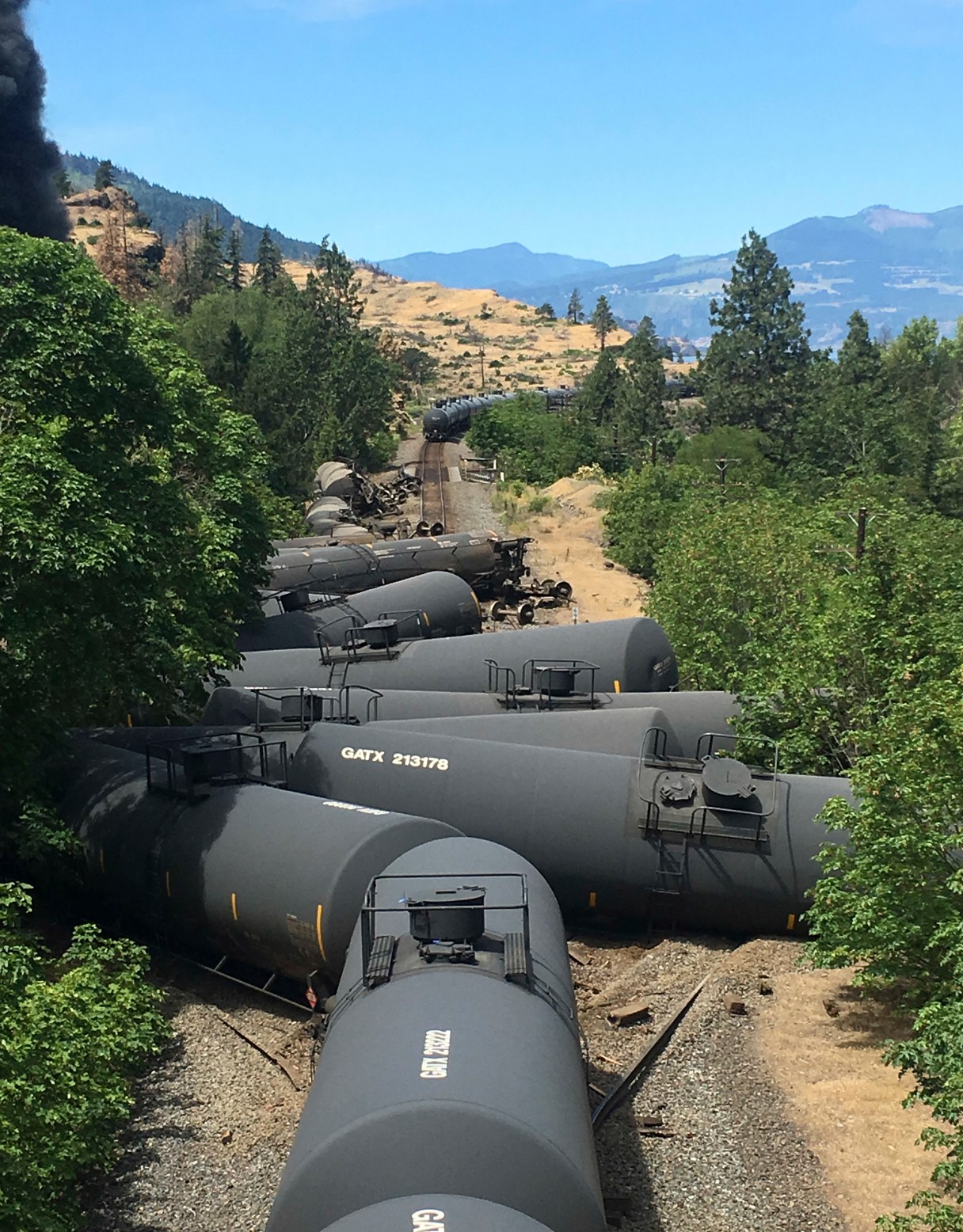
FILE - In this June 3, 2016, file photo provided by Silas Bleakley, tank cars carrying oil, are derailed near Mosier, Ore. Federal investigators on Thursday, June 23, 2016, blamed Union Pacific Railroad for the derailment along the Oregon-Washington border, saying the company failed to properly maintain its track. Preliminary findings on the derailment raise questions about why the company didn't find the broken bolts that triggered the wreck when it inspected the tracks right before the derailment. (Silas Bleakley via AP, file)

PORTLAND, Ore. (AP) – Federal investigators on Thursday blamed Union Pacific Railroad for a fiery oil train derailment along the Oregon-Washington border, saying the company failed to properly maintain its track.

Preliminary findings on the June 3 derailment in the Columbia River Gorge raise questions about why the company didn’t find the broken bolts that triggered the wreck when it inspected the tracks right before the derailment. Union Pacific faces potential penalties for safety violations, officials said.

The Associated Press obtained the findings ahead of their Thursday release.

Advanced electronic brakes proposed by regulators could have made the derailment less severe, Federal Railroad Administrator Sarah Feinberg said. The brakes could have reduced the number of cars that went off the tracks and prevented the one that first burst into flames from being punctured, officials said.

“We’re talking about upgrading a brake system that is from the Civil War era,” Feinberg said. “It’s not too much to ask these companies to improve their braking systems in the event of an accident so fewer cars are derailing.”