
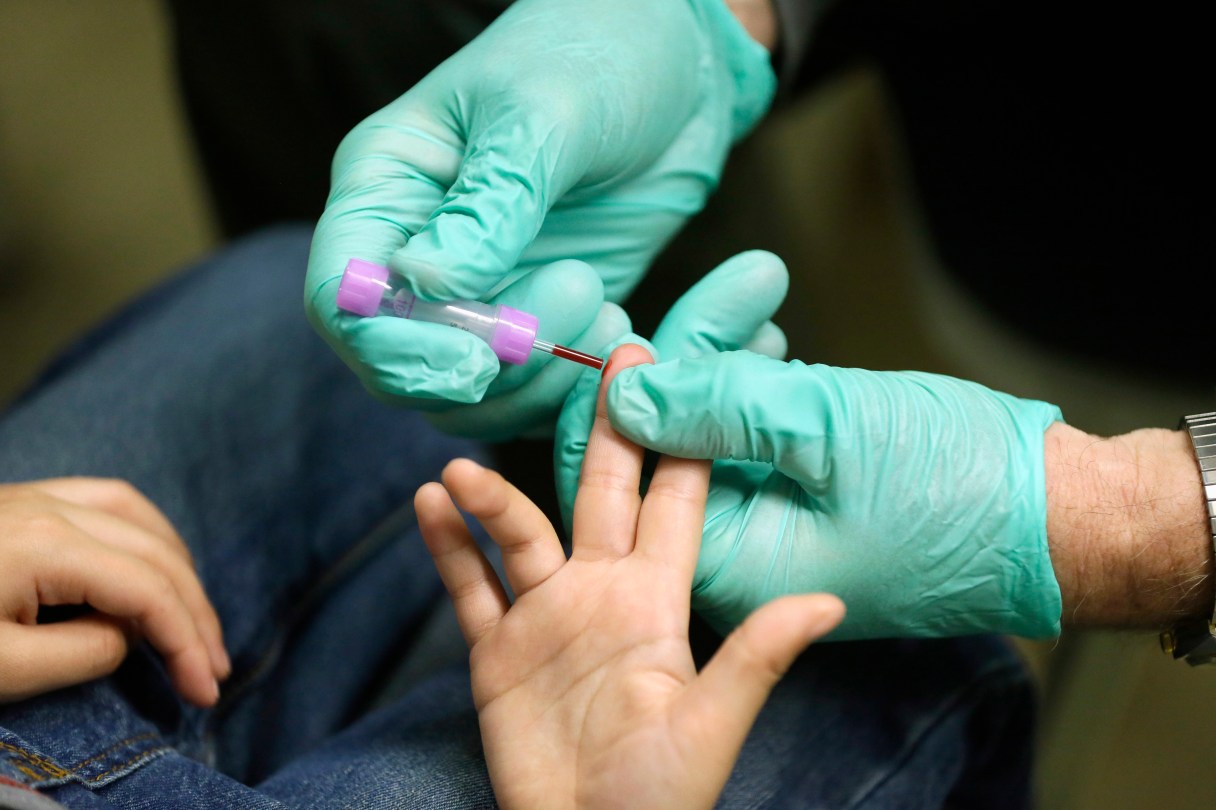
DETROIT (AP) – Blood-lead levels in Flint children under the age of 6 were significantly higher after the city switched its water in 2014 in a cost-saving move, according to report released Friday by U.S. disease experts.
The Centers for Disease Control and Prevention said the likelihood a child would have a concerning blood-lead level – at least 5 micrograms of lead per deciliter of blood – was about 50 percent higher after the April 2014 switch from Detroit’s water system to the Flint River. Flint used the water for 18 months, during which lead leached from old pipes at homes because the water wasn’t treated to control corrosion. The city switched back to Detroit last fall.
About 9,600 children younger than 6 years old lived in homes served by Flint’s water system, the report said. Among them, about 7,300 received nearly 9,700 blood lead tests before, during and after the water source switch.
“This crisis was entirely preventable, and a startling reminder of the critical need to eliminate all sources of lead from our children’s environment,” Patrick Breysse, director of CDC’s National Center for Environmental Health, said in a statement.
Children can develop learning disabilities and behavior problems from lead exposure, even in low levels.