
Also read…
* Supreme Court’s abortion law ruling in Texas ends Alabama’s fight * Abortion ruling may not open door for new Texas clinics
NASHVILLE – Tennessee-based abortion rights supporters hailed Monday’s U.S. Supreme Court ruling striking down Texas clinic restrictions, saying they believe it will lead to similar limitations here being thrown out in a pending lawsuit.
Rebecca Terrell, executive director of Memphis-based CHOICES, which is an abortion provider and has sued Tennessee over its 2012 and 2015 restrictions, said clinic officials are “gratified that the Supreme Court has recognized that these clinic shut-down laws violate women’s fundamental rights.”
Terrell said officials “are confident that the similar sham laws in Tennessee that CHOICES and other providers have challenged in federal court will soon be struck down.”
Meanwhile, Tennessee Attorney General Herbert Slatery, a Republican, is “reviewing the ruling and will be evaluating what is applicable to the case here in Tennessee,” said Harlow B. Summerford, Slatery’s spokesman.
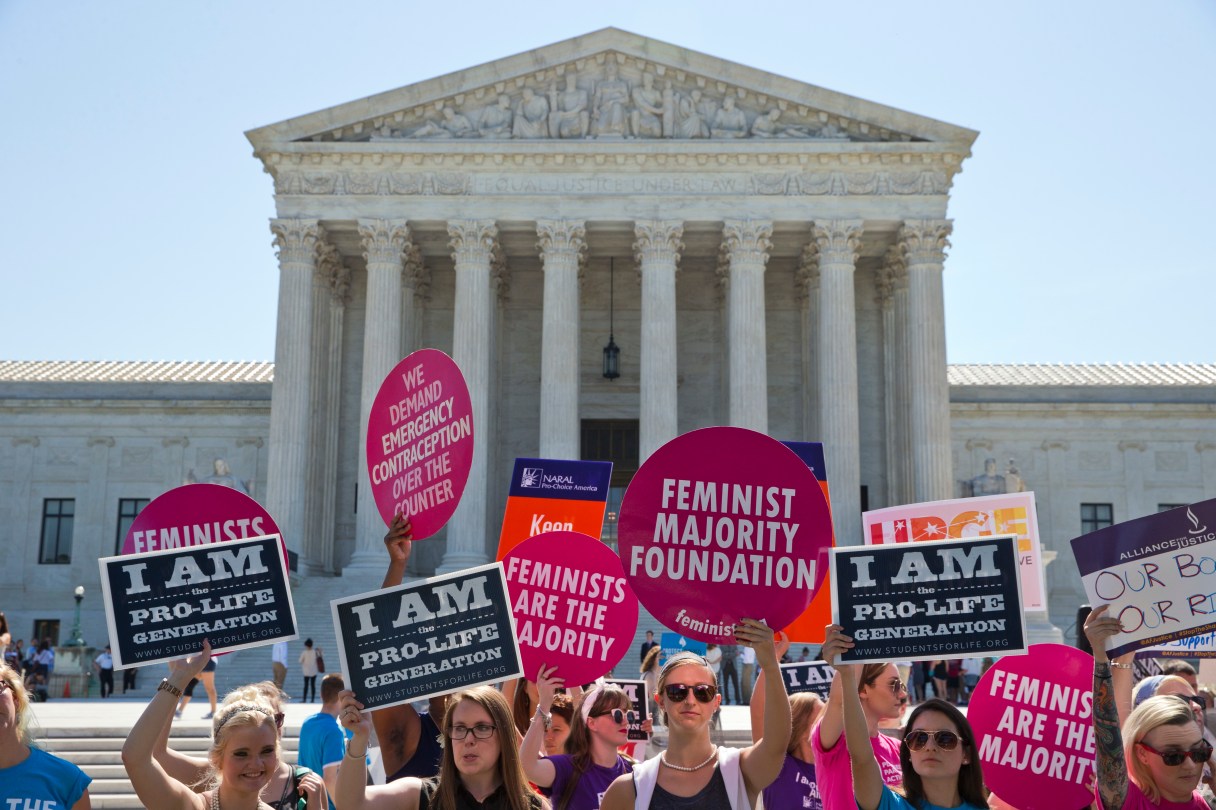
The nation’s highest court voted 5-3 to strike down Texas’ two abortion clinic laws in the court’s biggest abortion case in nearly a quarter century.
Texas had argued its 2013 law and subsequent regulations were necessary in protecting women’s health. The rules required doctors who perform abortions to have admitting privileges at nearby hospitals and also forced clinics to meet hospital-like standards for outpatient surgery.
Tennessee passed similar laws in 2012 and 2015. Critics charged that abortions are safer than most medical procedures and said the laws were designed to make it harder for women to obtain abortions.
Justice Stephen Breyer’s majority opinion held that the regulations are medically unnecessary and unconstitutionally limit a woman’s right to an abortion.
State Rep. Susan Lynn, R-Mount Juliet, sponsor of the 2014 Tennessee law that requires abortion operations performing 50 or more surgical abortions to meet the same stringent requirements of ambulatory surgical care centers, called the Supreme Court ruling “a disappointing moment for women’s health in Tennessee.
“Once again,” Lynn said in a statement, “the Court has found a way to circumvent the will of the people. I am firmly committed to making sure that life is protected and that women are not put into risky medical situations. That’s what we will continue working toward in the General Assembly.”
Chattanooga’s only abortion clinic closed in 1993.
The legal director of the American Civil Liberties Union of Tennessee, Thomas H. Castelli, praised Monday’s decision and said it “strongly suggests that similar Tennessee laws should be struck down as unconstitutional, as they amount to political interference in a woman’s private health care decisions and do nothing to protect a woman’s health.”
Tennessee’s 2012 admitting privileges law resulted in the closure of two of the eight clinics providing abortions. Of the remaining six, two, including Memphis’ Choices clinic, are threatened with closure. CHOICES and two other operations in Knoxville and Bristol filed a challenge in federal court here seeking to get the laws thrown out.
David Fowler, an attorney and president of the socially conservative Family Action Council of Tennessee, said he wants to look at the opinion to see how justices’ rationale applies to language used in Tennessee’s laws.
“I’m not sure how our statutes may have differed, if any, because I didn’t lobby on or work on those statutes,” Fowler, a former state senator from Signal Mountain, said in an email. “My gut would say that the court would find our laws unconstitutional.
“I think it would be a fair statement at this point to say that the decision has certainly put into question whether TN’s similar statute would be struck down as well,” added Fowler, who while in the state Senate initiated a resolution later passed by the General Assembly and ultimately adopted by state voters, that removed all abortion protections from the Tennessee Constitution.
But it had no impact on federal court decisions.
Fowler noted that “technically a Supreme Court decision only binds the parties to the case and only serves as precedent for what the court would do in a lawsuit involving a similarly situated state with the same law.”
But, Fowler added, “few states enforce laws once one state’s law is struck down because they realize they would lose if they got sued, but legally our law was not ‘ruled unconstitutional per se.'”
State Sen. Mike Bell, R-Riceville, a member of the state Senate Judiciary Committee, said, “I have great concern that [decision] could strike down the Tennessee laws, as well.”
Bell said the high court’s action “points to the importances of this year’s election and the possibility of vacancies coming up on the Supreme Court” and a president “who would put conservative appointees who would interpret the law and not make the law.”
Castelli said the decision “sends a strong message that laws imposed to create obstacles for a woman seeking to end a pregnancy rather than to actually safeguard her health violate the Constitution.”
CHOICES executive director Terrell agreed, saying “with this landmark decision the U.S. Supreme Court continues the powerful momentum for women’s rights and against political interference in our right to safe, legal abortion.”
The Associated Press contributed to this report.
Contact staff writer Andy Sher at asher@timesfreepress.com or 615-255-0550. Follow on Twitter at AndySher1.