
Sunday, November 1, 2026Nov 1

This story is free to read.

AP FACT CHECK: Overstatements in Trump’s economic speech

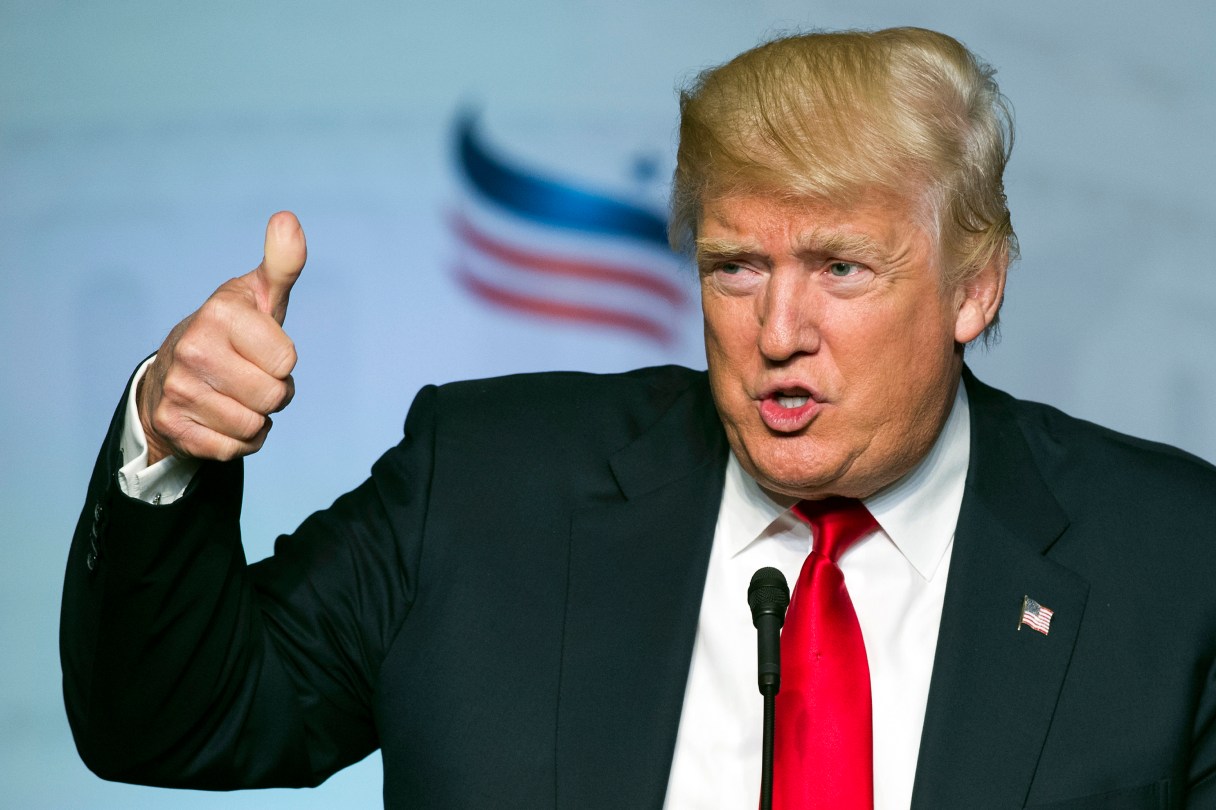
FILE - In this June 10, 2016 file photo, Republican presidential candidate Donald Trump gives a thumbs-up while addressing the Faith and Freedom Coalition's Road to Majority Conference in Washington. Trump will deliver a speech outlining his trade policies on June 28, a speech that is sure to underscore the stark differences between his approach and that of Democratic rival Hillary Clinton when it comes to handling the economy. Trump favors big tax cuts that mainly would help the rich. Clinton wants to boost taxes on high earners. Clinton wants to raise the minimum wage nationwide. Trump favors leaving it to the states (AP Photo/Cliff Owen, File)
FILE - In this June 10, 2016 file photo, Republican presidential candidate Donald Trump gives a thumbs-up while addressing the Faith and Freedom Coalition's Road to Majority Conference in Washington. Trump will deliver a speech outlining his trade policies on June 28, a speech that is sure to underscore the stark differences between his approach and that of Democratic rival Hillary Clinton when it comes to handling the economy. Trump favors big tax cuts that mainly would help the rich. Clinton wants to boost taxes on high earners. Clinton wants to raise the minimum wage nationwide. Trump favors leaving it to the states (AP Photo/Cliff Owen, File) FILE - In this June 10, 2016 file photo, Republican presidential candidate Donald Trump gives a thumbs-up while addressing the Faith and Freedom Coalition's Road to Majority Conference in Washington. Trump will deliver a speech outlining his trade policies on June 28, a speech that is sure to underscore the stark differences between his approach and that of Democratic rival Hillary Clinton when it comes to handling the economy. Trump favors big tax cuts that mainly would help the rich. Clinton wants to boost taxes on high earners. Clinton wants to raise the minimum wage nationwide. Trump favors leaving it to the states (AP Photo/Cliff Owen, File)

WASHINGTON (AP) – Donald Trump laid out economic ideas in a speech in Pennsylvania on Tuesday that did not always deal squarely with economic realities. A look at some of his statements and how they compare with the facts:

TRUMP: “When subsidized foreign steel is dumped into our markets, threatening our factories, the politicians have proven, folks, have proven they do nothing.”

THE FACTS: Not exactly nothing.

The Obama administration slapped Chinese steelmakers with a combined 522 percent penalty this year.

Buttressed by government subsidies, Chinese mills churned out too much of the cold-rolled steel used for autos and other products. So the Chinese firms slashed steel prices and dumped their steel on U.S. shores. This prompted a complaint by five U.S. steelmakers in 2015, which the Commerce Department investigated as required before announcing the first of the new duties in March.

If Trump has any bone to pick, it might be that the required investigation took too long to protect U.S. mills fully from the Chinese dumping.

___

TRUMP: “Today, we import nearly $800 billion more in goods than we export. This is not some natural disaster. It is a politician-made disaster.”

THE FACTS: That’s in the ballpark, but not the whole trade story.

The trade deficit on goods was $762.6 billion in 2015. But he neglects to include the valuable services that foreigners buy from U.S. firms. Those services reduced the total trade deficit to roughly $500 billion, according to the Census Bureau.

It’s hard to see the problem as the sole fault of politicians. Many businesses chose to relocate their factories abroad in order to increase their profits, while others kept their production in the United States. Trump himself outsourced the stitching of his neckties and branded clothing to China.