
Monday, November 9, 2026Nov 9

Supreme Court’s abortion law ruling in Texas ends Alabama’s fight

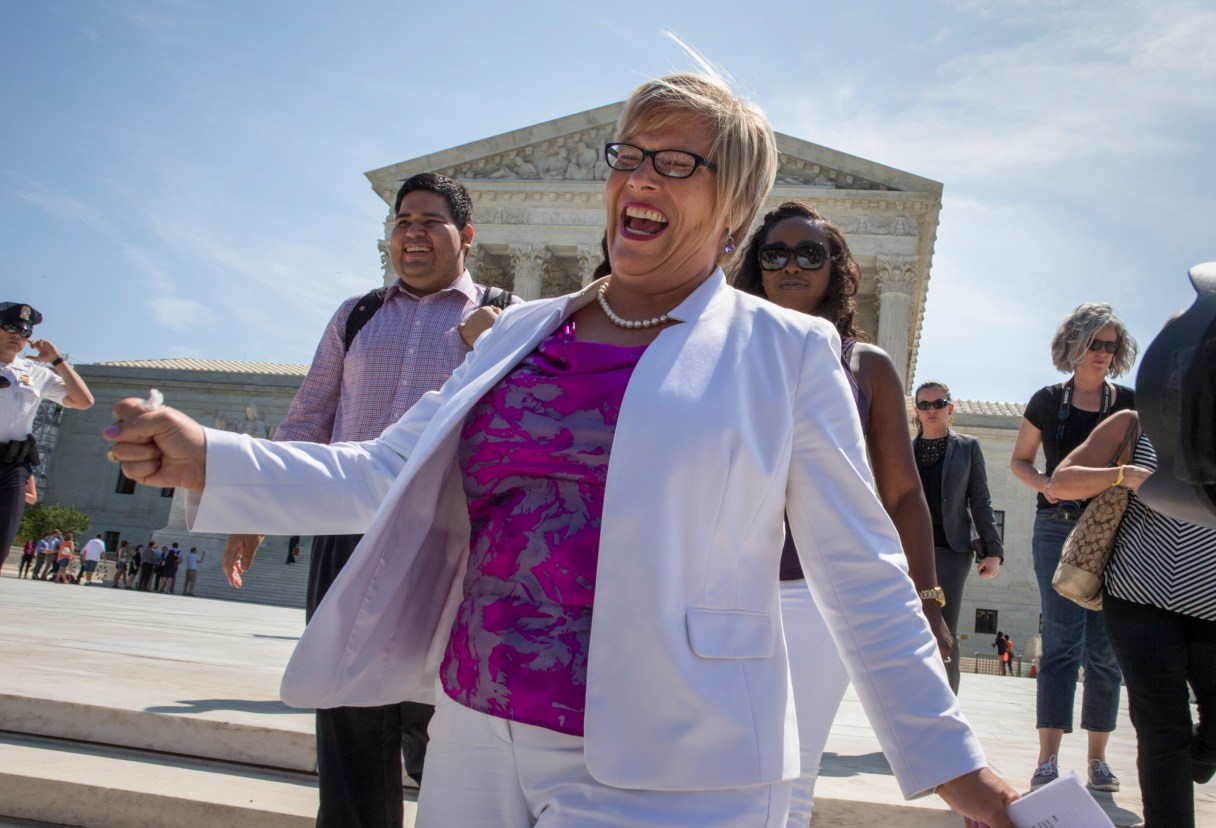
Amy Hagstrom Miller, founder of Whole Woman's Health, a Texas women's health clinic that provides abortions, rejoices as she leaves the Supreme Court in Washington, Monday, June 27, 2016, as the justices struck down the strict Texas anti-abortion restriction law known as HB2. The justices voted 5-3 in favor of Texas clinics that had argued the regulations were a thinly veiled attempt to make it harder for women to get an abortion in the nation's second-most populous state. The case is Whole Woman's Health v. Hellerstedt.
Amy Hagstrom Miller, founder of Whole Woman's Health, a Texas women's health clinic that provides abortions, rejoices as she leaves the Supreme Court in Washington, Monday, June 27, 2016, as the justices struck down the strict Texas anti-abortion restriction law known as HB2. The justices voted 5-3 in favor of Texas clinics that had argued the regulations were a thinly veiled attempt to make it harder for women to get an abortion in the nation's second-most populous state. The case is Whole Woman's Health v. Hellerstedt. Amy Hagstrom Miller, founder of Whole Woman's Health, a Texas women's health clinic that provides abortions, rejoices as she leaves the Supreme Court in Washington, Monday, June 27, 2016, as the justices struck down the strict Texas anti-abortion restriction law known as HB2. The justices voted 5-3 in favor of Texas clinics that had argued the regulations were a thinly veiled attempt to make it harder for women to get an abortion in the nation's second-most populous state. The case is Whole Woman's Health v. Hellerstedt.

Also read…

* High court’s ruling on Texas abortion law highlights divide among Tennesseans * Abortion ruling may not open door for new Texas clinics

MONTGOMERY, Ala. – Alabama Attorney General Luther Strange said Monday that his office will end the legal fight over an abortion clinic requirement after the U.S. Supreme Court struck down a nearly identical Texas law.

Strange said his office will stop trying to reinstate a provision of a 2013 Alabama law that required abortion doctors to have admitting privileges at a local hospital. Justices in a 5-3 decision Monday overturned a Texas law requiring admitting privileges and requiring clinics to meet the same building standards as ambulatory surgical centers.

“While I disagree with the high court’s decision, there is no good faith argument that Alabama’s law remains constitutional in light of the Supreme Court ruling,” Strange said.

A federal judge in 2014 ruled the Alabama law was an undue burden on women’s ability to access abortion because it would cause most of the state’s abortion clinics to close. Strange said Monday that his office will dismiss an appeal of that decision.