
Monday, November 16, 2026Nov 16

Yearlong spacemen embrace fresh, frigid air back on Earth

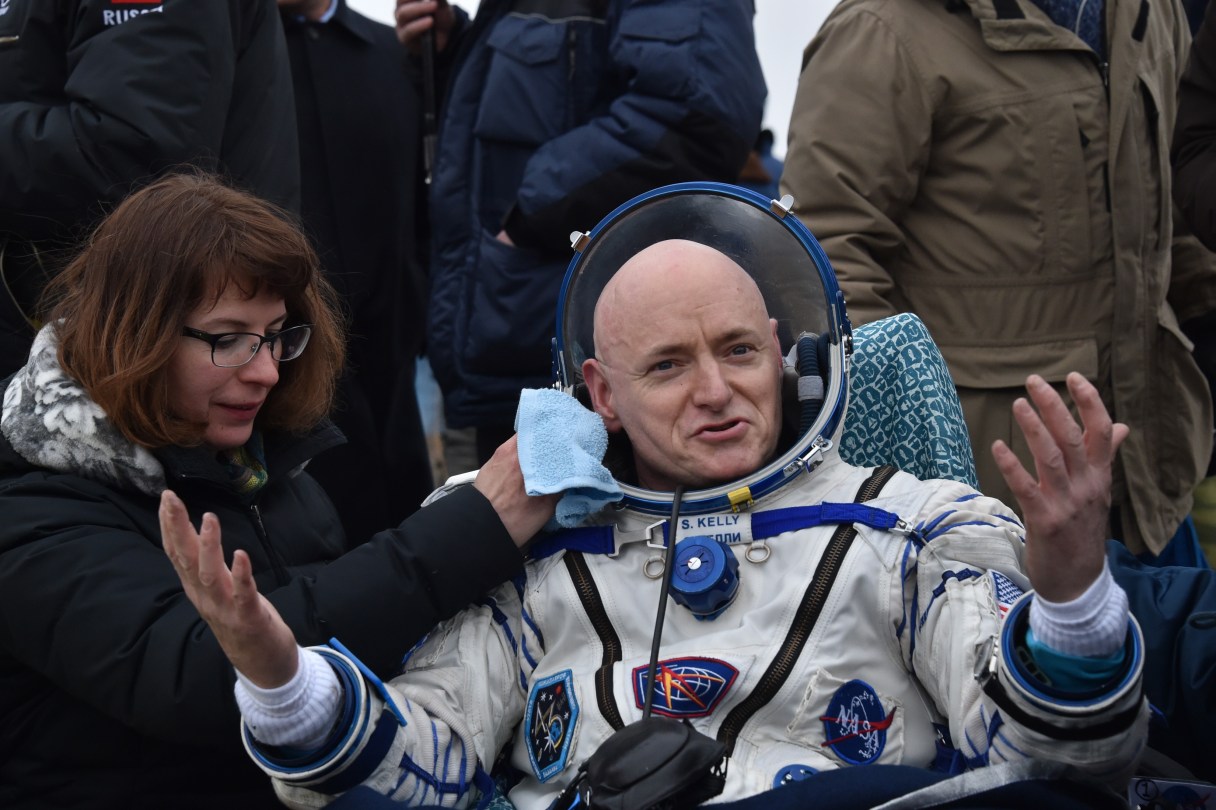
International Space Station (ISS) crew member Scott Kelly of the U.S. reacts after landing near the town of Dzhezkazgan, Kazakhstan, on Wednesday, March 2, 2016. The Soyuz TMA-18M spacecraft landed with Expedition 46 Commander Scott Kelly of NASA and Russian cosmonauts Mikhail Kornienko and Sergey Volkov of Roscosmos. Kelly and Kornienko are completing an International Space Station record year-long mission to collect valuable data on the effect of long duration weightlessness on the human body that will be used to formulate a human mission to Mars. Volkov is returning after six months on the station. (Krill Kudryavtsev/Pool photo via AP)

CAPE CANAVERAL, Fla. (AP) – Ah, there’s nothing like a blast of fresh, frigid air to welcome you back to the planet after nearly a year cooped up in space.

That’s the word from astronaut Scott Kelly, NASA’s space-endurance champ who returned to bitterly cold Kazakhstan on Wednesday, along with his roommate for the past year, Russian cosmonaut Mikhail Kornienko.

In a NASA interview before heading home to Houston, Kelly said it was “amazing” to feel the cold air when the hatch of his Soyuz capsule popped open after touchdown.

“I don’t mean to say it’s not fresh on the space station,” he said, “but there’s nothing like new cold air coming into the capsule.”

Both Kelly, 52, and Kornienko, 55, yearned for nature throughout their 340-day mission at the International Space Station, a dry run by NASA for eventual trips to Mars.