
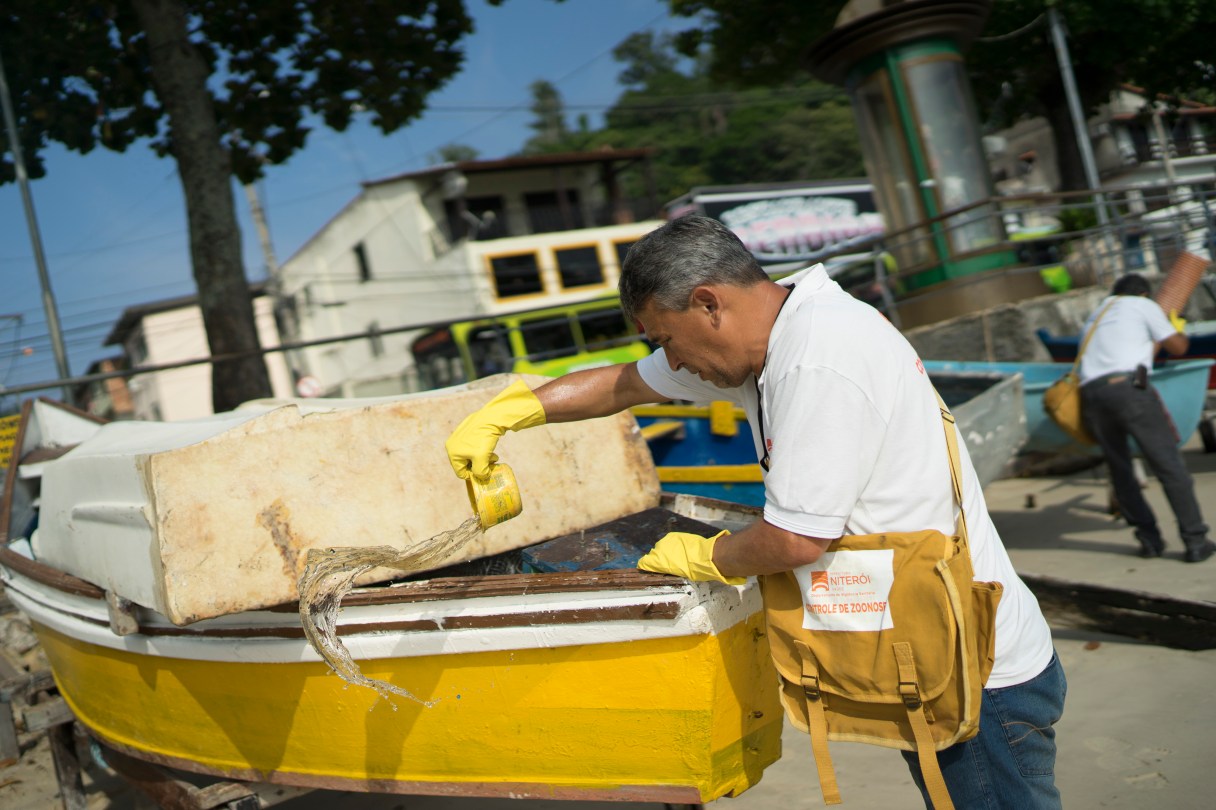
NITEROI, Brazil (AP) – For Luciana Santos, doing her part in Brazil’s fight to control the mosquito that spreads the Zika virus, dengue and other diseases is as easy as a couple of clicks on her smartphone.
Santos lives in Niteroi, which is across Guanabara Bay from Rio de Janeiro, and it’s where authorities recently launched an app called “Sem Dengue,” or “Without Dengue.” It allows residents to report stagnant water that can serve as a breeding ground for the Aedes aegypti mosquito.
Brazil has stepped up its fight against Aedes since researchers here linked an outbreak of Zika virus with a surge in cases of microcephaly, a rare birth defect that leaves babies with unusually small heads and brain damage that can cause mental retardation and a host of long-term problems.
So when Santos recently came across several puddles swimming with mosquito larvae while strolling on Jurujuba Beach with her parents and son, she snapped a photo and sent the shot through the app. The app’s geo-locator function automatically tagged the picture with the exact spot it was made and sent a detailed alert to City Hall. Within 72 hours, officials had deployed a team to deal with the puddles.
“It’s a way for us to help our city, (which) is our role as citizens,” said Santos, a manager of an oncology clinic who says she has seen many friends and relatives catch both Zika and dengue. “They (City Hall) have no way of seeing everything, but the population’s help contributes a lot” to rooting out mosquitoes.