
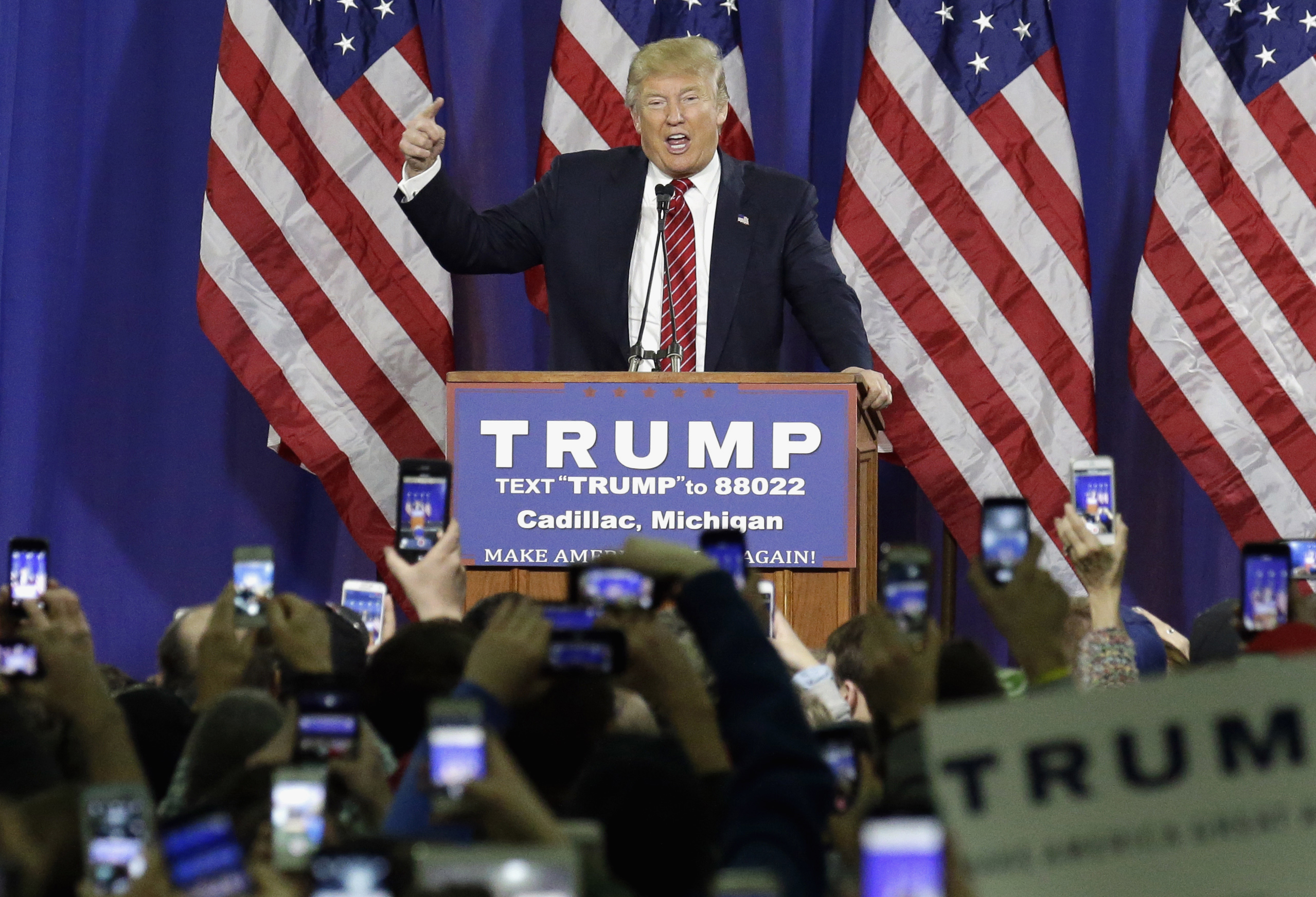
 FILE – In tbhis March 4, 2016 file photo, Republican presidential candidate Donald Trump speaks during a rally at Wexford County Civic Center in Cadillac, Mich. Should he win the Republican presidential nomination, Trump’s most plausible path to victory in the general election would be a map unlike any seen recently, relying on a coalition of working class, largely white, voters that have long been Democratic bastions in presidential contests, from Maine to Pennsylvania to Michigan. (AP Photo/Nam Y. Huh, File)
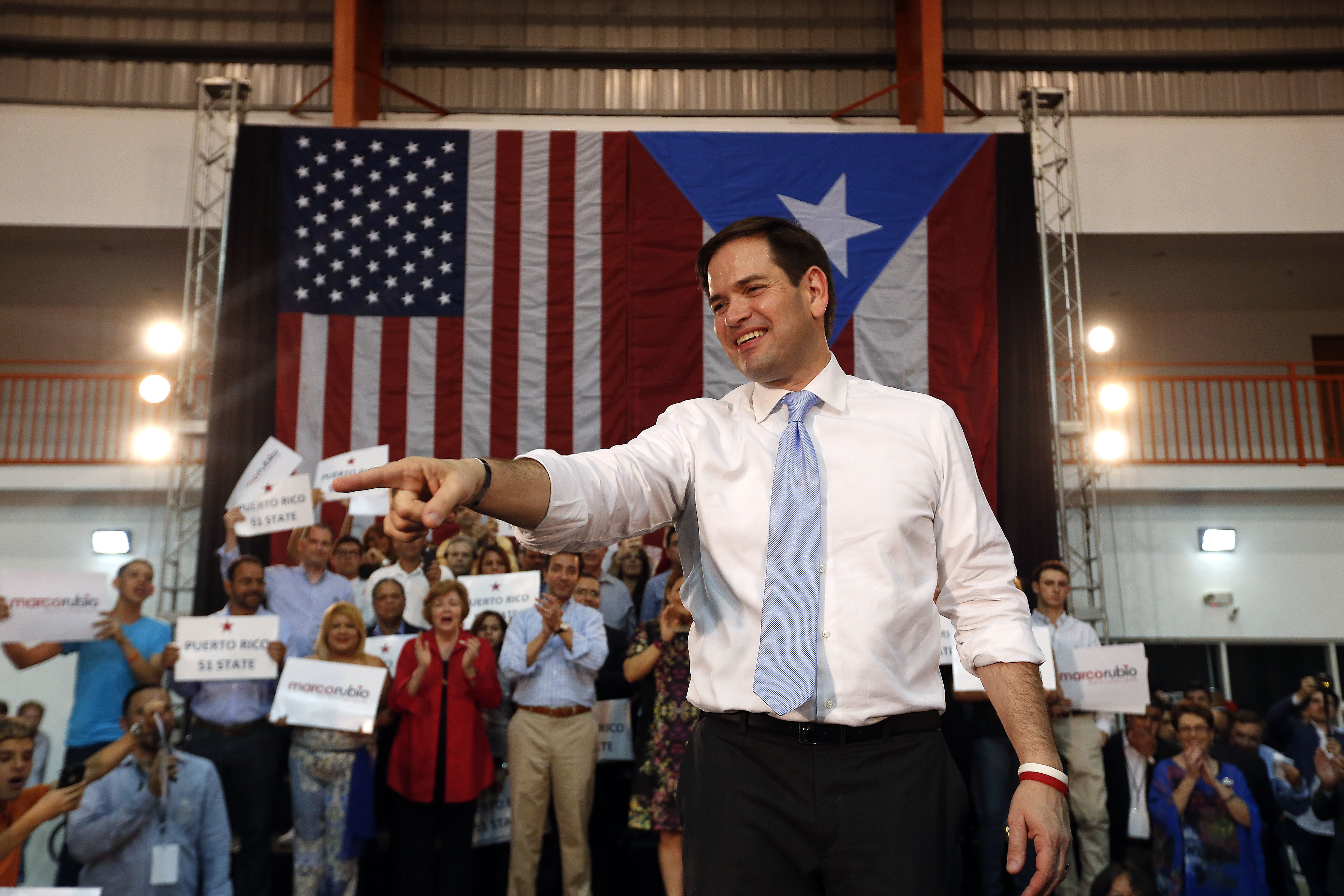 Republican presidential candidate, Sen. Marco Rubio, R-Fla., speaks in Toa Baja, Puerto Rico, Saturday, March 5, 2016. (AP Photo/Paul Sancya)
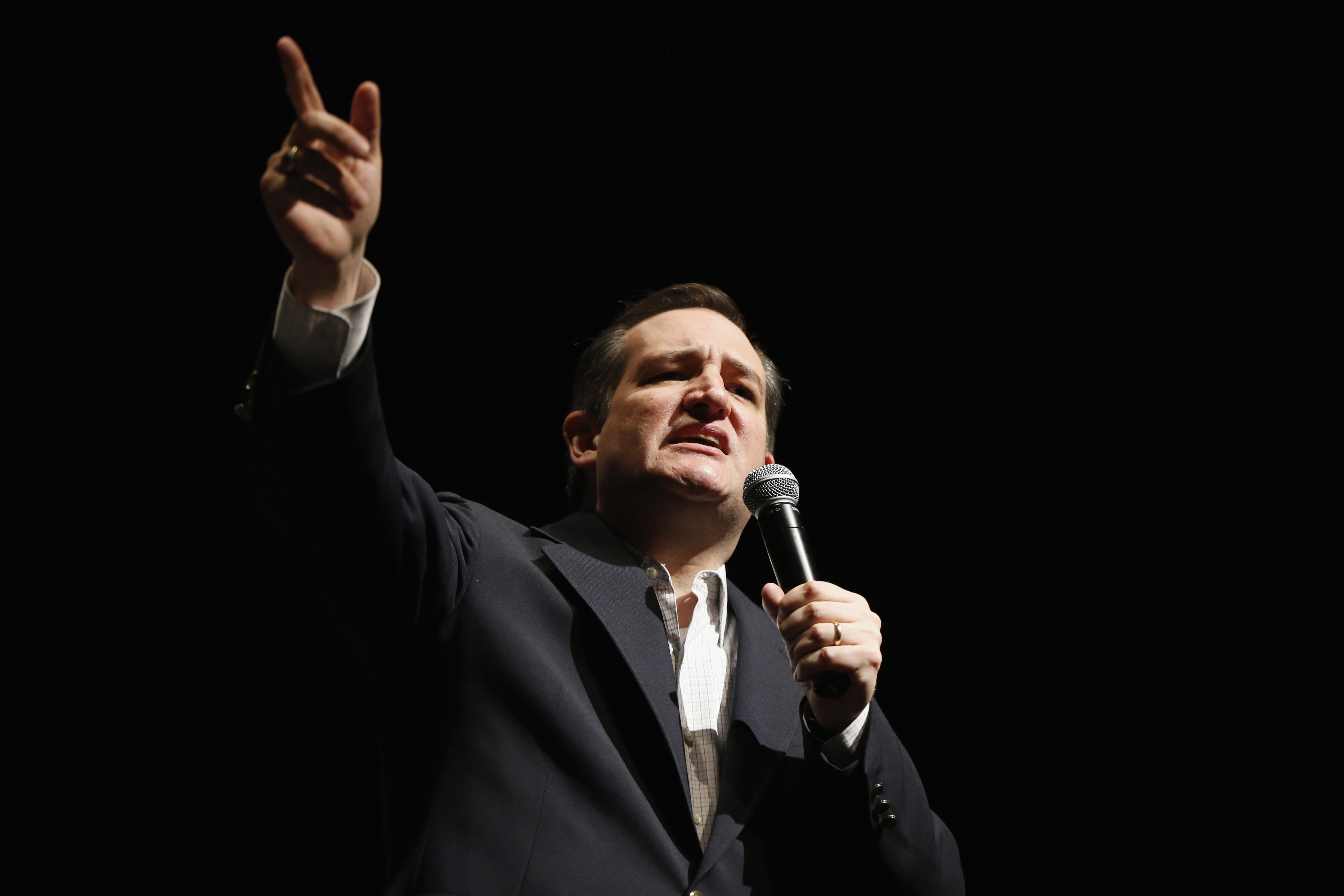 In this March 4, 2016, file photo, Republican presidential candidate, Sen. Ted Cruz speaks at a campaign stop at the University of Maine in Orono, Maine.
WASHINGTON – Republican leaders in Washington have spent years casting tea party allies and hardliners in Congress as merely a restive minority, a fringe element to be tolerated.
Now, with Donald Trump and Ted Cruz rising to the top of the 2016 GOP presidential primary, those party leaders are confronting the possibility that they may be the outliers.
One by one, Washington’s favored candidates have dropped out of the White House race. Those who are left – Marco Rubio and John Kasich – face long odds and sudden-death primaries in their home states next week. In private conversations and public newspaper editorials, talk of a historic splintering of the GOP centers on the prospect of the establishment, not the insurgents, dissolving or breaking away.
“Something important is ending. It is hard to believe what replaces it will be better,” Peggy Noonan, a speechwriter for Ronald Reagan, wrote in a Wall Street Journal column.
Republicans have long grappled with a divide between party leaders and grass-roots supporters. Recent presidential elections papered over the fissures rather than resolved them, with Republicans sending centrist candidates John McCain and Mitt Romney into the general election even as the GOP electorate became more conservative.