
Thursday, November 12, 2026Nov 12

NASA salvages Mars mission that should have launched by now

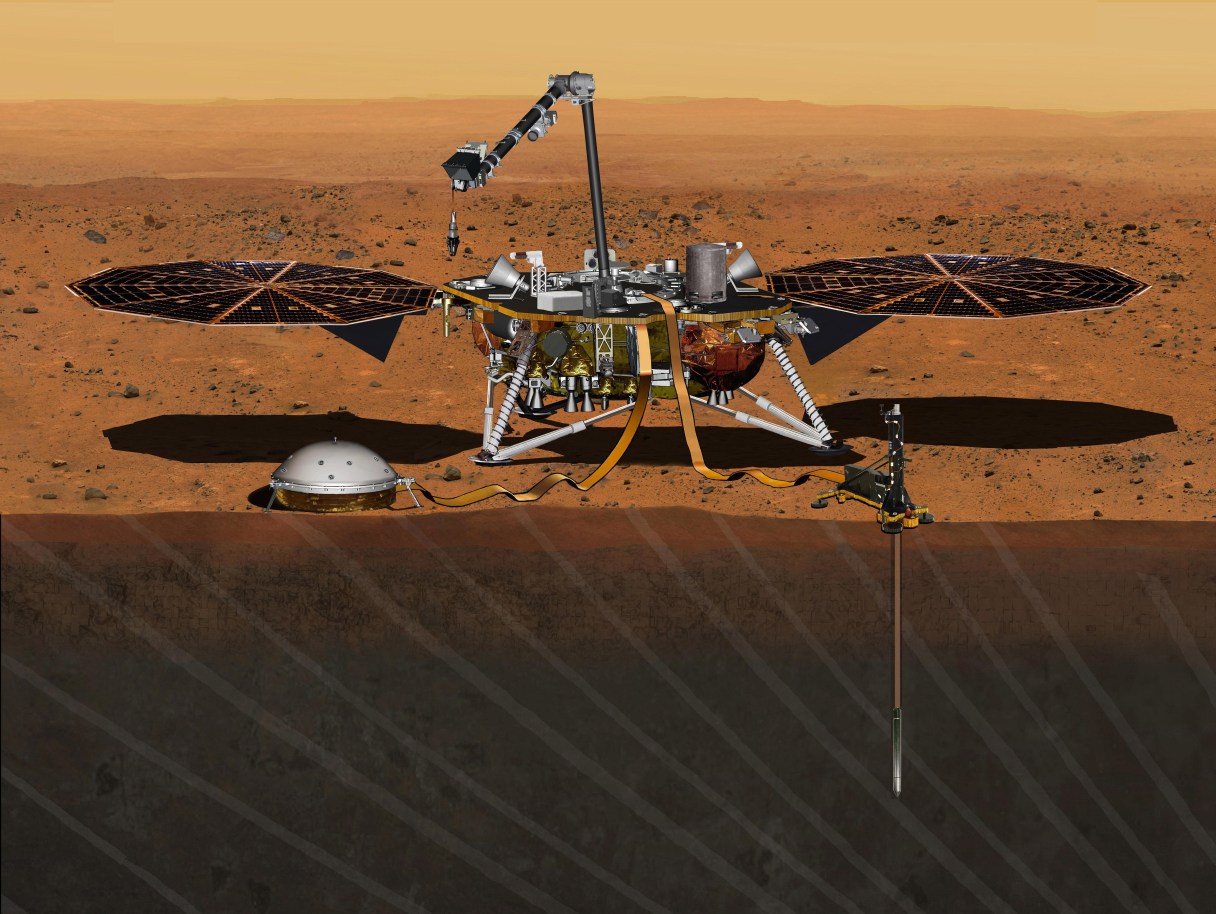
FILE - This August 2015 artist's rendering provided by NASA/JPL-Caltech depicts the InSight Mars lander studying the interior of Mars. On Wednesday, March 9, 2016, NASA said it's shooting for a 2018 launch of the InSight spacecraft. The robotic lander was supposed to lift off in March 2016, but was grounded in December by a leak in a French instrument. Project managers said the device should be redesigned in time. (NASA/JPL-Caltech via AP)
FILE - This August 2015 artist's rendering provided by NASA/JPL-Caltech depicts the InSight Mars lander studying the interior of Mars. On Wednesday, March 9, 2016, NASA said it's shooting for a 2018 launch of the InSight spacecraft. The robotic lander was supposed to lift off in March 2016, but was grounded in December by a leak in a French instrument. Project managers said the device should be redesigned in time. (NASA/JPL-Caltech via AP) FILE - This August 2015 artist's rendering provided by NASA/JPL-Caltech depicts the InSight Mars lander studying the interior of Mars. On Wednesday, March 9, 2016, NASA said it's shooting for a 2018 launch of the InSight spacecraft. The robotic lander was supposed to lift off in March 2016, but was grounded in December by a leak in a French instrument. Project managers said the device should be redesigned in time. (NASA/JPL-Caltech via AP)

CAPE CANAVERAL, Fla. (AP) – NASA’s next Mars mission is still alive.

Instead of scrapping the grounded Mars InSight spacecraft, the space agency announced Wednesday it’s shooting for a 2018 launch. The robotic lander was supposed to lift off this month, but ended up sidelined in December by a leak in a key French instrument. Project managers said the device should be redesigned in time.

May 2018 represents the next available launch window. Opportunities to launch to Mars arise just every two years, based on the alignment of Earth and its neighbor.

The InSight spacecraft aims to study the interior of Mars by drilling deep within. The sensors for the French seismometer need to operate in a vacuum chamber in order to measure subtle ground movements. The vacuum chamber was leaking. The other main science instrument, a German heat-flow probe, was ready to fly.

It’s unknown how much the two-year delay will cost. NASA’s only other option was to kill the project.