
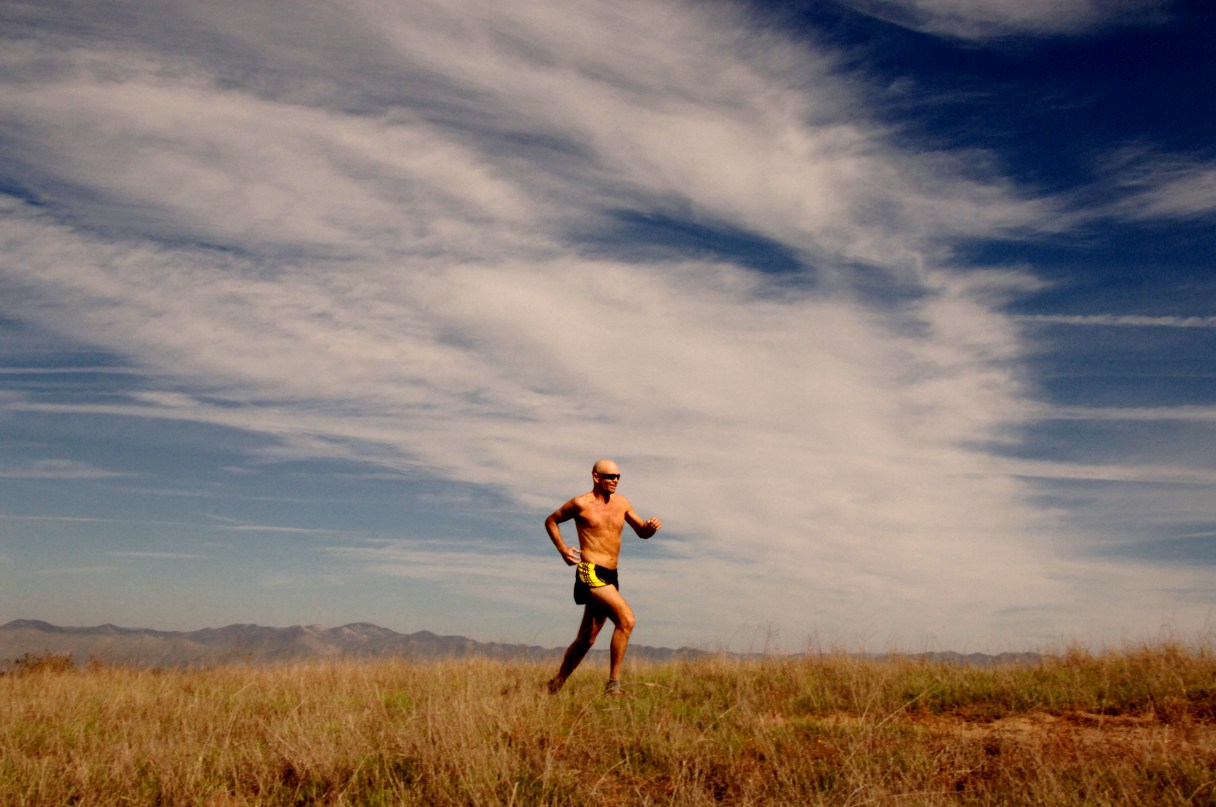
 Micah True
If you go
› What: Screening of “Run Free: The True Story of Caballo Blanco.”› When: 7 p.m. Tuesday, March 15.› Where: The Camp House, 149 E. M.L. King Blvd.› Admission: $12 in advance, $15 at the door.› Ticket website: www.imathlete.com/events/runfree.› Movie website: www.runfreemovie.com.
More Info
“Run Free: The True Story of Caballo Blanco” has picked up several prestigious awards.* Award of Excellence from the IndieFest Film Awards, which recognizes film, television and new media professionals who demonstrate exceptional achievement in craft and creativity and contribute to profound social change. “Run Free” was singled out for its creative excellence.* Silver medal winner at the 2015 Spotlight Documentary Film Awards, which designated “Run Free” as one of the top 250 independent documentaries produced anywhere in the world in 2015.* Best Documentary at the 2015 Arizona International Film Festival.* 2015 Bud Greenspan Memorial Film and Video Award, presented by the Track & Field Writers of America.
“Run Free: The True Story of Caballo Blanco,” a feature-length documentary about ultra-running legend Micah True, will be screened Tuesday, March 15, at The Camp House.
Micah True, better known as Caballo Blanco – the White Horse – was the focal character of Christopher McDougall’s 2009 best-selling book, “Born To Run: A Hidden Tribe, Superathletes and the Greatest Race the World Has Never Seen,” about the Tarahumara Indians of northern Mexico. Also known as the Rarámuri, or Running People, they are some of the best long-distance runners in the world.
True was an enigmatic visionary who lived and ran with the Tarahumara after moving to remote Copper Canyon in the 1990s. He created the 50-mile Copper Canyon Ultra-Marathon to honor their running traditions and aid in their sustainability. Now in its 13th year, the race attracts hundreds of local Tarahumara to the village of Urique to compete alongside some of the best runners in the world. All race finishers receive 500 pounds of corn, which the international runners traditionally donate to the local Tarahumara, commemorating the spirit of sharing, or “kórima,” which is a way of life among the natives of Copper Canyon.
The 90-minute documentary is directed by Sterling Noren, a Seattle filmmaker who met True in 2009. Most of the material for the film was recorded in the weeks leading up to the 2012 race. Shortly after that race, True disappeared in the Gila Wilderness of New Mexico during his daily run, prompting ultra-runners from all over the country to travel to New Mexico to join in the search. His body was recovered several days later, found on a trail in a deserted canyon by some of his friends.
“We wanted to tell the story of Micah True in a way that was exciting and authentic, so that viewers could get a sense of what an amazing and inspiring person he was,” Noren says in a news release. “Micah’s vision lives on and his legacy is honored in this film. The film shares Micah’s compelling message of love, hope and kórima with the world while helping sustain the people and culture that meant so much to him.”
Executive producer Maria Walton, True’s girlfriend at the time, says her hope is that the film will “share Micah’s vision of hope for the Tarahumara culture and empower people everywhere with his joy of running.”
“Micah’s genuine passion for honoring the sacred running traditions of the Tarahumara people was the essence of his being,” she says.
A percentage of the film’s profits, including from DVD sales, will go to Norawas de Rarámuri (Friends of the Running People), the nonprofit agency founded by True to preserve traditional Tarahumara culture.