
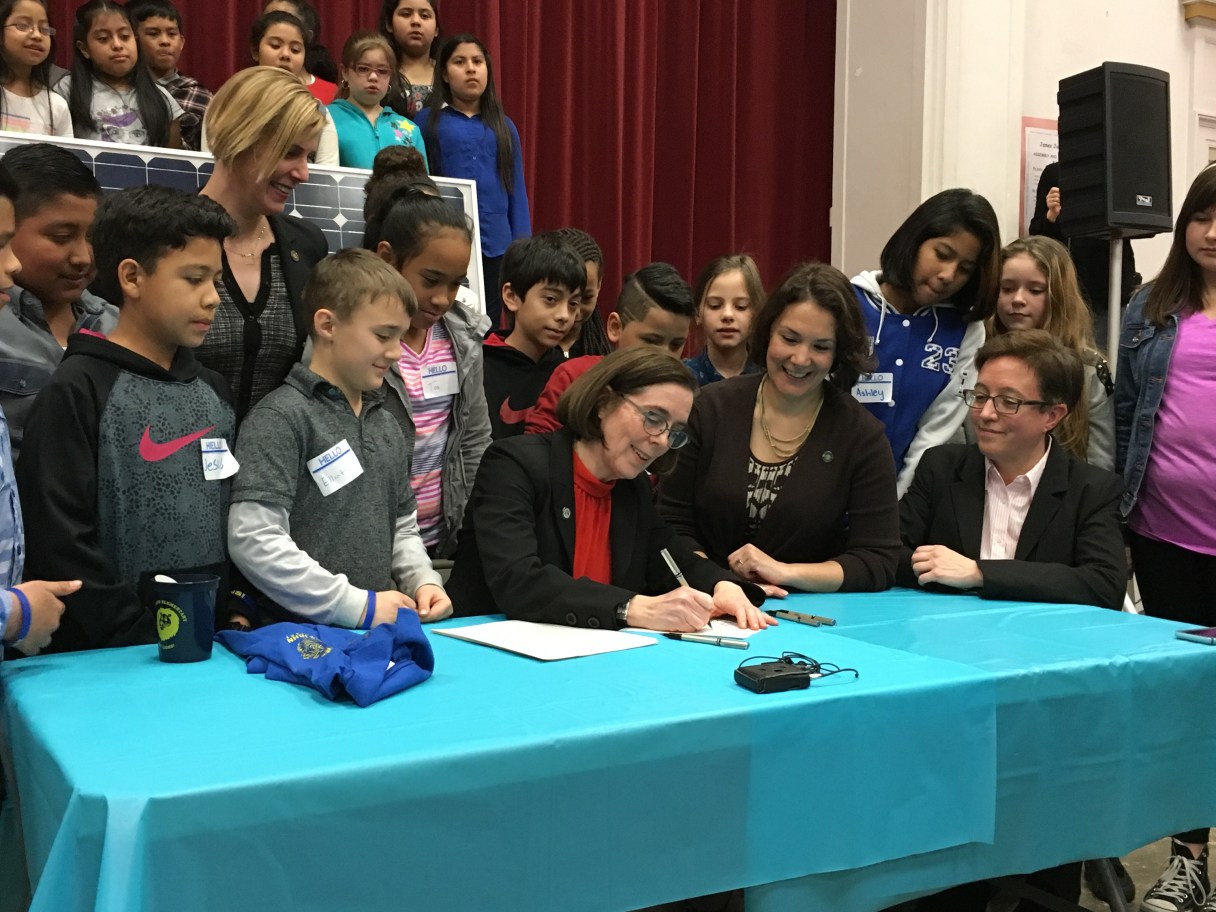
PORTLAND, Ore. (AP) – With the stroke of Gov. Kate Brown’s signature Friday, Oregon became the first state to eradicate coal from its power supply through legislation and now boasts some of the most stringent demands for renewable energy among its state peers.
The new law will wipe out coal-generated energy in phases through 2030 and requires utilities to provide half of customers’ power with renewable sources by 2040, doubling the state’s previous standard.
“Oregon is known to be a leader in clean-energy programs, investing in energy efficiency and recognizing the risk of climate change,” said Brown, who signed the measure surrounded by students at a Portland elementary school that’s powered by solar panels.
Environmental experts and advocates say the law’s coal phase-out component is precedent-setting for lawmakers considering similar moves in their own states, although Hawaii and Vermont have long-standing histories of running coal-free.
The renewables portion thrusts Oregon to the top ranks of a handful of other states that have renewable mandates of 50 percent or more. Hawaii, for instance, has a 100-percent requirement by 2045 while Massachusetts has 1-percent annual increase indefinitely, according to the Union of Concerned Scientists.