
Monday, November 16, 2026Nov 16

Women with Zika in Tahiti had 1 percent birth defects risk

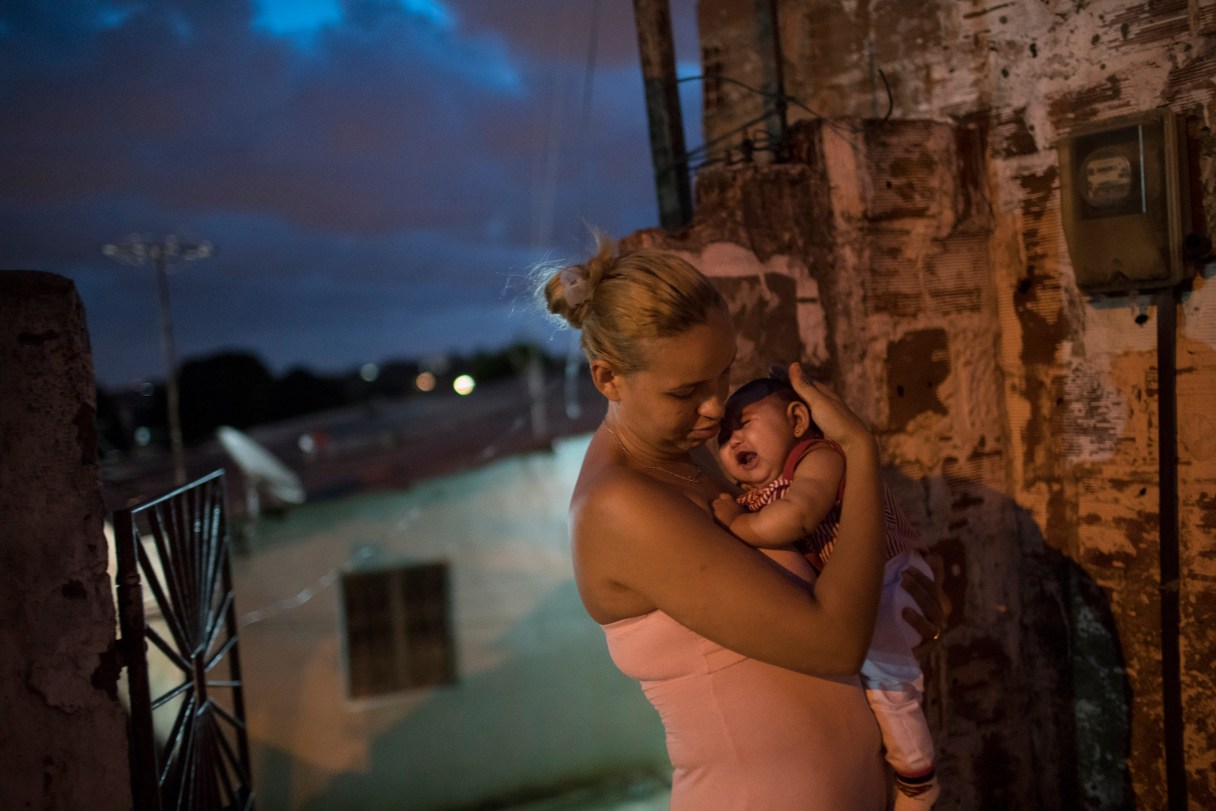
FILE - In this Wednesday, Jan. 27, 2016 file photo, Gleyse Kelly da Silva, 27, holds her daughter Maria Giovanna, who was born with microcephaly, outside their house in Recife, Pernambuco state, Brazil. Women who got pregnant during a Zika outbreak in Tahiti two years ago had about a 1 percent chance of having a baby with an abnormally small head, according to a new study published Tuesday, March 15. It’s a surprisingly low risk that experts say might not match the threat of the epidemic now spreading explosively in the Americas.  The World Health Organization declared Zika to be a global emergency last month, based on suspicions it is causing a spike in a worrying birth defect known as microcephaly as well as a rare condition that sometimes results in temporary paralysis.  (AP Photo/Felipe Dana, file)
FILE - In this Wednesday, Jan. 27, 2016 file photo, Gleyse Kelly da Silva, 27, holds her daughter Maria Giovanna, who was born with microcephaly, outside their house in Recife, Pernambuco state, Brazil. Women who got pregnant during a Zika outbreak in Tahiti two years ago had about a 1 percent chance of having a baby with an abnormally small head, according to a new study published Tuesday, March 15. It’s a surprisingly low risk that experts say might not match the threat of the epidemic now spreading explosively in the Americas. The World Health Organization declared Zika to be a global emergency last month, based on suspicions it is causing a spike in a worrying birth defect known as microcephaly as well as a rare condition that sometimes results in temporary paralysis. (AP Photo/Felipe Dana, file)

LONDON (AP) – Women who got pregnant during a Zika outbreak in Tahiti two years ago had about a 1 percent chance of having a baby with an abnormally small head, according to a new study published Tuesday. It’s a surprisingly low risk that experts say might not match the threat of the epidemic now spreading explosively in the Americas.

The World Health Organization declared Zika to be a global emergency last month, based on suspicions it is causing a spike in a worrying birth defect known as microcephaly as well as a rare condition that sometimes results in temporary paralysis.

Before reaching the Americas last year, the mosquito-spread Zika triggered epidemics in the South Pacific and in French Polynesia, including its biggest island, Tahiti. Most people who are infected don’t get sick or only have mild symptoms.

After a surge in microcephaly was detected in Brazil, international scientists combed through records from the 2013-14 Tahiti outbreak to see if the same thing had happened there.

They found only eight such cases after tracking about 8,000 pregnant women. Seven occurred near the end of the outbreak, which researchers said suggested their mothers had been infected early in their pregnancies. Of those cases, five of the pregnancies were terminated.