
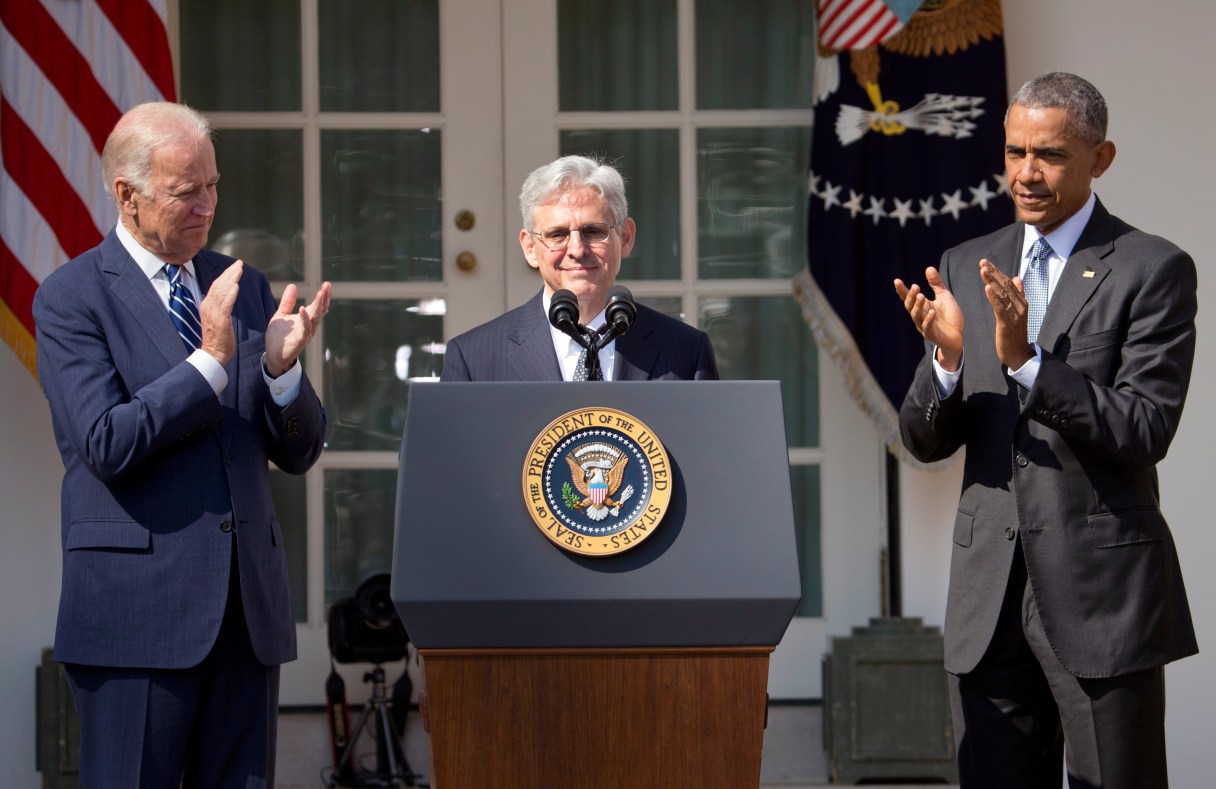
WASHINGTON (AP) – President Barack Obama nominated appeals court judge Merrick Garland to the Supreme Court on Wednesday, thrusting a respected moderate jurist and former prosecutor into the center of an election-year clash over the future of the nation’s highest court.
Obama cast the 63-year-old Garland as “a serious man and an exemplary judge” deserving of a full hearing and a Senate confirmation vote, despite Republican vows to deny him both. Standing in the White House Rose Garden with Garland, Obama argued the integrity of the court was at stake and appealed to the Senate to “play it straight” in filling the seat left vacant by the death of Justice Antonin Scalia.
“It’s supposed to be above politics,” Obama said of the high court. “It has to be. And it should stay that way.”
Republican leaders, however, held to their refusal to consider any nominee, saying the seat should be filled by the next president after this year’s election. Senate Majority Leader Mitch McConnell spoke with Garland by phone but did not change his position that “the American people will have a voice.” He said he would not be holding “a perfunctory meeting but he wished Judge Garland well,” a spokesman said.
Others in the GOP ranks were less wedded to the no-hearing, no-vote, not-even-a-meeting stance – a sign that Republicans are aware the strategy could leave them branded as obstructionist.