
Monday, November 16, 2026Nov 16

Seabird die-off takes twist with carcasses in Alaska lake

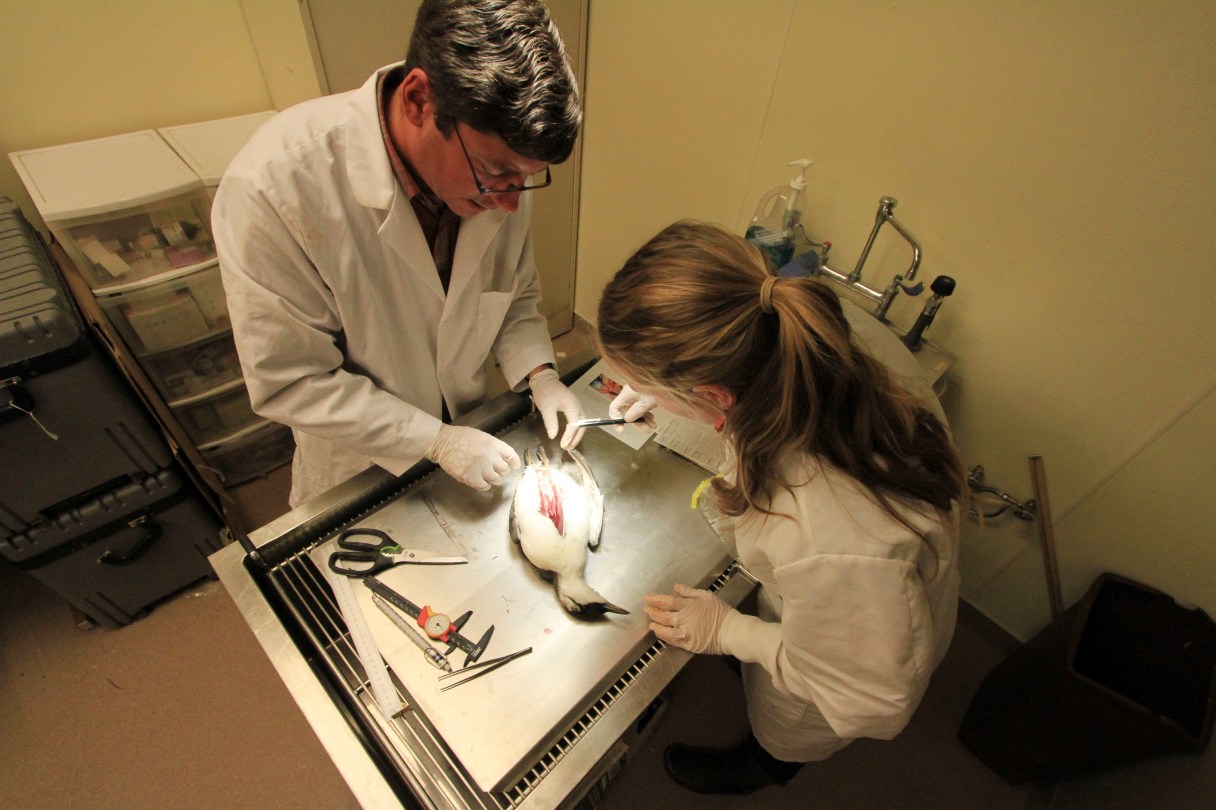
FILE - In this March 11, 2016 file photo, wildlife biologists Rob Kaler of the U.S. Fish and Wildlife Service and Sarah Schoen of the U.S. Geological Survey examine body parts of a common murre during a necropsy in Anchorage, Alaska. The massive die-off of a widely distributed North Pacific seabird continues to surprise federal scientists. The latest twist was the discovery of thousands of carcasses of common murres along a freshwater Alaska lake. (AP Photo/Dan Joling, File)

ANCHORAGE, Alaska (AP) – Lake Iliamna in Alaska is North America’s eighth-largest lake, but nobody would mistake it for the Pacific Ocean. Not even a seabird.

So when thousands of common murres were found dead at the southwest Alaska lake – part of a massive die-off of a species whose preferred winter habitat is at sea – seabird experts were puzzled.

“We’ve talked about unprecedented things about this die off. That’s another one,” said John Piatt, research wildlife biologist for the U.S. Geological Survey.

Murres occasionally land in fresh water, Piatt said.

“You figure it’s a misguided individual. To have 6,000, 8,000 birds in the lake is pretty mind-blowing, really,” he said. “I’ve never heard of any such a thing anywhere in the world.”