
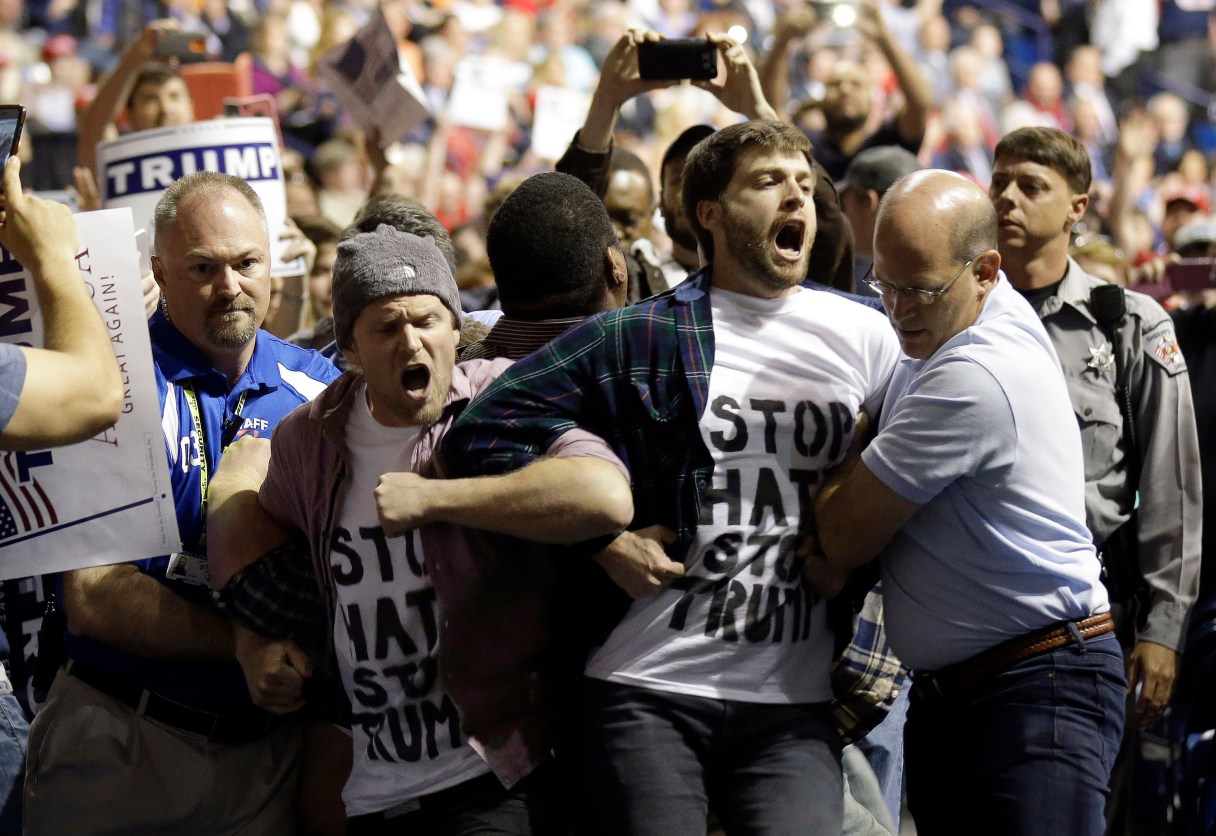
The scene was violent and chaotic: protesters being forcibly removed from a rally for Republican presidential candidate Donald Trump. The image reinforced a common complaint that police can be callous toward the free-speech rights of demonstrators when seeking to preserve order. Some questions and answers about rules and procedures for police at political events:
Q. Who pays for police to be there, taxpayers or event organizers?
A. It depends. As part of the permitting process, local officials, the venue and the event organizers discuss the event and its logistics and decide what kind of security is needed. What’s the expected crowd size? Is there a record of violence or disruptions at similar events?
Sometimes authorities decide it’s necessary for event organizers to provide private security. Sometimes authorities agree to supplement that with local police. Sometimes the private security detail consists of off-duty officers who are paid by the organizers or the venue, but retain their normal police powers. Sometimes, it’s private security without arrest power supplemented by police on their regular shifts.
With 18,000 police departments in the United States and municipalities with different rules, venues that can be municipally owned or privately held and events that require different approaches to ensure safety, nothing is standard.