
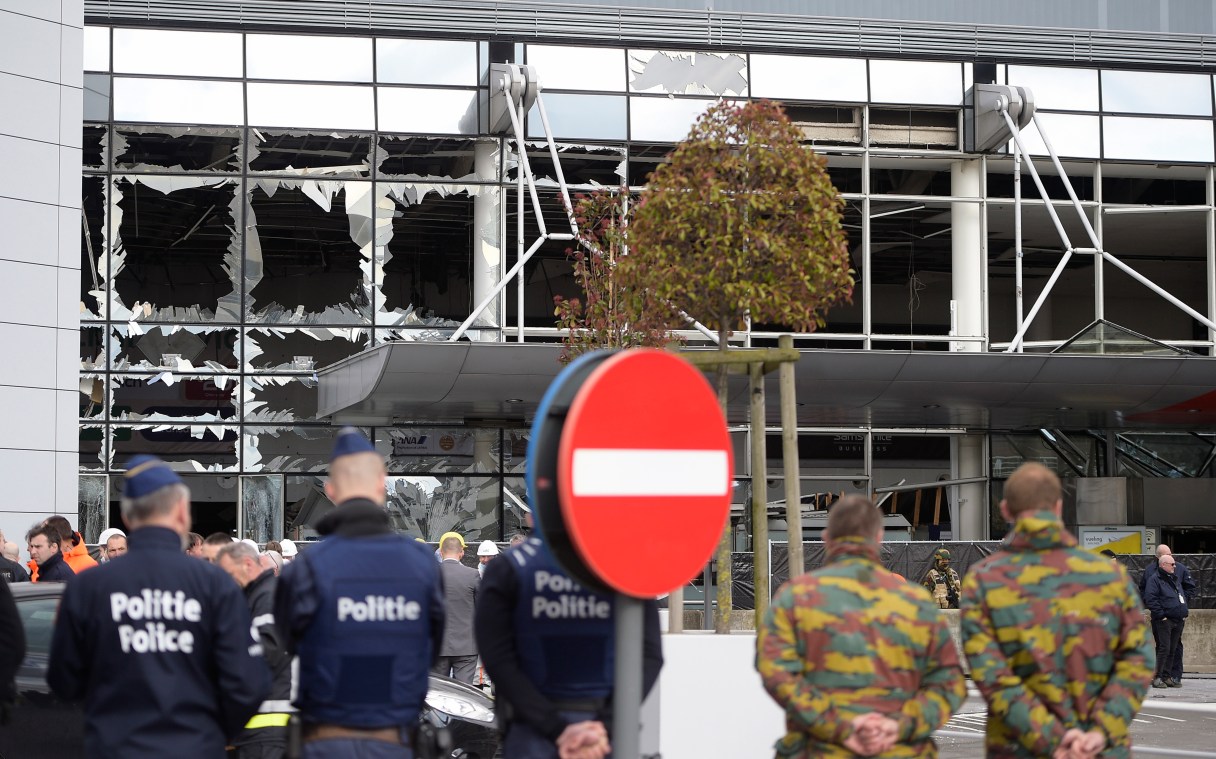
JERUSALEM (AP) – Despite the high death toll and dramatic scenes of destruction, this week’s attacks in Brussels appear to have been surprisingly easy to carry out, requiring little more than some careful preparation, a handful of motivated militants and ingredients that are readily available on store shelves.
Security experts say Europe’s major cities – filled with soft targets and home to hundreds of Islamic militants who have fought or trained in Syria, Iraq and Libya – will remain vulnerable to similar attacks without changes in their security procedures.
The assailants in Brussels were well-prepared for the suicide bombings in the airport and subway, which killed more than 30 people. They chose crowded, easy-to-reach targets that were poorly secured in a country whose forces have already been stretched by a string of crackdowns on suspected Islamic militants. Belgium’s chief prosecutor said the investigators found 15 kilograms of TATP – an inexpensive and hard-to-detect explosive material – at an apartment where the attackers had stayed, but it wasn’t immediately clear whether it was used in the blasts.
“It doesn’t require sophistication, but it requires preparation and planning,” said Yoram Schweitzer, a former head of the Israeli military’s counter-terrorism desk. “There is a need for suicide belts, a safe house, or perhaps baggage with explosives.”
Schweitzer, an expert at the Institute for National Security Studies, an Israeli think tank, estimated that an attack like the one in Brussels would take weeks, perhaps several months, to plan.