
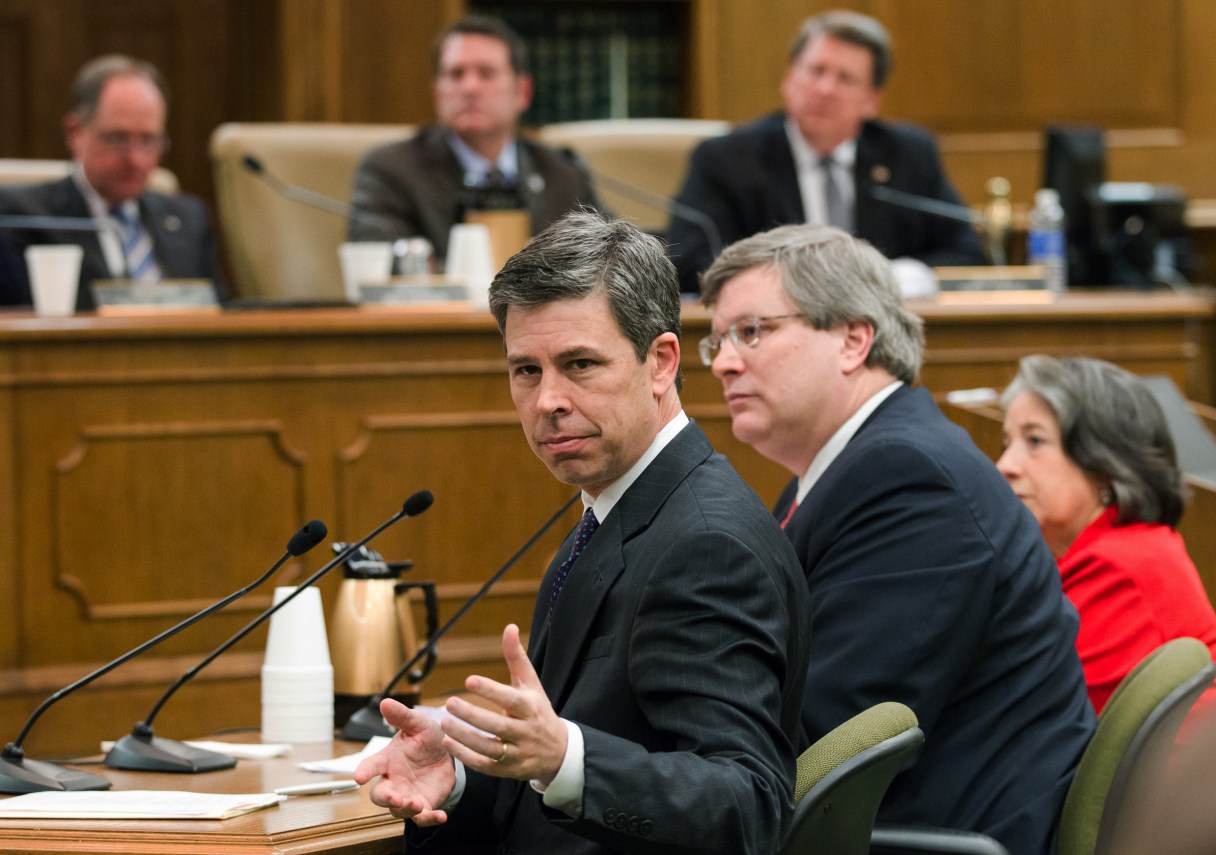
NASHVILLE – Chattanooga Mayor Andy Berke and mayors from Memphis and Knoxville on Wednesday urged members of a Tennessee Senate panel to reject a controversial bill that in some instances would allow residents in municipalities to vote to leave the cities.
“This bill is a little bit of a pig in a poke,” Berke, a former state senator and Democrat, told the GOP-run Senate State and Local Government Committee during a special hearing on the “de-annexation” bill. “That’s really what it is. We have something that’s really not good for citizens and certainly isn’t good for cities and the people who live around them.
“What we know is there are many, many unknowns,” Berke noted, later adding that, while Chattanooga “is on a roll” right now, “as we look at this legislation, we know that good policies and leadership for many years have led to this and those same types of things can set you back.”
Berke was joined by Memphis Mayor Jim Strickland and Knoxville Mayor Madeline Rogero in voicing alarm about the impact of the bill on cities’ finances, stability and efforts to recruit new companies and jobs to the communities.
Two Memphis business titans, AutoZone founder Pitt Hyde and First Tennessee President David Popwell, expressed similar concerns about what they see as legislative interference in the state’s engines of growth.