
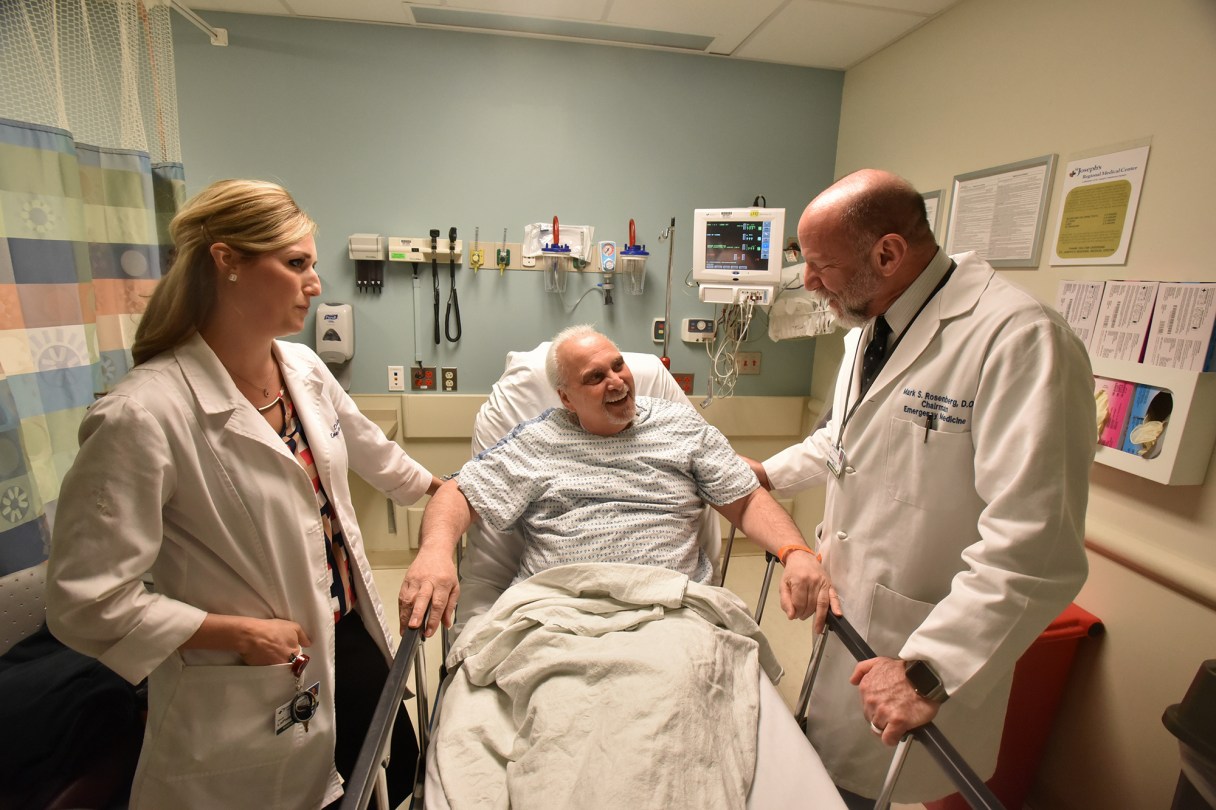
PATERSON, N.J. (AP) – Mark Rosenberg doesn’t need to go to his job as chairman of emergency medicine at New Jersey’s busiest emergency room to get a bracing insight into the mushrooming problem of opioid abuse.
He can think of his own mother-in-law, who was treated at an emergency room for chronic wrist pain stemming from a fall, received five Percocet tablets and was told to see her family doctor – who then prescribed 100 more.
“She’s 93 years old,” Rosenberg said Monday. “A hundred Percocet! The point is that our culture is such that it’s really out of control.”
To combat what health professionals say is a nationwide epidemic, Rosenberg’s hospital, St. Joseph’s Regional Medical Center in Paterson, has been using opioid alternative protocols in its emergency room since January.
The goal of the Alternatives to Opiates (ALTO) program is to try to treat most patients without opioids before considering using them. In the first two months, 75 percent of the 300 patients that have gone through the program did not need opioids, Rosenberg said. Patients with cancer or those with chronic pain who are already dependent on opioids aren’t part of the program.