
Friday, November 13, 2026Nov 13

Federal officials, advocates push pill-tracking databases

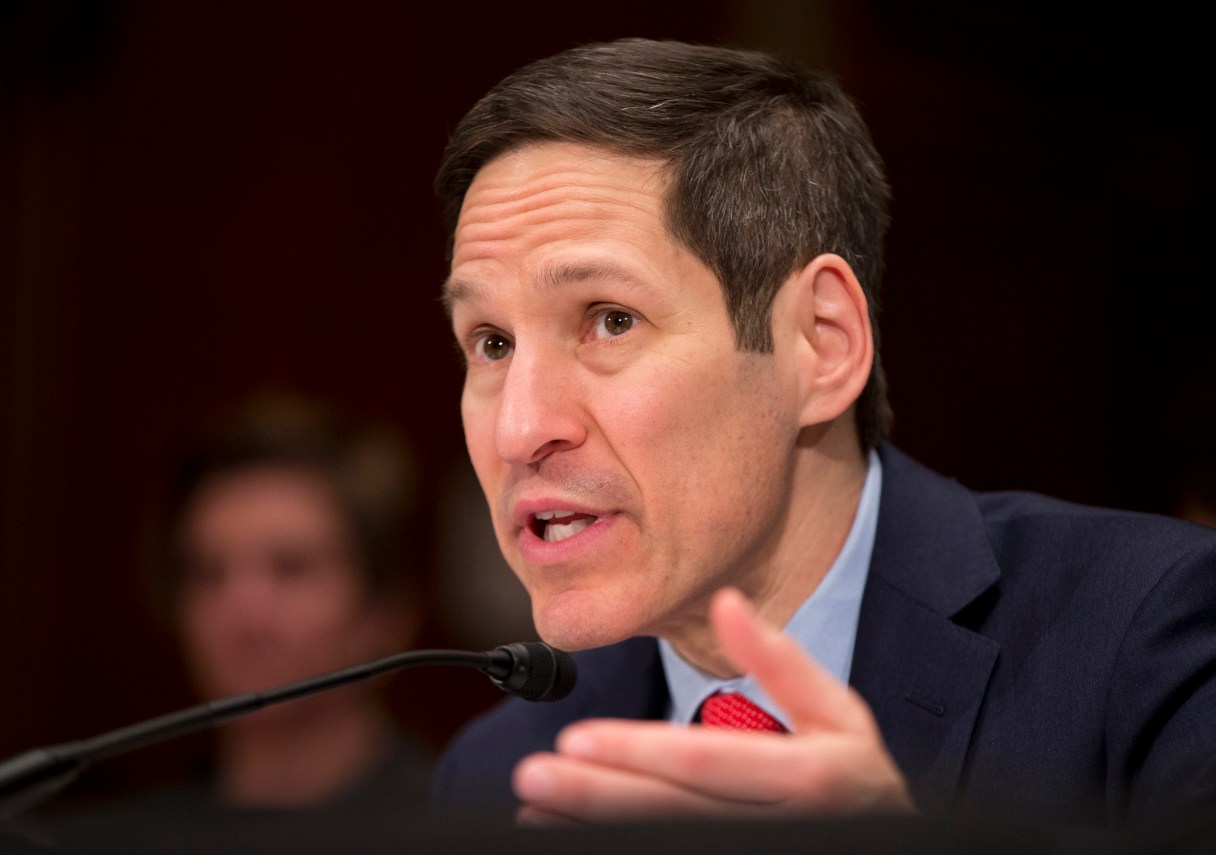
FILE - In this Thursday, Feb. 11, 2016, file photo, Centers for Disease Control and Prevention Director Thomas Frieden testifies on Capitol Hill in Washington, before a Senate Appropriations subcommittee hearing. Federal officials and advocates both want to require doctors to use pill-tracking databases to curb painkiller abuse. "There isn't yet a single state in the country that has an optimal prescription drug monitoring program that works in real time, actively managing every prescription," said Frieden, director of the Centers for Disease Control and Prevention, in a recent news conference. (AP Photo/Manuel Balce Ceneta, File)
FILE - In this Thursday, Feb. 11, 2016, file photo, Centers for Disease Control and Prevention Director Thomas Frieden testifies on Capitol Hill in Washington, before a Senate Appropriations subcommittee hearing. Federal officials and advocates both want to require doctors to use pill-tracking databases to curb painkiller abuse. "There isn't yet a single state in the country that has an optimal prescription drug monitoring program that works in real time, actively managing every prescription," said Frieden, director of the Centers for Disease Control and Prevention, in a recent news conference. (AP Photo/Manuel Balce Ceneta, File) FILE - In this Thursday, Feb. 11, 2016, file photo, Centers for Disease Control and Prevention Director Thomas Frieden testifies on Capitol Hill in Washington, before a Senate Appropriations subcommittee hearing. Federal officials and advocates both want to require doctors to use pill-tracking databases to curb painkiller abuse. "There isn't yet a single state in the country that has an optimal prescription drug monitoring program that works in real time, actively managing every prescription," said Frieden, director of the Centers for Disease Control and Prevention, in a recent news conference. (AP Photo/Manuel Balce Ceneta, File)

WASHINGTON (AP) – The nation’s top health officials are stepping up calls to require doctors to log in to pill-tracking databases before prescribing painkillers and other high-risk drugs.

The move is part of a multi-pronged strategy by the Obama administration to tame an epidemic of abuse and death tied to opioid painkillers like Vicodin and OxyContin. But physician groups see the proposed requirement to check the databases as overly burdensome, another time-consuming task that takes away from patient care.

Helping push the administration’s effort forward is an unusual, multi-million dollar lobbying campaign funded by a former corporate executive who has turned his attention to fighting addiction.

“Their role is to say what needs to be done, my role is to get it done,” says Gary Mendell, CEO of the non-profit Shatterproof, which is lobbying in state capitals to tighten prescribing standards for addictive drugs.

Mendell founded the group in 2011, after his son committed suicide following years of addiction to painkillers. Previously Mendell was CEO of HEI Hotels and Resorts, which operates upscale hotels. To date, Mendell has invested $4.1 million of his own money in the group to hire lobbyists, public relations experts and 12 full-time staffers.