
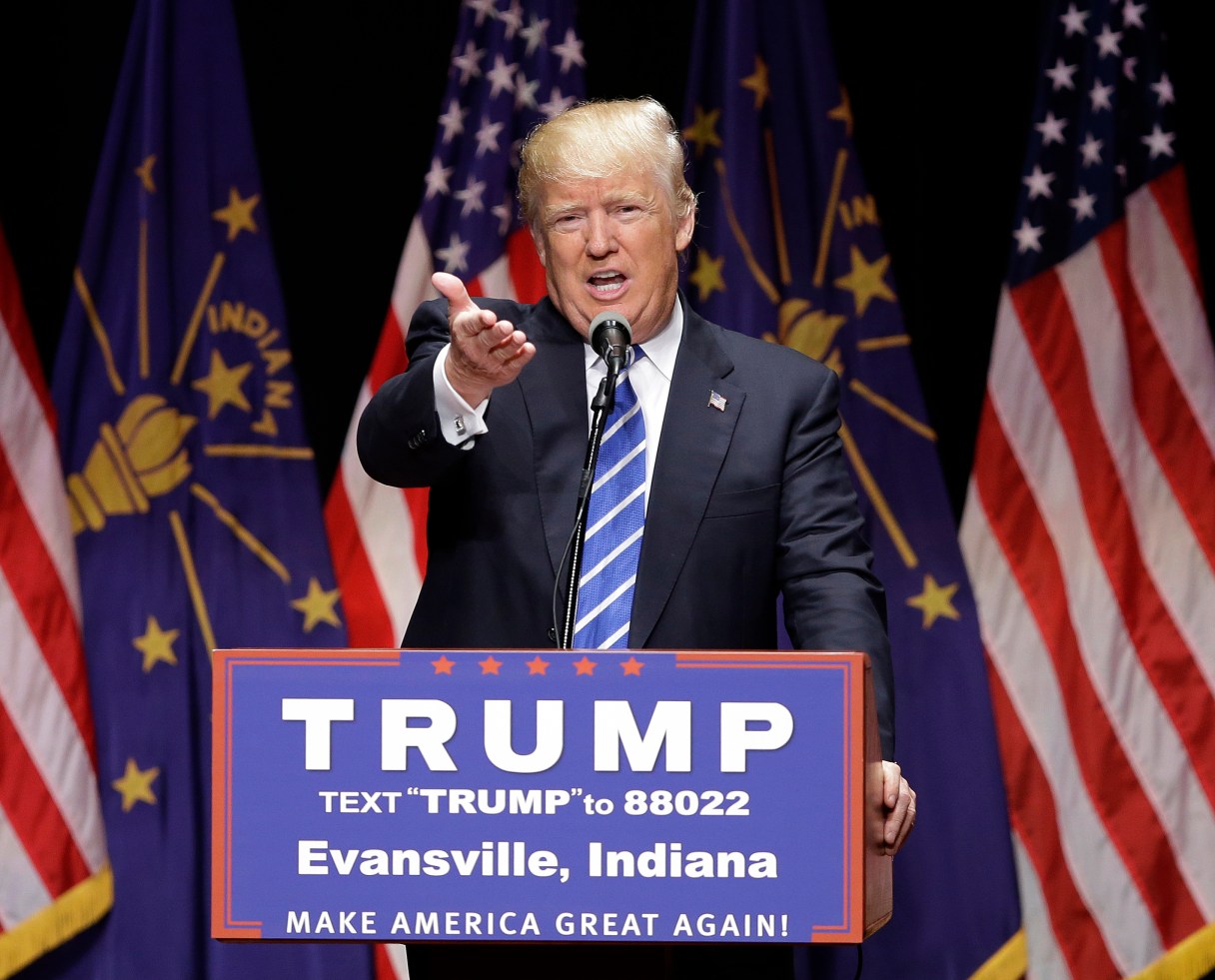
BURLINGAME, Calif. (AP) – The Republican Party in California has been riven for decades between those who want to tack to the ideological center to expand its diminishing appeal and those who want it to enforce conservative purity. But the prospect of Donald Trump clinching the nomination in the Golden State has scrambled the party’s political fault lines in advance of its pivotal June primary, forging unexpected alliances that blur those longstanding divisions.
Tea party favorite Ted Cruz was endorsed Saturday by former Gov. Pete Wilson, a centrist governor who raised taxes and feuded regularly with conservatives. Trump, meanwhile, has snapped up support from stalwarts on California’s right, like conservative activist Ted Costa and former state Sen. Tony Strickland, and its middle, like former U.S. Rep. Doug Ose. Cruz might also be effectively helped by big-tent Republicans trying to stop Trump.
“There’s always been that conservative versus moderate, can you speak to the middle or only to the base? And this transcends that,” said Tim Clark, Trump’s state director and a seasoned GOP strategist here.
California caps the epic Republican contest with its June 7 primary. It will be the first time in memory that the state’s unusual system could decide a presidential nomination. The state will parcel out most of its delegates to the winners of each of its 53 congressional districts, with only 13 going to the statewide winner.
The state’s Republican presidential primaries are usually low-profile affairs, occurring after the nomination has been clinched. All sides agree that makes it very hard to predict how this race, expected to draw millions to the polls, will go.