
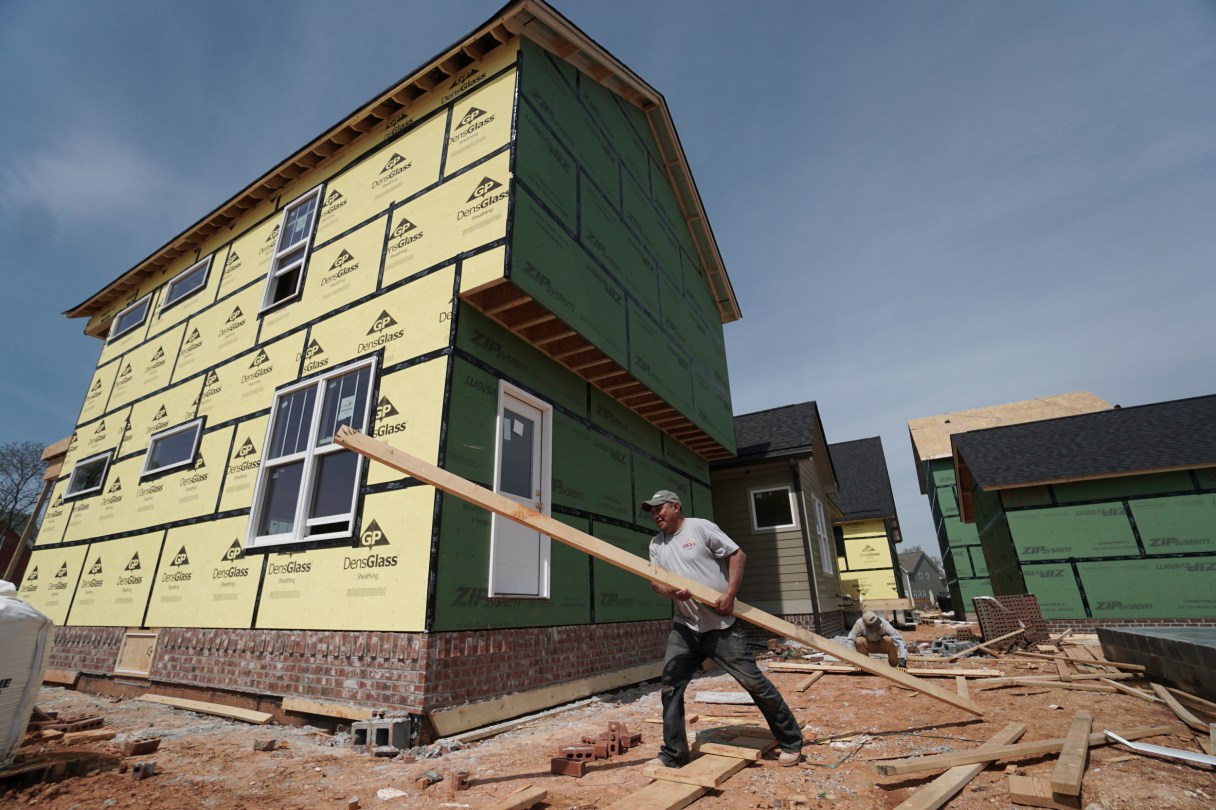
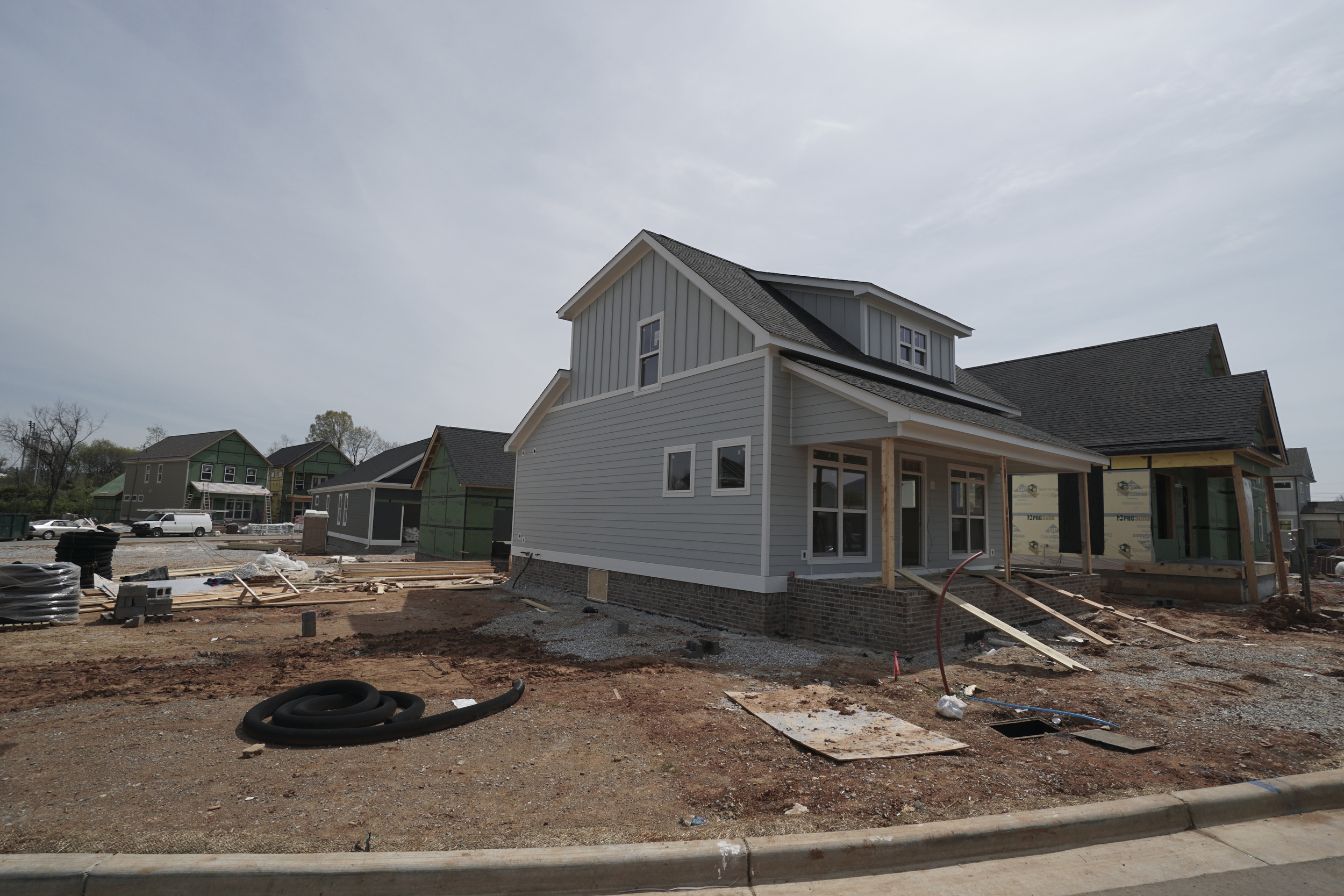
 Staff Photo by Dan Henry / The Chattanooga Times Free Press- 3/30/16. Construction continues on the new Madison Park Southside neighborhood off of Main St. on Wednesday, March 30, 2016.
SINGLE FAMILY FACTS
Downtown area neighborhoods, average house size per square foot and dollars per square foot:* Jefferson Heights, 2,075, $140* Highland Park, 1,630, $107* In-fill homes, 1,279, $91* Fort Wood, 2,379, $132* Glenwood, 1,826, $76* Cameron Harbor (phase one), 2,187, $196* Average, 1,891, $124Source: Noell Consulting, Downtown Chattanooga Marketing Analysis
Jeremy Fitzsimmons compares the growth of new downtown Chattanooga neighborhoods to going to a good restaurant with a line of people waiting outside.
“You’re creating more tables for the people to come in and eat,” says the new construction specialty Realtor for Keller Williams.
Demand to live in and near downtown is driving the creation of new small neighborhoods. Nearly all of the sales of such homes are to people moving from the suburbs and from out of state. About a half dozen more such neighborhoods are under construction or planned in Chattanooga.
Fitzsimmons cites three of the new pocket neighborhoods undergoing development from GreenTech Construction of Chattanooga – one each in the Southside, St. Elmo and North Chattanooga.
“It’s the immense draw to downtown and living downtown,” he says. “There was a phase when people were content to live in other communities on the outskirts. But they visit downtown and people find themselves more and more engaged in urban affairs.”
Ethan Collier, president of Chattanooga-based Collier Construction, says he sees the trend continuing downtown and near the central city.
“It’s growing in popularity,” he says. “People feel safer [than in the past], there’s more to do, more restaurants, more shopping.”
A new market analysis of the housing market in and around downtown done for the nonprofit redevelopment group River City Co. shows that new home sales should continue to grow.
“The market for condominiums and townhomes is strongest in downtown and Fort Wood,” says the study by Noell Consulting Group of Atlanta.
The analysis forecasts continued sales to empty-nester households. Sales also should continue to be strong as baby boomers move into their 60s and 70s, it says.
Single-family homes downtown offer residents what Fitzsimmons calls “the best of both worlds” – finding community with their neighbors and sidewalk living.
“You’re living close to neighbors and within walking distance” of eateries and other amenities, Collier says.
But downtown real estate tends to be more expensive than similar-sized plots in the suburbs.
“If you find an acre of land, you can buy it in Ooltewah for $30,000,” he says. “In downtown, it can be $300,000 an acre or even more.”
Builders often create more dense housing development downtown, and people buy smaller houses in the central city than in the suburbs.
“People will trade off square footage,” Collier says. But, he says, buyers get amenities such as the Riverwalk or living just a few minutes from where they work.
“Those things, they value,” Collier says. “People are getting smaller homes and yards, but people are willing to make that trade-off.”
The demand to live downtown is keen, Fitzsimmons says. For example, at the Madison Park neighborhood off East Main Street, 70 percent of homes were presold before ground was broken, he says. Plans call for 25 single-family homes and 16 townhomes, according to the Realtor. Homes at Madison Park are selling for between $312,000 and $469,000, he says.
Another GreenTech neighborhood is Incline Heights in St. Elmo. The site is one block from where the new section of Riverwalk and a greenway will intersect and at the same time close to the popular 1885 Grill, Fitzsimmons says.
Plans are to have 21 homes in that area, he says, and prices are starting at $280,000 and running to $450,000.
Collier says he’s working on The One Hundred at South Broad behind the Southern Saddlery Building close to St. Elmo. That planned $20 million development is to hold single-family homes, townhouses and commercial space.
“Where some see empty land, we see a fertile field. We see the community that could be, and we’re working to make it real,” said the development’s website.
Collier also is working on a project off North Market Street in which there will be 14 planned townhomes, he says.
Another GreenTech site underway is an 88-home community in the heart of North Chattanooga off of Dartmouth Street. A large green tract is being bulldozed to make way for the development.
Not everyone is pleased as neighbors sometime question the new residences. They worry about loss of green space, water runoff and density. Some neighbors say that development is better fit for East Brainerd than near downtown where open or undevloped land is rare.
Fitzsimmons says there’s “a delicate balance” in building and trying to respect green space.
“It’s the same thing people felt in the 1920s on the original street” when homes were being built, he says. “There’s always a multi-generational problem.”
Fitzsimmons sees the pocket neighborhood approach to building as finding fewer locations as downtown Chattanooga continues its growth.
“We’ll find fewer in the urban scene,” he says. Builders will begin doing more infill or multi-unit development, Fitzsimmons says.
Collier says there’s a growing demand among developers for new sites downtown and around the city’s core.
“For quite a while, people could find empty lots but it’s growing more and more difficult,” he says.
At the same time, it’s harder for the developer to do in-fill, urban construction, the builder says. While there’s a lot of infrastructure in place, there are a lot of challenges, he says.
“You don’t have the room to work,” Collier says.