
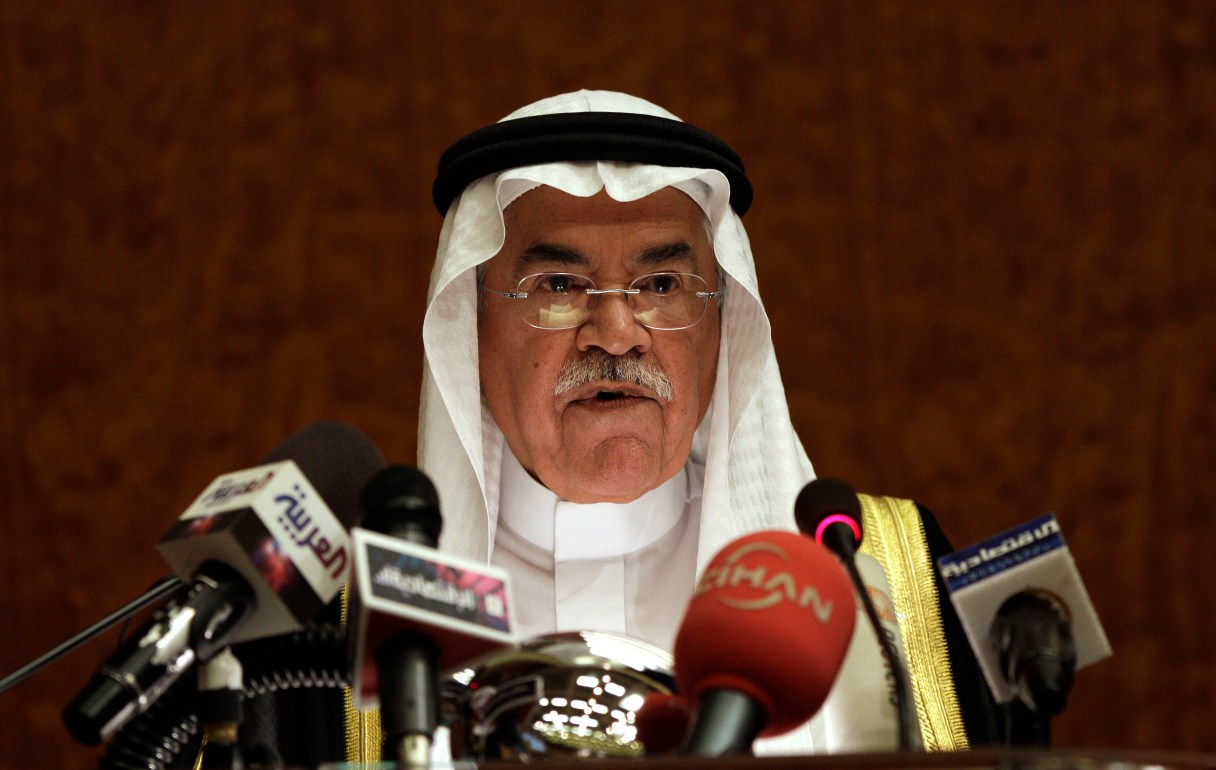
DUBAI, United Arab Emirates (AP) – Saudi Arabia on Saturday announced the ouster of its longtime oil minister as part of a larger ongoing government shakeup.
A royal decree announced that Ali al-Naimi has been replaced by former Health Minister and Saudi Aramco board chairman Khaled al-Falih.
Al-Naimi has long been a pillar of Saudi oil policy, leading the Ministry of Petroleum and Mineral Resources since 1995. Prior to that role he’d served as the president of oil giant Aramco.
Under a new Saudi leadership led by King Salman, the king’s son Deputy Crown Prince Mohammed bin Salman has largely been overseeing Saudi economic policy along with a handful of new ministers. The changes announced Saturday come as the government plans wide-ranging reforms aimed at overhauling the Saudi economy amid lower oil prices that have eroded state revenues.
Saudi Arabia’s dominant market share and historical ability to influence prices by loosening or tightening its taps gave al-Naimi exceptional influence at meetings of the oil cartel OPEC, where the kingdom is by far the largest producer and de facto policy-maker. His brief utterances on the sidelines of OPEC meetings often had the power to swing global oil prices.