
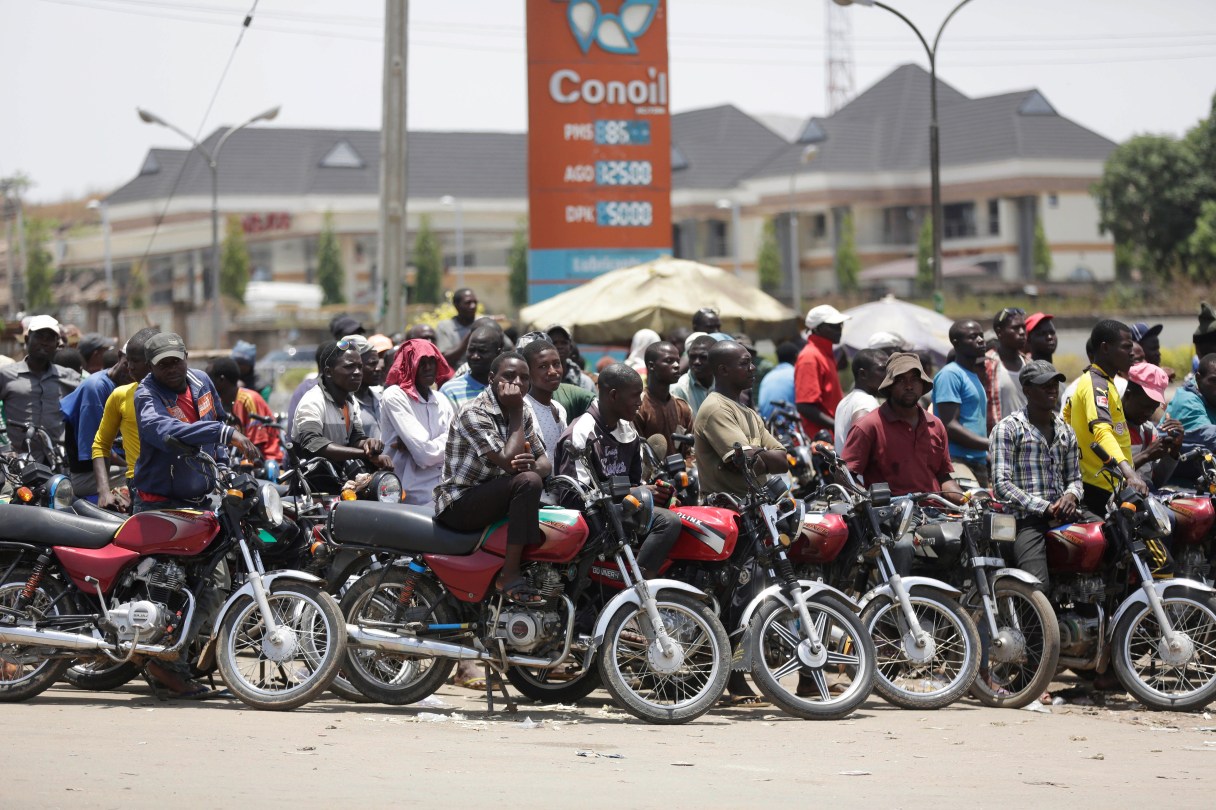
LAGOS, Nigeria (AP) – Nigeria’s government announced Wednesday it is lifting a controversial subsidy on gas, nearly doubling the price amid a massive fuel shortage and militant attacks on oil installations in Africa’s biggest petroleum producer.
Previous attempts to end the subsidy have provoked riots and, in 2012, the biggest demonstrations ever seen, forcing the government to retract.
The 4-million-strong Nigeria Labour Congress immediately announced that it and its civil society allies will fight the “most audacious and cruel” move that will “make life more miserable” for Nigerians struggling with spiraling inflation and increases in electricity tariffs despite more blackouts.
The year-old government of President Muhammadu Buhari said the decision was taken at a meeting that included legislators, labor leaders and Enough Is Enough Nigeria, which helped lead the 2012 protests. The congress said this implied an agreement that never happened as it advised the meeting that current prices should stand.
Petroleum Minister Ibe Kachikwu announced the new price of a maximum of 145 naira (73 U.S. cents) a liter, up from 86.5 naira (43 cents). He noted that the months-long scarcity has meant Nigerians already are paying up to 250 naira ($1.26) a liter on the black market.