
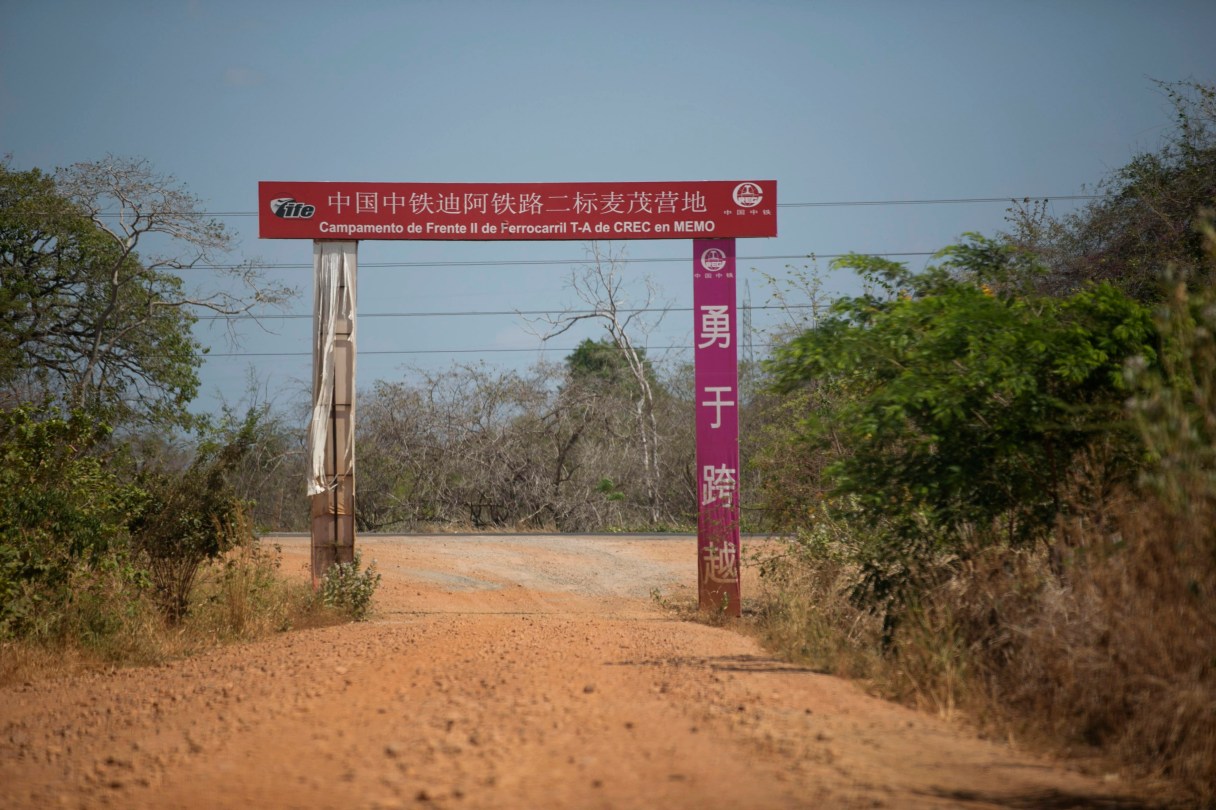
ZARAZA, Venezuela (AP) – It was once billed as a model of socialist fraternity: South America’s first high-speed train, powered by Chinese technology, crisscrossing Venezuela to bring development to its backwater plains. Now all but abandoned, it has become a symbol of economic collapse – and a strategic relationship gone adrift.
Where dozens of modern buildings once stood, cattle now graze on grass growing amid the rubble of the project’s gutted and vandalized factory. A red arched sign in Chinese and Spanish is all that remains of what until 16 months ago was a bustling complex of 800 workers.
That’s when the project’s Chinese managers quietly cleared out.
As with many unfinished politically motivated projects dotting Venezuela – government critics call them “red elephants” – the decaying infrastructure contrasts with the railway’s promising beginnings.
A decade ago then-President Hugo Chavez dreamed up the Tinaco-Anaco railway as a way to populate the plains and attract development from long-dominant coastal areas. Stretching 300 miles (468-kilometers), it was intended to move 5 million passengers and 9.8 million metric tons of cargo a year at speeds up to 135 miles (220 kilometers) per hour.